

⤴️-Paid Ad- Check advertising disclaimer here. Add your banner here.🔥
All Activity
- Today
-
Gold is too volatile for me for intraday trading, but it does tend to follow seasonal patterns well. I entered a long position on June 29 with a tight stop. The entry was confirmed by a bullish engulfing pattern—a signal that has historically always led to a rise in the price of gold. The 76.4% retracement level at approximately $4,655 should be reached at a minimum; the price might even hit $5,000. However, the price should not drop below $4,000.
-

Market Technical Analysis by RoboForex
RBFX Support replied to RBFX Support's topic in Technical Analysis
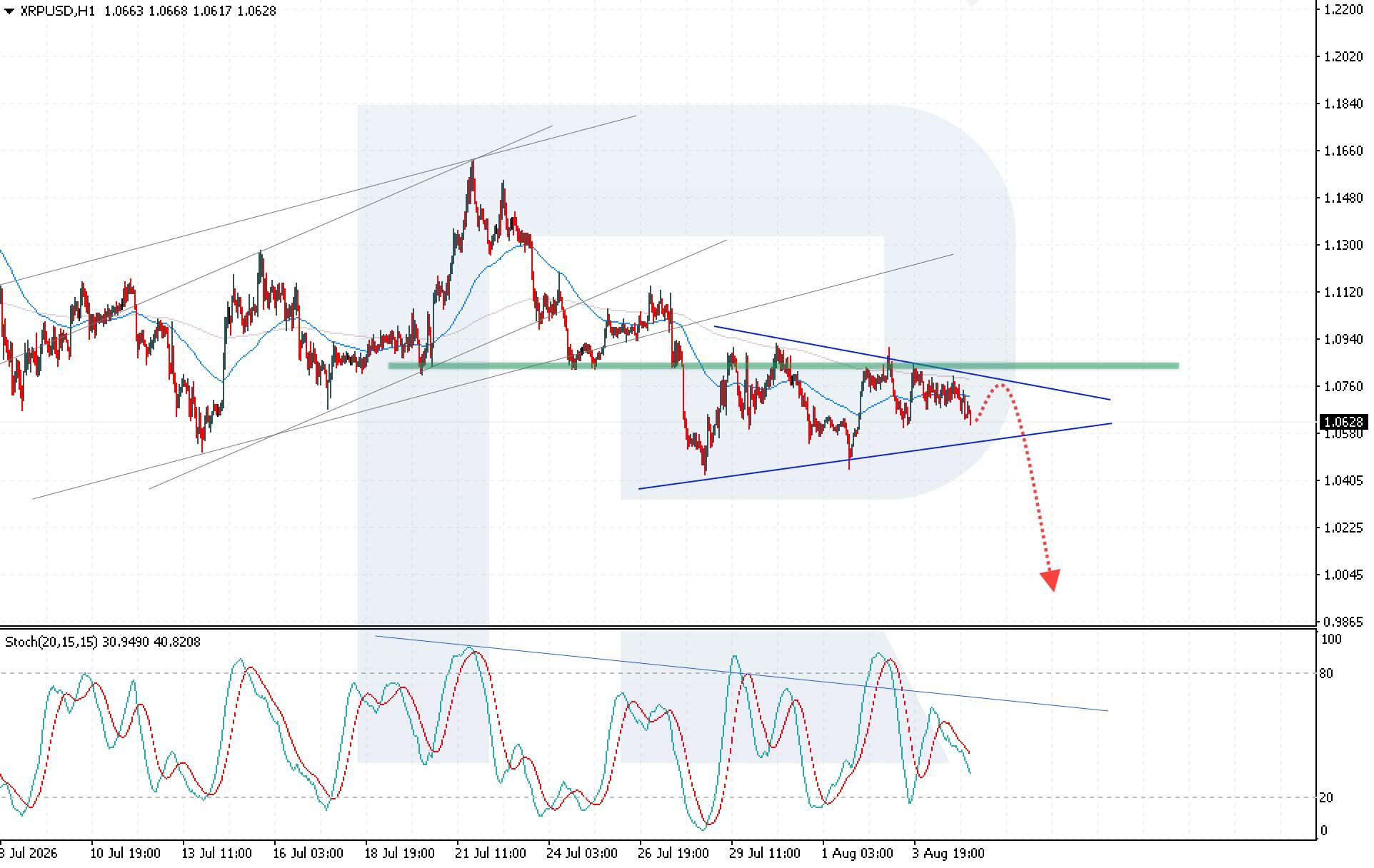
XRPUSD risks further decline as bearish momentum strengthens The XRPUSD price remains under selling pressure after reversing from key resistance levels. The current quote is 1.0628. Technical outlook XRPUSD quotes are declining after rebounding from the upper boundary of the Triangle pattern. Price action analysis indicates that sellers remain in control. Today’s XRPUSD forecast suggests a decline towards 1.0045. Today’s XRPUSD analysis indicates selling pressure following a rebound from the upper boundary of the Triangle pattern. Read more - XRPUSD Forecast Attention! Forecasts presented in this section only reflect the author’s private opinion and should not be considered as guidance for trading. RoboForex bears no responsibility for trading results based on trading recommendations described in these analytical reviews. Sincerely, The RoboForex Team
-

HFMarkets (hfm.com): Market analysis services.
AllForexnews replied to AllForexnews's topic in Fundamental Analysis
Date: 5th August 2026. Stocks Surge as AI Rebounds and Falling Oil Reshapes the Forex Outlook. Asian stock markets rallied sharply on Wednesday as investors returned to technology and semiconductor shares following a record-breaking session on Wall Street. The recovery was supported by three developments that had previously weighed heavily on global risk appetite: oil prices continued to decline, government bond yields moved lower, and strong corporate earnings revived confidence in artificial intelligence-related investment. Japan and South Korea led the advance, while gains in China, Australia, and other regional markets indicated that the improvement in sentiment was not limited to a single country. For forex traders, however, the most important question is whether falling energy prices and bond yields can continue to weaken inflation expectations and reduce pressure on central banks to raise interest rates. The S&P 500 gained approximately 1.8% on Tuesday and closed at a fresh record, while the NASDAQ Composite jumped around 2.6%. NVIDIA, Broadcom, and Micron were among the strongest performers as investors returned to semiconductor shares following the recent technology-sector correction. NVIDIA gained more than 2% after Elon Musk praised the company’s processors and highlighted their potential role in SpaceX’s artificial intelligence and computing plans. The comments reinforced expectations that spending on AI infrastructure, advanced processors, and data centres will continue to expand. Nevertheless, the earnings reaction was far from universally positive. AMD shares fell approximately 8.8% in after-hours trading even though the company reported record quarterly revenue of $11.5 billion, representing an increase of 50% from the previous year. Data centre revenue more than doubled, while AMD forecast third-quarter revenue of approximately $13 billion, plus or minus $300 million. The sell-off suggests that strong growth alone may no longer be enough for highly valued AI companies. Investors increasingly expect earnings, guidance, and margins to exceed already elevated forecasts. SpaceX also dropped around 7.5% following its first quarterly report as a publicly traded company. Concerns that heavy AI and infrastructure investment could consume cash flow overshadowed the company’s operational growth. The next potential volatility event will arrive on Thursday, when up to 912 million shares held by employees and other pre-IPO investors are expected to become eligible for sale. Japan and South Korea Lead the Asian Recovery The positive momentum quickly spread across North Asia. Japan’s Nikkei 225 advanced approximately 3.5%, while South Korea’s KOSPI rose more than 4%. SK Hynix gained nearly 7%, Samsung Electronics climbed around 4% and several Japanese semiconductor and electronic-component companies recorded strong gains. MSCI’s index of Asia-Pacific shares outside Japan rose approximately 2.3%, while Chinese blue-chip stocks added around 1.5%. The Australian S&P/ASX 200 also reached a new record as financial and mining shares supported the index. The regional rally represents a strong rebound from the recent AI-sector sell-off, but it does not necessarily mean that all concerns have disappeared. Investors are still evaluating whether the enormous amounts being invested in AI infrastructure will generate sufficient long-term returns. China also faces an additional source of risk. The Trump administration is reportedly preparing restrictions on imports of new Chinese optical transceivers and other data centre components on national security grounds. Shares of several Chinese optical-equipment manufacturers came under pressure following the reports, partially offsetting the wider semiconductor rally. The most significant macroeconomic support came from oil. Brent crude declined towards $79 per barrel, substantially below its July peak of approximately $102. West Texas Intermediate fell towards $75 as investors reacted to signs of progress in negotiations involving the United States, Iran, and Oman. The proposed arrangement could establish a temporary 60-day system for reopening shipping routes through the Strait of Hormuz. Under the reported plan, inbound vessels would travel through a northern lane near Iran, while outbound vessels would use a southern route through Omani waters. No final agreement had been officially confirmed at the time of writing. Previous negotiations have also collapsed, meaning traders should remain prepared for renewed geopolitical volatility. The Strait of Hormuz is one of the world’s most important energy transit routes. Before the conflict, approximately one-fifth of the world’s oil supply passed through the waterway. A sustained reopening would increase the flow of oil out of the Persian Gulf and reduce the geopolitical risk premium built into crude prices. For forex traders, lower oil prices can have several important consequences: Reduced inflation expectations may decrease pressure on the Federal Reserve and other central banks to tighten monetary policy. Oil-importing economies and currencies may benefit from lower energy costs. Oil-exporting currencies could lose some support if crude prices extend their decline. Improved risk appetite may weaken demand for traditional safe-haven currencies. Lower oil prices have already provided relief to government bond markets. The US 10-year Treasury yield declined to approximately 4.60%, compared with a recent high of around 4.75%. Markets also reduced the estimated probability of a Federal Reserve rate increase in September to approximately 57%, down from 67%. This repricing reflects expectations that lower energy prices could limit the inflationary impact of the Middle East conflict. However, the Fed outlook remains uncertain. Kansas City Fed President Jeff Schmid recently argued that tighter monetary policy may still be necessary to return inflation to the central bank’s 2% target. The combination of lower yields and improving equity sentiment placed modest pressure on the US Dollar. EUR/USD traded close to $1.1540, near its highest level in approximately six weeks. USD/JPY slipped towards 157.60, although intervention risk remains elevated following last week’s rare coordinated Yen-buying operation by Japan and the United States. Comments from US Treasury Secretary Scott Bessent were also interpreted as support for further monetary tightening from the Bank of Japan. Expectations of higher Japanese interest rates could provide additional support for the Yen, particularly if Japanese authorities remain willing to intervene. The New Zealand Dollar underperformed after unemployment rose to 5.6% in the June quarter, its highest level in approximately a decade. The data may strengthen expectations that the Reserve Bank of New Zealand will adopt a more cautious monetary policy stance. Gold gained approximately 1.6% and traded around $4,140 per ounce. Ordinarily, a strong equity rally might reduce demand for defensive assets such as gold. However, the decline in Treasury yields supported the precious metal because gold does not offer interest payments and therefore tends to become relatively more attractive when bond yields fall. A softer US Dollar also made gold less expensive for investors using other currencies. Gold traders must now balance two competing forces. Further diplomatic progress in the Middle East could reduce safe-haven demand, but declining yields and lower expectations of additional Fed tightening could continue to support prices. Attention now turns towards major US economic data that could determine whether the decline in Treasury yields and the US Dollar continues. The July ADP private-employment report is scheduled for 12:15 GMT on Wednesday, followed by the ISM Services PMI at 14:00 GMT. Traders should pay particular attention to the employment and prices components of the ISM report, as these may influence expectations for inflation and Federal Reserve monetary policy. The more influential July nonfarm payrolls report will be released on Friday, 7 August, at 12:30 GMT. A stronger-than-expected labour report could revive rate-hike expectations, push Treasury yields higher, and support the US Dollar. A weaker report could reinforce the recent decline in yields, weigh on the Dollar and provide further support to gold and equity markets. The Asian stock market rally rests on three improving conditions: continued AI investment, falling oil prices, and lower bond yields. For the moment, these factors are supporting equities and reducing demand for the US Dollar. However, the outlook remains vulnerable to sudden reversals. A breakdown in the Hormuz negotiations could send oil prices sharply higher again. Strong US employment or services data could revive expectations of further Fed tightening. Meanwhile, disappointing earnings or rising financing costs could renew concerns about the profitability of AI investment. Forex traders should therefore monitor oil, Treasury yields, and technology shares together. Their interaction is currently shaping movements across USD/JPY, EUR/USD, commodity currencies, and gold more than any single market in isolation. Always trade with strict risk management. Your capital is the single most important aspect of your trading business. Please note that times displayed based on local time zone and are from time of writing this report. Click HERE to access the full HFM Economic calendar. Want to learn to trade and analyse the markets? Join our webinars and get analysis and trading ideas combined with better understanding of how markets work. Click HERE to register for FREE! Click HERE to READ more Market news. Andria Pichidi HFMarkets Disclaimer: This material is provided as a general marketing communication for information purposes only and does not constitute an independent investment research. Nothing in this communication contains, or should be considered as containing, an investment advice or an investment recommendation or a solicitation for the purpose of buying or selling of any financial instrument. All information provided is gathered from reputable sources and any information containing an indication of past performance is not a guarantee or reliable indicator of future performance. Users acknowledge that any investment in Leveraged Products is characterized by a certain degree of uncertainty and that any investment of this nature involves a high level of risk for which the users are solely responsible and liable. We assume no liability for any loss arising from any investment made based on the information provided in this communication. This communication must not be reproduced or further distributed without our prior written permission. -
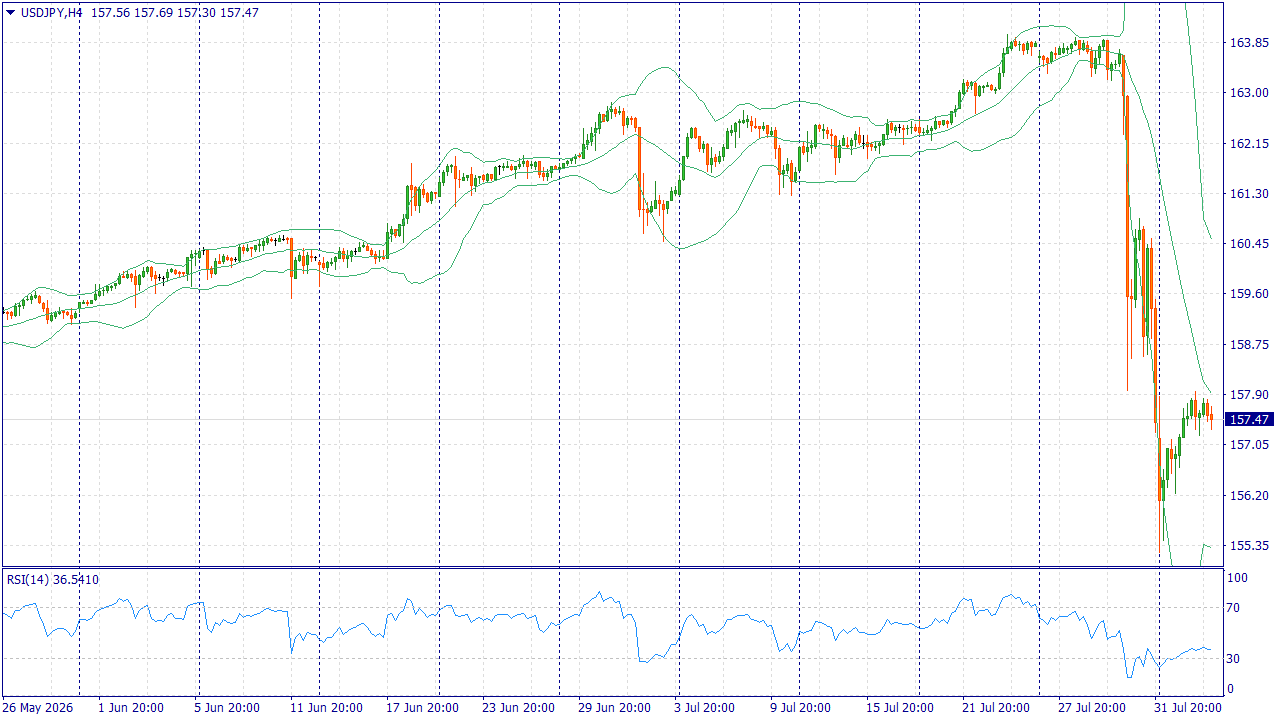
 Market Fundamental Analysis for August 5, 2026 USDJPY Event to watch today: 15:15 EET. USD – ADP Employment Change 17:00 EET. USD – ISM Services PMI USDJPY: The yen is receiving fresh fundamental support following the release of the minutes from the Bank of Japan’s June meeting. The document showed that policymakers were paying increased attention to inflation risks and considering the possibility of further rate increases. Additional support came from data showing that real wages rose by 1.6% in June, marking a sixth consecutive monthly increase and strengthening the case for monetary policy normalization. Only for our readers: mention the one-time promo code GIFT20 in the support chat and get +20% on your next deposit of any amount. The maximum bonus amount is $500. Only one promo code can be applied to a deposit at a time. Pressure on USDJPY is also being reinforced by the recent joint intervention by the United States and Japan in support of the yen. Officials indicated that they were prepared to act again, while the US side publicly backed Tokyo’s efforts. At the same time, lower US Treasury yields and a reduced probability of another Federal Reserve rate increase are diminishing the appeal of interest rate differential trades. Slower growth in Japan’s services sector remains a limiting factor, meaning that sustained yen appreciation is not guaranteed. Strong US ADP or ISM data could also restore demand for the dollar. Nevertheless, the combination of a weaker dollar impulse, expectations of further Bank of Japan action, and the risk of renewed official measures makes a decline in USDJPY the more resilient base-case scenario. Trading idea: SELL 157.50, SL 158.15, TP 155.90
-
 dvc joined the community
 -
I am the owner of astrogann.com I want to sale this site including all of code astro indicator on that site.
-
 Polako joined the community
 - Yesterday
-
 Emzl30 joined the community
 -
 jerry joined the community
 -
 marketz joined the community
 -
 USDJPY Reverses from 40-Year High The USDJPY pair retreated from multi-decade highs following a rare joint intervention by the United States and Japan. In July, quotes climbed to 163.99 — the highest level in around 40 years — but by August 4, they had declined to the 157.7 area. At the peak of yen strengthening, the pair dropped to 155.20. A similar situation occurred in July 2024, when the pair rose to 161.9 and then fell to 139.7 over the following months. Japan’s Ministry of Finance confirmed that on July 31 it bought yen jointly with the U.S. Treasury. According to Reuters, the U.S. side used euros rather than dollars for the operation. This approach helped support the Japanese currency without creating the impression that Washington was aiming to weaken the dollar. Factors behind yen strengthening: Joint intervention. U.S. participation significantly amplified the impact of the operation and increased market confidence in authorities’ determination to halt the yen’s decline. For traders, this signaled that further USDJPY growth could face not only Japan’s actions but also support from Washington. Threat of further action. Japanese authorities stated they are ready to intervene again if yen weakness becomes excessively rapid. The risk of sudden intervention makes market participants more cautious about opening new positions against the yen. Closing speculative positions. The sharp drop in USDJPY forced traders to take profits on bets against the yen. The mass closing of such positions accelerated the pair’s decline and boosted short-term demand for the Japanese currency. At the same time, fundamental pressure on the yen has not disappeared. Interest rates in Japan remain lower than in the U.S., so the dollar still holds a yield advantage. Without further tightening by the Bank of Japan, the effect of the intervention may gradually fade. In the near term, key levels for USDJPY are 155 and 160. A move below 155 could strengthen the yen further, while a return above 160 would indicate that the impact of the intervention is weakening. According to FreshForex analysts, the risk of sharp USDJPY movements remains high. Traders should closely monitor statements from Japanese and U.S. authorities, Bank of Japan decisions, and U.S. labor market data. The possibility of another intervention creates trading opportunities but also increases the risk of sudden reversals. FreshForex offers over 250 trading instruments, including major currency pairs. Use USDJPY volatility to find trading opportunities and profit! Only for our readers: mention the one-time promo code GIFT20 in the support chat and get +20% on your next deposit of any amount. The maximum bonus amount is $500. Only one promo code can be applied to a deposit at a time.
 -
 Feel_good joined the community
 -
Market Technical Analysis by RoboForex
RBFX Support replied to RBFX Support's topic in Technical Analysis
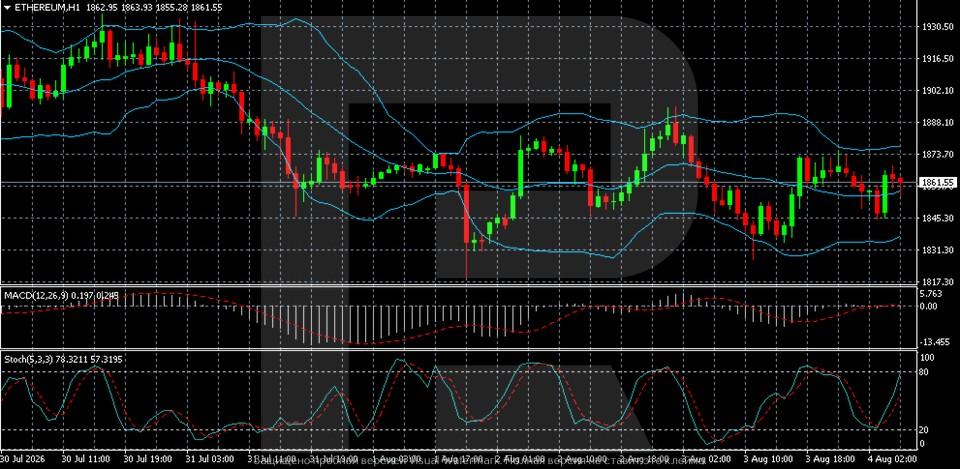
Ethereum (ETHUSD) is well positioned and only needs momentum Ethereum (ETHUSD) is trading near 1,861 USD on Tuesday. Tokenisation could provide support for ETH. Technical outlook On the H1 chart, Ethereum (ETHUSD) is trading near 1,862 and remains range-bound after recovering from the 1,831–1,840 area. The price is hovering near the middle Bollinger Band, while the indicator’s boundaries are gradually narrowing, indicating lower volatility and the absence of sustained directional momentum. The Ethereum price has entered a range, while fundamental support is strengthening. Read more - ETHUSD Forecast Attention! Forecasts presented in this section only reflect the author’s private opinion and should not be considered as guidance for trading. RoboForex bears no responsibility for trading results based on trading recommendations described in these analytical reviews. Sincerely, The RoboForex Team
-
roboforex Market Fundamental Analysis by RoboForex
RBFX Support replied to RBFX Support's topic in Fundamental Analysis
US 500 forecast: index approaches upper channel boundary The US 500 index is testing the resistance level again. A breakout could resume the uptrend. The US 500 forecast for today is positive. US 500 forecast: key takeaways Recent data: the US Federal Reserve held its interest rate steady at 3.75% Market impact: the data is moderately positive for the stock market Fundamental analysis The Federal Reserve’s decision to keep the interest rate within the 3.50–3.75% range was not a surprise to the market. However, the statement and the Federal Reserve chairman’s comments were far more important than the decision to leave the rate unchanged. For the US 500 index, the news is primarily negative in the short term. Initially, keeping the rate unchanged could have been viewed positively, as the regulator refrained from immediately raising borrowing costs further. RoboForex Market Analysis & Forex Forecasts Attention! Forecasts presented in this section only reflect the author’s private opinion and should not be considered as guidance for trading. RoboForex bears no responsibility for trading results based on trading recommendations described in these analytical reviews. Sincerely, The RoboForex Team -
Weekly Overview: XAUUSD, #SP500, #BRENT | 07 August 2026 XAUUSD: BUY 4060.00, SL 4020.00, TP 4160.00 Gold begins the week with moderate support as a weaker US dollar and a sharp decline in oil prices ease concerns about renewed inflationary pressure. However, the Federal Reserve’s decision to keep interest rates unchanged, alongside support from some policymakers for a rate increase, is keeping US Treasury yields elevated and limiting demand for the metal. The main test will come from the US labor market data. Weak figures could reduce expectations of a rate increase and strengthen interest in XAUUSD, while a strong report may restore pressure. If the US dollar remains subdued and oil market conditions stay stable, the base-case scenario allows for further gains in gold. Trading idea: BUY 4060.00, SL 4020.00, TP 4160.00 #SP500: BUY 7540, SL 7480, TP 7670 The #SP500 is receiving support from lower oil prices, which reduce the risk of renewed pressure on corporate costs and consumer demand. The earnings season also remains a source of resilience, although the market’s response to technology sector results is becoming more selective. This week, the index’s direction will be shaped by employment data and further corporate earnings reports. A strong labor market could revive expectations of a Federal Reserve rate increase and intensify pressure from elevated yields. For now, the decline in the energy risk premium is supporting demand for equities, leaving a cautious upside scenario as the base case. Trading idea: BUY 7540, SL 7480, TP 7670 #BRENT: SELL 83.50, SL 86.00, TP 78.50 Brent begins the week with a sharp decline after the United States cancelled new strikes against Iran and hopes for renewed negotiations increased. The restoration of traffic through the Strait of Hormuz could reduce the risk premium, while higher OPEC+ production quotas from September are reinforcing expectations of more abundant supply. Negotiations could still break down, while regional supplies remain constrained, meaning the decline in oil prices may not be one-sided. Nevertheless, part of the geopolitical premium has already been removed, while demand forecasts remain restrained. If the diplomatic scenario remains intact, the priority stays with further downside in #BRENT. Trading idea: SELL 83.50, SL 86.00, TP 78.50 Only for our readers: mention the one-time promo code GIFT20 in the support chat and get +20% on your next deposit of any amount. The maximum bonus amount is $500. Only one promo code can be applied to a deposit at a time.
-
HFMarkets (hfm.com): Market analysis services.
AllForexnews replied to AllForexnews's topic in Fundamental Analysis
Date: 4th August 2026. Global Stocks Near Records as Yen and Oil Stay Volatile | Eyes on US Jobs7. Global stock markets are trading close to record levels after a technology-led rebound on Wall Street improved investor sentiment following a highly volatile month. However, the market outlook remains sensitive to several major developments. Traders are closely monitoring the impact of coordinated US-Japan intervention in the currency market, renewed volatility in oil prices, geopolitical tensions involving Iran, and the upcoming US employment report. Technology earnings are also returning to the spotlight as investors assess whether the substantial investment directed towards artificial intelligence is beginning to generate stronger revenue and profits. Global Stock Markets Remain Near Record Highs The MSCI All Country World Index remained close to 1,130, slightly below its record high of 1,136.59. US stocks strengthened during Monday’s session, led by large technology companies. The rally moved the S&P 500 closer to its all-time high, while index futures subsequently climbed to record territory. NASDAQ 100 futures also rose approximately 0.6%, indicating that demand for technology stocks remained positive heading into Tuesday’s trading session. European stock futures pointed towards a stronger opening, although Asian markets delivered a more mixed performance. The latest recovery follows a turbulent period for the technology sector. Investors have increasingly questioned whether the billions of dollars being spent on artificial intelligence infrastructure will produce sufficient growth and profitability. Until recently, much of the AI-related investment interest had focused on semiconductor producers, data centre providers, and other companies supplying the infrastructure required to develop artificial intelligence. Attention may now be shifting towards businesses that can use AI to improve their products, reduce costs, or increase earnings. This change could become an important theme for technology markets. Investors may increasingly distinguish between companies simply spending heavily on AI and those demonstrating measurable financial returns from that investment. Palantir Rallies After Raising Its Forecast Palantir Technologies gained approximately 14% in extended trading after the company raised its financial forecasts. The strong reaction suggests that investors remain willing to reward companies that can demonstrate clear revenue growth linked to artificial intelligence. The announcement also supported broader optimism towards technology stocks following Monday’s strong Wall Street session. A gauge of major technology companies recorded its best daily performance since March, while semiconductor shares rose by approximately 1%. Nevertheless, volatility remains elevated. Technology-focused investment funds have experienced significant fluctuations as expectations surrounding AI spending, valuations, and future profitability continue to change. Amazon shares fell approximately 1.6% in post-market trading after Chairman Jeff Bezos disclosed plans to sell shares. The decline followed a three-day rally that had lifted Amazon’s market value to around $3 trillion. SpaceX Earnings Enter the Spotlight Another major event for technology investors is the first earnings report from SpaceX as a publicly traded company. The report could test investor demand for highly valued technology and aerospace businesses, particularly after the recent volatility in AI-related shares. Markets will be watching SpaceX’s revenue, profitability, capital expenditure, and forward guidance. Investors may also focus on the performance of its launch operations and satellite-related businesses. The earnings report comes before a potentially significant increase in the company’s available share supply. As much as $116 billion in stock could become eligible for sale for the first time next month. Large share unlocks can affect market prices if early investors, employees, or other shareholders decide to sell part of their holdings. Yen Weakens After Historic US-Japan Intervention The Japanese yen declined around 0.3% during the Asian session, trading close to 157.70 against the US dollar. The pullback followed a gain of more than 4% over the previous four trading days after the United States and Japan carried out coordinated yen-buying intervention. The operation represented the first coordinated intervention of its kind since 1998 and pushed the yen sharply higher from a four-decade low near 164 per dollar. The intervention has now shifted market attention towards the 155 level in USD/JPY. Why USD/JPY at 155 Is Important The 155 level is viewed as an important test of whether the yen’s recovery can develop into a more sustained trend. Previous Japanese intervention in April and May briefly pushed USD/JPY towards this area. However, the pair subsequently recovered, leading traders to question whether direct intervention can create lasting currency strength without broader changes in monetary and fiscal policy. A decisive move below 155 could alter market behaviour. Traders who previously bought USD/JPY during declines may become more cautious, while Japanese exporters could increase their dollar sales as the currency pair moves outside its recent trading range. The yen’s recovery could also accelerate because of speculative positioning. Asset managers and leveraged funds reportedly hold their largest net short yen positions since 2024. If USD/JPY falls below 155, some investors may be forced to reduce these positions by purchasing yen. This type of short squeeze could potentially push USD/JPY towards 152. The currency pair has already moved below its 200-day moving average near 158 for the first time since October, adding further technical significance to the recent decline. Can the Yen Maintain Its Recovery? Despite the intervention, some analysts remain cautious about the yen’s longer-term outlook. The US dollar continues to offer a considerable yield advantage over the Japanese currency. That advantage could widen further if the Federal Reserve raises interest rates while the Bank of Japan continues to tighten policy gradually. Some strategists expect investors to resume using the yen as a funding currency once the threat of further intervention decreases. Under this scenario, USD/JPY could eventually recover towards the 160-162 region. Market activity already indicates that some traders are taking profits following the intervention-driven move. For the yen to achieve a more sustainable recovery, investors may need stronger evidence that Japan’s broader policy direction is changing. This could include faster interest rate increases from the Bank of Japan, greater fiscal discipline, and continued coordination between Japanese and US policymakers. Oil Rebounds as US-Iran Uncertainty Continues Oil prices rose after recording their largest daily decline in a week. Brent crude traded near $85 per barrel, while West Texas Intermediate moved above $81. The rebound followed a decline of almost 5% during Monday’s session. The latest price movement reflects uncertainty surrounding negotiations involving the United States and Iran. US President Donald Trump described his latest diplomatic offer as Iran’s ‘last chance’ and said he expected the Strait of Hormuz to reopen fully. Iran denied that direct negotiations with the United States were taking place. However, Tehran said discussions with Oman regarding the movement of ships through the Strait were progressing. The conflicting statements highlight the uncertainty surrounding diplomatic efforts. Oil prices could continue to react sharply to any indication of military escalation, successful negotiations, or improved shipping conditions. Strait of Hormuz Remains a Major Market Risk Commodity flows through the Strait of Hormuz have slowed considerably. Before the conflict, the Strait handled approximately one-fifth of global crude oil and liquefied natural gas flows. Any prolonged disruption could reduce global supply and place upward pressure on energy prices. Concerns increased after a cargo vessel northeast of Al Khasab, Oman, reported being struck by an unidentified projectile. Meanwhile, activity increased at Saudi Arabia’s Yanbu export terminal on the Red Sea. The port provides an alternative route that allows some Saudi oil exports to bypass the Strait of Hormuz. However, security risks also remain present in the Red Sea, where vessels have faced threats near the Bab El-Mandeb shipping route. Additional supply risks are emerging from the war in Ukraine. Refineries, tankers, pipelines, and other Russian oil infrastructure were reportedly targeted at least 30 times during July, the second-highest monthly total since Russia’s full-scale invasion began in 2022. Together, these developments indicate that oil prices may remain volatile even if diplomatic discussions between the United States and Iran continue. Treasury Yields Rise as Oil Prices Recover US Treasury prices gave back part of Monday’s gains as oil prices rebounded. The 10-year Treasury yield increased by approximately two basis points to 4.69%. Energy prices can influence government bond markets because higher oil costs may contribute to inflation. If inflation remains elevated, the Federal Reserve may have less flexibility to lower interest rates. Alternatively, a sustained decline in oil prices could reduce inflationary pressure and support expectations of less restrictive monetary policy. This relationship means that developments in the Middle East may continue to influence currencies, bonds, and equities, as well as the energy market. US Employment Data Becomes the Next Major Test Investors are now preparing for several US employment reports, with Friday’s nonfarm payrolls release expected to be the most important economic event of the week. The report could provide clearer evidence regarding the strength of the US labour market and the likely direction of Federal Reserve policy. Stronger-than-expected job creation could increase expectations that interest rates will remain high or rise further. This could support the US dollar and Treasury yields, but create pressure on interest rate-sensitive stocks. Weaker employment growth could reduce rate expectations, although an unexpectedly sharp slowdown might also raise concerns about the economic outlook. Recent manufacturing data showed that US factory activity expanded in July at its fastest pace in more than four years. Production increased strongly, while companies also added workers. The figures suggest that parts of the US economy remain resilient heading into the latest employment report. What Should Traders Watch Next? Market sentiment remains constructive, with global equities trading close to record levels and technology shares attracting renewed demand. However, several developments could determine whether the rally continues. For stock traders, earnings growth and evidence of financial returns from AI investment may become increasingly important. For currency traders, the 155 level in USD/JPY represents a key technical and policy-related threshold. Oil traders will continue monitoring diplomatic developments involving the United States and Iran, as well as shipping activity through the Strait of Hormuz. Bond and US dollar traders will focus on Friday’s employment report and its implications for Federal Reserve policy. With equities near record highs, oil prices reacting to geopolitical headlines, and the yen remaining sensitive to official intervention, volatility may remain elevated across several major markets. Traders should continue following economic data, central bank expectations, and geopolitical developments while applying appropriate risk management measures. Always trade with strict risk management. Your capital is the single most important aspect of your trading business. Please note that times displayed based on local time zone and are from time of writing this report. Click HERE to access the full HFM Economic calendar. Want to learn to trade and analyse the markets? Join our webinars and get analysis and trading ideas combined with better understanding of how markets work. Click HERE to register for FREE! Click HERE to READ more Market news. Andria Pichidi HFMarkets Disclaimer: This material is provided as a general marketing communication for information purposes only and does not constitute an independent investment research. Nothing in this communication contains, or should be considered as containing, an investment advice or an investment recommendation or a solicitation for the purpose of buying or selling of any financial instrument. All information provided is gathered from reputable sources and any information containing an indication of past performance is not a guarantee or reliable indicator of future performance. Users acknowledge that any investment in Leveraged Products is characterized by a certain degree of uncertainty and that any investment of this nature involves a high level of risk for which the users are solely responsible and liable. We assume no liability for any loss arising from any investment made based on the information provided in this communication. This communication must not be reproduced or further distributed without our prior written permission. -
“Fast revenues” is exactly the framing that gets people into trouble with gold. XAUUSD can move quickly, but spreads, leverage and news volatility make risk control far more important than how fast withdrawals are processed
-
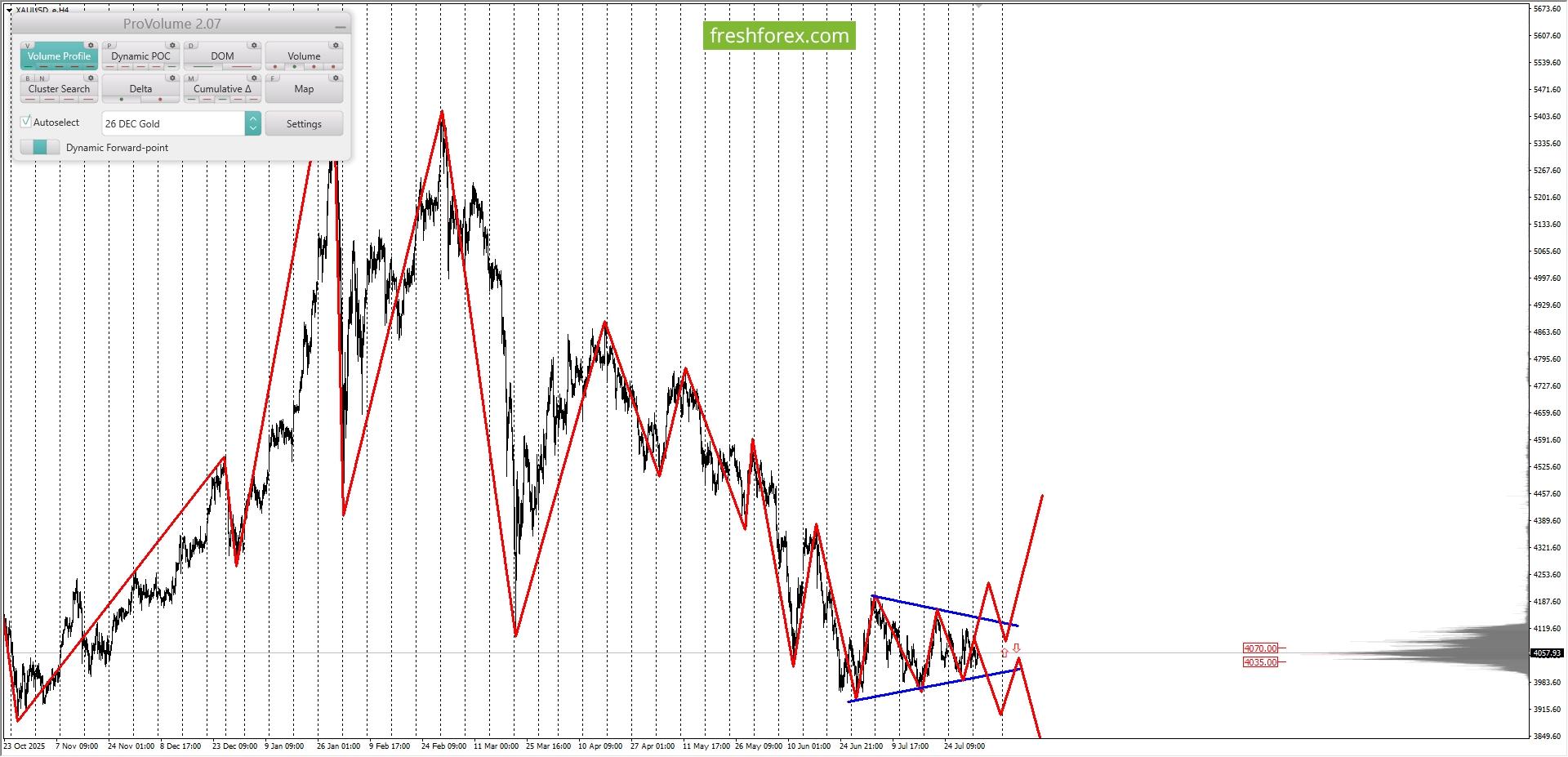
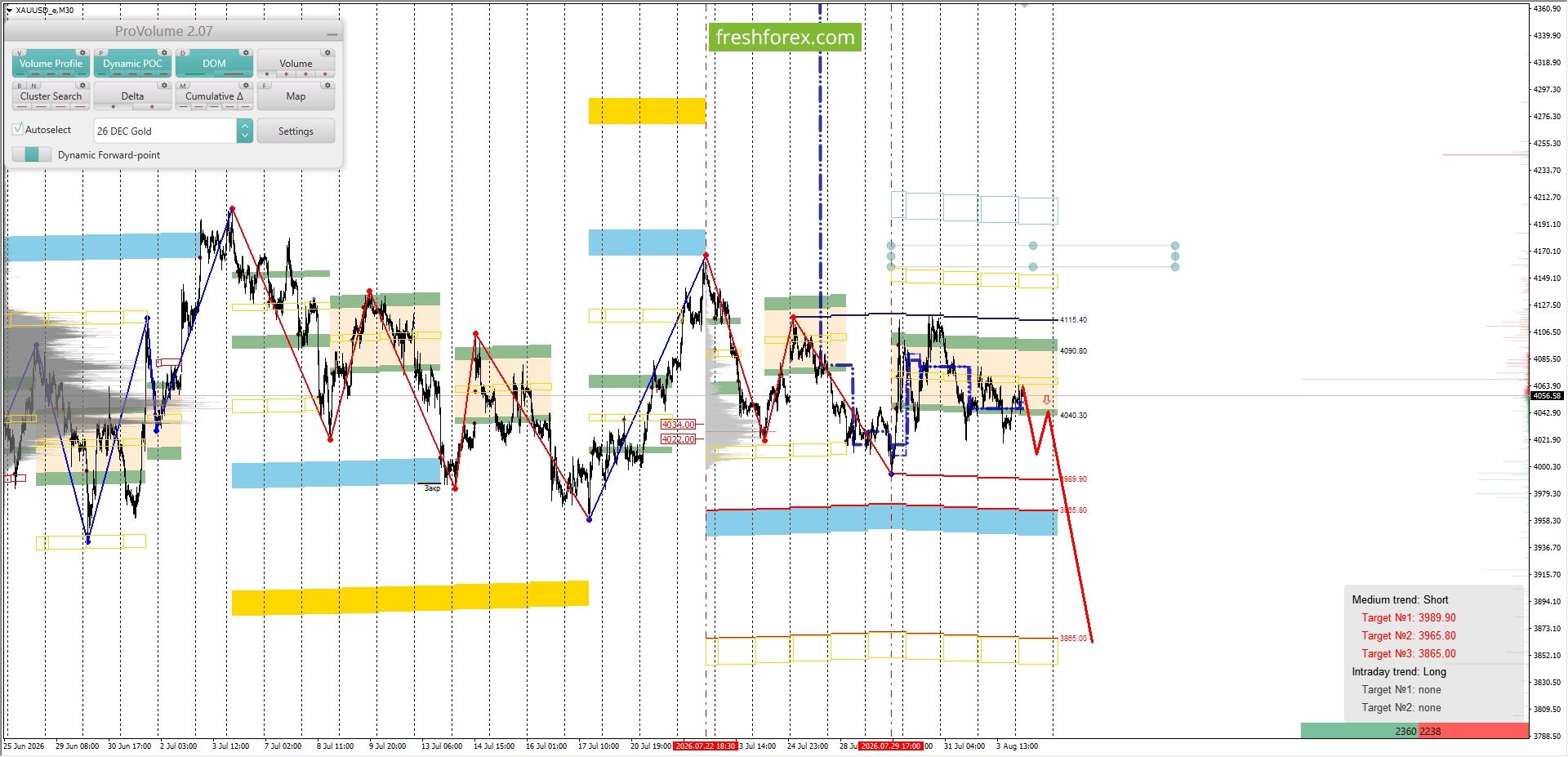
Analysis of margin levels for August 4, 2026 XAUUSD XAUUSD: SELL 4040.30–4090.80, TP1 3989.90, TP2 3865.00. Long-term trend: temporary uncertainty. The highest concentration of volumes in the current contract is located within the 4035.00–4070.00 range. XAUUSD is currently trading within this range, indicating temporary uncertainty. Only for our readers: mention the one-time promo code MR20 in the support chat and get +20% on your next deposit of any amount. The maximum bonus amount is $500. Only one promo code can be applied to a deposit at a time. Medium-term trend: bearish. The highest concentration of medium-term volumes is located within the 4022.00–4034.00 range. XAUUSD is currently trading above this range, indicating seller weakness. From the perspective of margin requirements, the favorable selling area is located between the 1/4 and 1/2 zones constructed from the low of July 29, 2026. The lower boundary of the 1/4 zone is 4040.30. The lower boundary of the 1/2 zone is 4090.80. Intraday target: a retest of the July 29, 2026 low at 3989.90. Medium-term target: a test of the lower boundary of the GWCZ at 3865.00. Trading idea: consider selling within the favorable price range once a reversal pattern forms. Sell: 4040.30–4090.80, Take Profit 1: 3989.90, Take Profit 2: 3865.00.
- Last week
-
 nothing joined the community
 -
HFMarkets (hfm.com): Market analysis services.
AllForexnews replied to AllForexnews's topic in Fundamental Analysis
Date: 3rd August 2026. US-Japan Yen Intervention and Iran Talks Reshape Global Markets. Global markets began the week with major price movements across currencies, commodities, bonds, and stock indices as traders reacted to two significant developments: coordinated US-Japan intervention in the Japanese yen and renewed diplomatic efforts between the United States and Iran. The intervention triggered a sharp recovery in the yen and increased volatility in USD/JPY, while hopes of a US-Iran agreement sent oil prices sharply lower. Falling energy prices also eased inflation concerns, supporting government bonds, gold, and US equity futures. For CFD traders, these developments create both opportunities and risks across forex, commodities, and global indices. US and Japan Join Forces to Support the Yen Japan confirmed that it had intervened in the foreign exchange market in coordination with the US Treasury after the yen reached its weakest level against the dollar in approximately four decades. This marked the first coordinated US-Japan intervention of its kind in 15 years and demonstrated that both governments are increasingly concerned about disorderly movements in the currency market. Japan is estimated to have spent approximately $53 billion during one day of intervention, potentially making it the country’s largest single-day currency operation on record. The exact size of the US contribution has not been confirmed. Following the joint action, the yen strengthened sharply, and USD/JPY briefly fell towards 155.23, its lowest level since early May. The pair had previously approached the 164 region during July. Japanese and US officials have also warned that they are prepared to intervene again should excessive volatility return. Why Did the US Reportedly Use Euros to Buy Yen? One of the most unusual aspects of the intervention was the reported decision by the US Treasury to sell euros rather than US dollars to purchase yen. Historically, the US has normally intervened directly through the dollar. However, selling dollars to buy yen could have created the impression that Washington was deliberately attempting to weaken its own currency. Such a move could conflict with the US government’s long-standing support for a strong dollar and raise questions about whether the country was seeking a competitive advantage through exchange-rate manipulation. Using euros allowed the US to support the Japanese currency without creating the same immediate downward pressure on the dollar. The euro is the world’s second most traded currency and accounted for approximately 29% of global foreign exchange turnover in the latest Bank for International Settlements survey. It is therefore liquid enough to be used in a large-scale intervention. However, the strategy may still indirectly affect the dollar over time if the US Treasury later needs to rebalance its foreign exchange reserves. Yen Short Positions Could Accelerate the Move The intervention came at a particularly sensitive time for speculative positioning. Before the operation, asset managers and leveraged funds had built their largest net short positions against the yen since 2024. Hedge funds’ bearish exposure was also close to its highest level since 2007. This positioning increases the risk of a short squeeze. When traders who have sold the yen begin closing their positions, they must buy the currency back. A large-scale unwinding of bearish positions could therefore amplify the yen’s recovery and push USD/JPY lower. Some analysts believe USD/JPY could remain under pressure around the 155 area. A move towards 150 may also become possible if speculative positioning shifts from net short to net long yen exposure. Nevertheless, intervention alone may not be enough to create a permanent change in direction. Can the Yen Continue Strengthening? The coordinated action has changed the short-term risk of betting against the yen, but longer-term fundamentals remain challenging. Several factors continue to weigh on the Japanese currency: The interest rate gap between Japan and the United States remains wide. Concerns continue over Japan’s fiscal position and government spending plans. Global geopolitical uncertainty remains elevated. Investors are still assessing whether the Bank of Japan will tighten monetary policy further. The Bank of Japan recently kept its benchmark interest rate unchanged at 1%, although Governor Kazuo Ueda indicated that policymakers would avoid falling behind inflationary developments. Market expectations for a September rate increase have risen, with overnight swaps suggesting an estimated 46% probability of a move, compared with around 30% one week earlier. However, if intervention successfully stabilises the currency, the Bank of Japan may feel less pressure to raise rates immediately. For sustained yen appreciation, traders may need to see additional BOJ tightening, lower US Treasury yields, or greater confidence in Japan’s fiscal outlook. Bond Markets Are Another Reason for US Involvement The US decision to support Japan may not have been driven solely by foreign exchange concerns. Japan is the largest foreign holder of US government debt. To finance a large-scale yen intervention, Japanese authorities could theoretically sell part of their US Treasury holdings. Heavy Treasury sales could push US bond prices lower and yields higher at a time when markets are already concerned about inflation and government borrowing costs. The Federal Reserve has a facility that allows Japan to borrow dollars using its Treasury holdings as collateral. Japan can reportedly access up to $60 billion per day through this mechanism without directly selling its US bonds. This arrangement allows Japanese authorities to obtain liquidity while limiting the impact on Treasury yields. The intervention therefore serves two purposes: supporting the yen and reducing the risk that Japan’s actions create instability in the US bond market. Iran Talks Send Oil Prices Sharply Lower Currency intervention was not the only major market driver. US President Donald Trump announced that fresh negotiations with Iran would begin after cancelling a planned military attack. The decision followed requests from regional allies, including Saudi Arabia, to prioritise diplomacy. The discussions are expected to focus partly on reopening the Strait of Hormuz, one of the world’s most important energy shipping routes. The conflict and the disruption to shipping through the strait had created concerns about global oil supplies and pushed energy prices higher. Following the announcement, Brent crude for October delivery fell as much as 7.3% to approximately $81.55 per barrel. The decline came after oil prices had risen by more than 20% during July. For oil CFD traders, the next significant catalyst will be whether negotiations produce a concrete agreement to reopen the shipping route. A successful deal could place further downward pressure on crude prices, while a breakdown in talks could quickly restore the geopolitical risk premium. Lower Oil Prices Ease Inflation Concerns The sharp fall in oil prices had an immediate impact beyond the energy market. Higher fuel and transportation costs can contribute to broader inflation, potentially forcing central banks to maintain higher interest rates. A sustained decline in crude prices could therefore reduce some of the pressure on the Federal Reserve to tighten monetary policy further. US Treasuries moved higher following the oil decline, with the 10-year yield falling by around four basis points to approximately 4.69%. The move came after the benchmark yield reached its highest level since January 2025 during the previous week. Lower yields can support assets such as technology stocks and gold because they reduce borrowing costs and lower the opportunity cost of holding non-yielding assets. Gold Rises Despite Reduced Geopolitical Risk Gold advanced towards the $4,070 region as traders assessed the potential impact of lower oil prices on inflation and US monetary policy. Normally, easing geopolitical tensions can reduce demand for traditional safe-haven assets. However, the decline in energy prices also reduced expectations that persistent inflation would force the Federal Reserve to raise interest rates aggressively. This created a more supportive interest rate environment for bullion. Gold remains more than 20% below the levels recorded before the US-Iran conflict began, as rising energy prices and higher bond yields had previously weighed on the precious metal. The next direction for gold is likely to depend on three main factors: The outcome of the US-Iran negotiations. Changes in Treasury yields. Expectations for the Federal Reserve’s September decision. If diplomacy succeeds and yields continue falling, gold could receive support from a less restrictive interest rate outlook. However, a breakdown in talks could produce a more complicated reaction, potentially increasing safe-haven demand while also reviving inflation concerns. Stock Markets React to Lower Oil and AI Volatility US and European equity futures moved higher as falling oil prices improved market sentiment. NASDAQ 100 futures and European stock futures advanced by approximately 0.8%, supported by lower inflation concerns and declining bond yields. Technology stocks are particularly sensitive to interest rate expectations because their valuations often depend heavily on future earnings. Lower yields generally increase the present value of those expected earnings. Asian stock markets produced a more mixed performance. South Korea’s KOSPI Index fell by more than 5%, reversing part of the previous session’s record 18% rally. Samsung Electronics and SK Hynix declined by approximately 8%, contributing to a broader fall in regional semiconductor stocks. The Nikkei 225 also moved lower as the stronger yen created pressure for Japanese exporters. A stronger domestic currency can reduce the value of overseas earnings when converted back into yen and make Japanese products more expensive internationally. Meanwhile, Chinese technology shares received some support from renewed enthusiasm surrounding artificial intelligence developments. What Should Traders Watch Next? The immediate market outlook will depend on several interconnected developments. In forex markets, traders will closely monitor whether USD/JPY can remain above the 155 area and whether authorities conduct another round of intervention. Sudden price movements remain possible because officials have clearly indicated that they are willing to act again. EUR/JPY may also experience increased volatility because the US reportedly used euros during the intervention. EUR/USD could become relevant if reserve rebalancing creates additional euro or dollar flows. In commodities, the focus will remain on the US-Iran negotiations and any announcement concerning the Strait of Hormuz. Oil markets may remain highly sensitive to headlines, with failed talks potentially reversing the latest decline. Gold traders should monitor the relationship between crude prices, inflation expectations, and Treasury yields. Lower yields may support bullion even if geopolitical tensions ease. For equity traders, falling energy costs could provide relief for consumer and technology sectors. However, the stronger yen may continue to weigh on Japanese exporters, while volatility in semiconductor stocks remains a major risk for the NASDAQ and Asian indices. Key Market Takeaways The US and Japan have demonstrated that they are prepared to take significant action to prevent excessive yen weakness. The intervention may trigger further short covering and keep USD/JPY volatile, but sustained yen strength will probably require support from monetary policy and economic fundamentals. At the same time, renewed US-Iran diplomacy has reduced immediate concerns about oil supplies, sending crude prices sharply lower and easing inflation fears. These developments have created a cross-asset reaction: the yen strengthened, oil declined, government bonds rose, gold advanced, and US equity futures moved higher. For CFD traders, the market remains highly headline-driven. Currency intervention and geopolitical negotiations can trigger sudden price gaps, rapid reversals, and increased spreads. Careful risk management remains essential while markets assess whether these developments represent lasting changes or only temporary relief. Always trade with strict risk management. Your capital is the single most important aspect of your trading business. Please note that times displayed based on local time zone and are from time of writing this report. Click HERE to access the full HFM Economic calendar. Want to learn to trade and analyse the markets? Join our webinars and get analysis and trading ideas combined with better understanding of how markets work. Click HERE to register for FREE! Click HERE to READ more Market news. Andria Pichidi HFMarkets Disclaimer: This material is provided as a general marketing communication for information purposes only and does not constitute an independent investment research. Nothing in this communication contains, or should be considered as containing, an investment advice or an investment recommendation or a solicitation for the purpose of buying or selling of any financial instrument. All information provided is gathered from reputable sources and any information containing an indication of past performance is not a guarantee or reliable indicator of future performance. Users acknowledge that any investment in Leveraged Products is characterized by a certain degree of uncertainty and that any investment of this nature involves a high level of risk for which the users are solely responsible and liable. We assume no liability for any loss arising from any investment made based on the information provided in this communication. This communication must not be reproduced or further distributed without our prior written permission. -
Fundamental Market Analysis for August 3, 2026 EURUSD Event to watch today: 17:00 EET. USD — ISM Manufacturing Index EURUSD: The euro remains supported after the ECB decided to keep its key interest rates unchanged in July. Maintaining the existing policy settings gave the market no reason to expect immediate monetary easing, allowing the single currency to retain some demand. However, the Federal Reserve’s rate remains higher, and the European backdrop alone is not strong enough to generate sustained gains. Only for our readers: mention the one-time promo code GIFT20 in the support chat and get +20% on your next deposit of any amount. The maximum bonus amount is $500. Only one promo code can be applied to a deposit at a time. The main driver of the current session is US dollar weakness following confirmed coordinated operations by the United States and Japan to support the yen. Pressure on the dollar has spread beyond USDJPY: the US Dollar Index remains lower after a notable weekly decline, while the yield on the 10-year US Treasury note has fallen. This combination supports EURUSD despite the interest rate differential remaining in favor of the United States. The market is awaiting US manufacturing activity data, which could alter expectations regarding the Federal Reserve’s next steps. A strong report may restore some demand for the dollar, but until its release, the weakening impulse in the US currency remains dominant. If the current fundamental backdrop persists, the base-case scenario allows for further gains in EURUSD. Trading idea: BUY 1.1530, SL 1.1495, TP 1.1605
-
Market Technical Analysis by RoboForex
RBFX Support replied to RBFX Support's topic in Technical Analysis
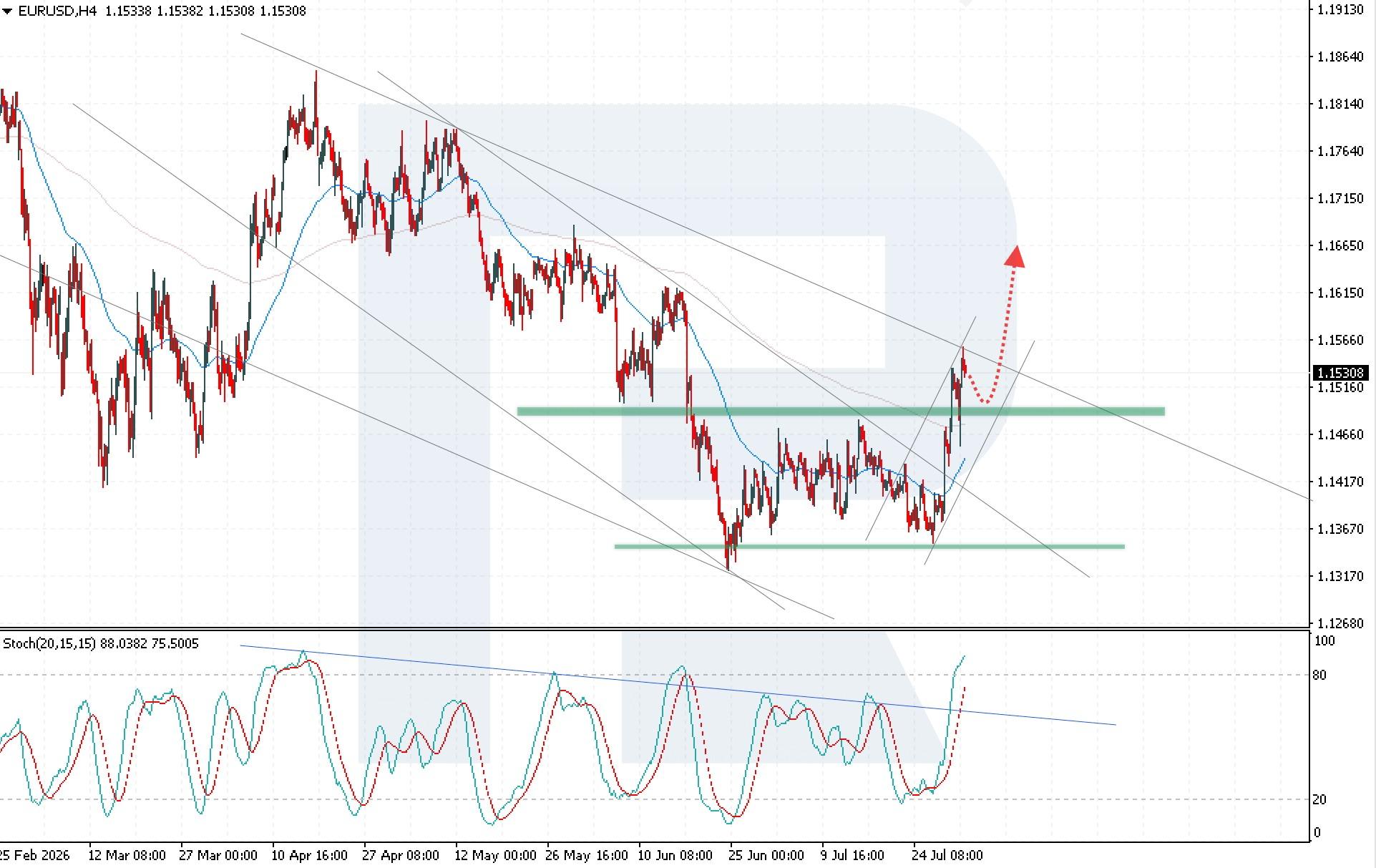
EURUSD strengthens as market rate expectations shift The EURUSD pair is correcting after Friday’s rise but maintains upward momentum thanks to improving eurozone economic indicators. The rate currently stands at 1.1530. Technical outlook The EURUSD pair rebounded from the upper boundary of the descending channel, with buyers gaining a foothold above the EMA-65, indicating continued bullish momentum in the short term. Today’s EURUSD forecast suggests a resumption of the upward move, with a potential target at 1.1665. The EURUSD pair maintains bullish momentum after breaking above the key resistance level and amid an improving fundamental backdrop for the euro. Read more - EURUSD Forecast Attention! Forecasts presented in this section only reflect the author’s private opinion and should not be considered as guidance for trading. RoboForex bears no responsibility for trading results based on trading recommendations described in these analytical reviews. Sincerely, The RoboForex Team
-
roboforex Market Fundamental Analysis by RoboForex
RBFX Support replied to RBFX Support's topic in Fundamental Analysis
Bitcoin awaits the week’s key trigger Easing tensions in the Middle East provided temporary support for BTCUSD, with the price currently hovering at 62,620. BTCUSD forecast: key takeaways Investors have begun to return to riskier asset classes Public companies continue to increase their Bitcoin reserves Improving global risk appetite is supporting the cryptocurrency market Fundamental analysis Today, Bitcoin is trading near 62,620 USD, remaining under pressure after failing to consolidate above the 63,550 USD resistance level. Sellers retain the initiative, while the market has shifted into wait-and-see mode ahead of new macroeconomic drivers. Following the US president’s statement that he was prepared to continue diplomatic contacts with Iran, investors began to return to riskier asset classes. Reduced concerns about further escalation of the conflict dampened demand for safe-haven instruments and supported the cryptocurrency market, including Bitcoin. RoboForex Market Analysis & Forex Forecasts Attention! Forecasts presented in this section only reflect the author’s private opinion and should not be considered as guidance for trading. RoboForex bears no responsibility for trading results based on trading recommendations described in these analytical reviews. Sincerely, The RoboForex Team -
True many times I paid somebody from iran, 2 times $50 each and I did not recover my crypto from paypal
-
Welcome to Indo-Investasi.com. Please feel free to browse around and get to know the others. If you have any questions please don't hesitate to ask.