⤴️-Paid Ad- Check advertising disclaimer here. Add your banner here.🔥
All Activity
- Today
-
Welcome to Indo-Investasi.com. Please feel free to browse around and get to know the others. If you have any questions please don't hesitate to ask.
-
 ranasalman joined the community
-
 mostbetpk joined the community
-
 Weekly review: XAUUSD, #SP500, #BRENT | November 20, 2026 XAUUSD: SELL 3872.79, SL 3909.29, TP 3788.84 Gold starts the week after a 4.5% decline in the previous one. Higher-than-expected US inflation strengthened expectations of a December Fed rate hike. The market has already largely priced in a quarter-point increase itself. For gold, it is now more important whether the pressure from a strong dollar and high bond yields will persist, which increases the cost of holding the metal. Kevin Warsh's speech and the October FOMC meeting minutes will help assess how likely further tightening is after December. If new signals keep yields at elevated levels, XAUUSD retains room for decline. After significant losses last week, the metal is sensitive to a reversal: a weakening dollar and falling yields could boost demand for gold. Trading idea: SELL 3872.79, SL 3909.29, TP 3788.84 #SP500: BUY 7548, SL 7472, TP 7753 On Tuesday, Nvidia will publish quarterly results. For the US market, the company's forecast is particularly important as it will show whether demand for AI computing infrastructure persists. By Friday, 91% of S&P 500 companies had reported results, and the aggregate estimate for third-quarter profit growth reached 31.9% year-on-year. This backdrop provides support for the index beyond just the largest tech companies. High US bond yields raise investors' requirements for profits, especially for highly valued companies. A strong Nvidia forecast could support the rise of #SP500 through the end of the week, provided the debt market does not react with new yield hikes following the FOMC minutes. Weak demand forecasts for AI equipment or renewed yield increases would cast doubt on this scenario. Trading idea: BUY 7548, SL 7472, TP 7753 #BRENT: SELL 93.51, SL 96.01, TP 88.01 The restoration of supplies through the Strait of Hormuz changes the oil market balance. The IEA now expects global supply to exceed demand by 1.7 million barrels per day in the fourth quarter. The rise in US commercial crude oil inventories by 4.7 million barrels for the week ending November 6 reinforced this signal, although inventory volumes remain below the five-year seasonal average. Global land-based stocks, according to the IEA, continued to decline even as oil volumes in transit increased. Therefore, transport disruptions can still quickly bring back the risk premium. New US inventory data will show whether the domestic balance supports the downside scenario. With stable supplies through the strait, pressure on #BRENT may persist until the end of the week. Trading idea: SELL 93.51, SL 96.01, TP 88.01 Connect Drawdown bonus 101% and trade with double your deposit! Bonus funds will help you increase your profits or withstand a sudden drawdown! You can find more analytical information on our website.
-

Market Technical Analysis by RoboForex
RBFX Support replied to RBFX Support's topic in Technical Analysis
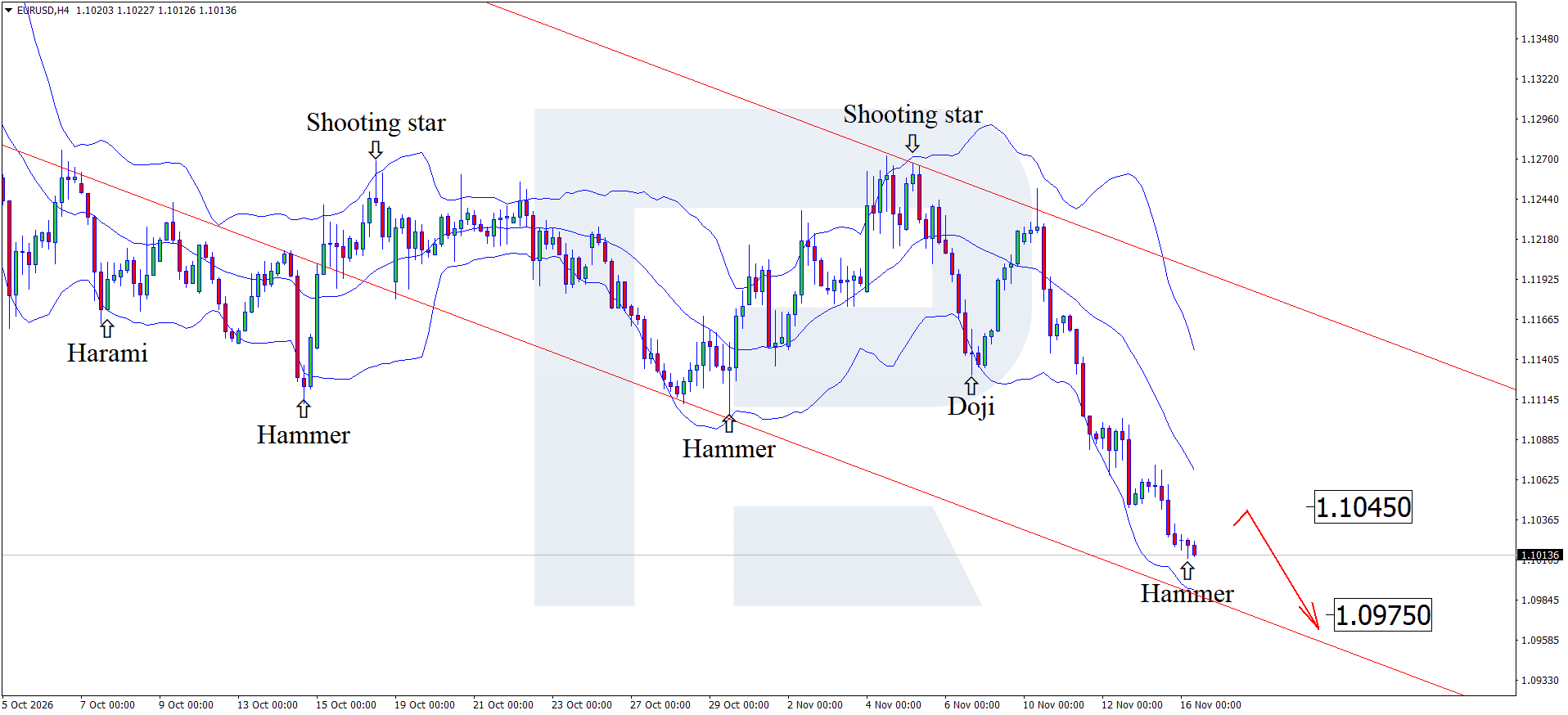
The dollar refuses to retreat: what is keeping EURUSD under pressure? The euro began the trading week with another wave of declines, while the release of the FOMC meeting minutes could add further pressure. The EURUSD rate currently stands at 1.1013. Technical outlook On the H4 chart, the EURUSD pair has formed a Hammer reversal pattern near the lower Bollinger Band. At this stage, the price could form a corrective wave following the signal, with the 1.1045 resistance level as the target for the pullback. The euro remains under pressure from fundamental factors and expectations of a Federal Reserve interest rate hike. Read more - EURUSD Forecast Attention! Forecasts presented in this section only reflect the author’s private opinion and should not be considered as guidance for trading. RoboForex bears no responsibility for trading results based on trading recommendations described in these analytical reviews. Sincerely, The RoboForex Team
-
roboforex Market Fundamental Analysis by RoboForex
RBFX Support replied to RBFX Support's topic in Fundamental Analysis
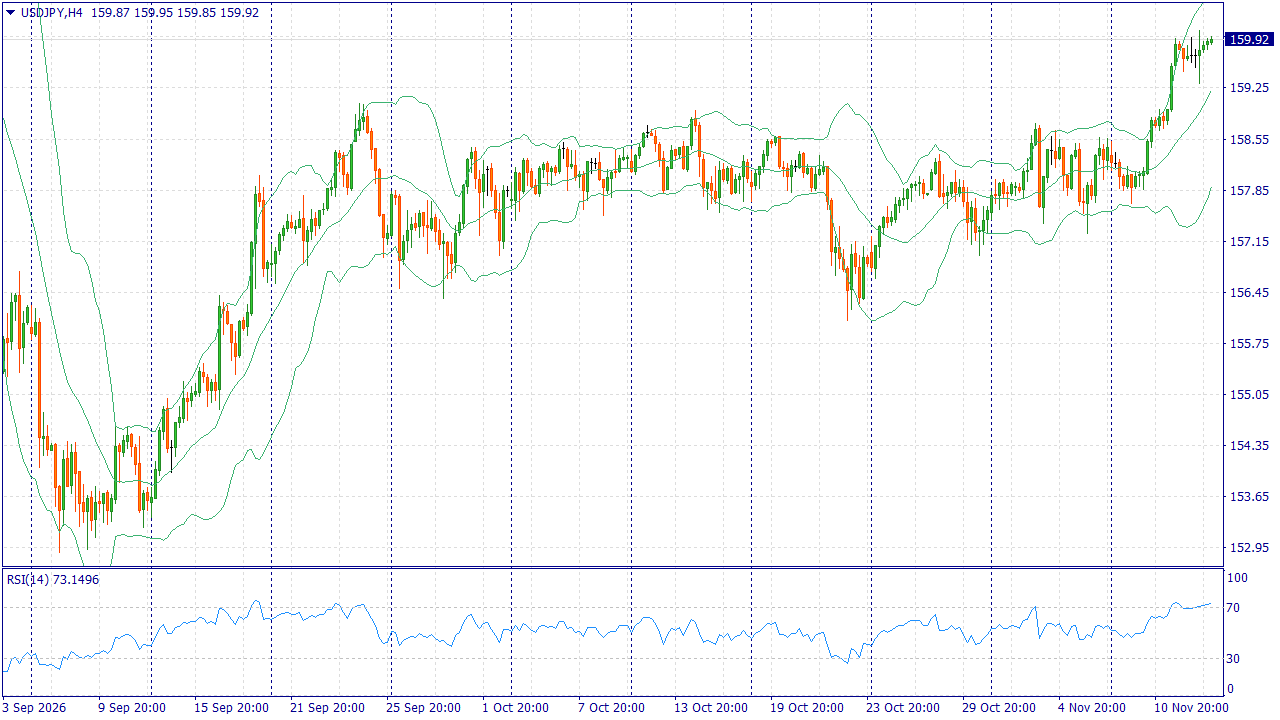
USDJPY poised for a correction: Japanese authorities warn the market The USDJPY rate is retreating from the 160.00 area amid renewed warnings from Japanese authorities about possible intervention in the foreign exchange market. However, weak Japanese GDP figures and hawkish expectations for Federal Reserve policy continue to support the dollar. USDJPY forecast: key takeaways Japan's economy barely grew in Q3, but fresh warnings from the Ministry of Finance supported the yen near the psychologically important 160.00 level The market estimates the likelihood of a Federal Reserve rate hike in December at 93.5%, providing fundamental support for the dollar USDJPY forecast for 16 November 2026: 159.08 Fundamental analysis The USDJPY pair is retreating towards the 159.70 area after another attempt to approach the psychologically important 160.00 level. The Japanese yen strengthened despite weaker-than-expected economic data, as the market once again increased its bets on possible currency intervention by Tokyo. Preliminary data showed that Japan's economy was virtually unchanged in Q3, following growth of 0.4% in the previous quarter. RoboForex Market Analysis & Forex Forecasts Attention! Forecasts presented in this section only reflect the author’s private opinion and should not be considered as guidance for trading. RoboForex bears no responsibility for trading results based on trading recommendations described in these analytical reviews. Sincerely, The RoboForex Team -

HFMarkets (hfm.com): Market analysis services.
AllForexnews replied to AllForexnews's topic in Fundamental Analysis
Date: 16th November 2026. AI Stocks Face a Critical Week: Nvidia, Anthropic and the Fed Could Trigger Further Volatility. Global stock markets continue to decline as investors question whether the artificial intelligence boom can sustain its extraordinary growth. Technology stocks remain under significant pressure, with Nvidia’s upcoming earnings and Anthropic’s anticipated IPO potentially determining the next direction of the AI sector. However, the sell-off extends beyond concerns surrounding artificial intelligence. Higher Treasury yields, expectations of further Federal Reserve interest rate hikes, disappointing economic data from Asia, and geopolitical uncertainty are contributing to the negative sentiment. With several major events scheduled this week, could financial markets experience another wave of selling, or are conditions developing for a recovery? Nvidia: Almost $2 Trillion Lost Ahead of Earnings Nvidia has experienced a sharp decline in market value, falling from approximately $5.8 trillion in early October to $3.9 trillion by Friday. This represents a loss of almost $1.9 trillion as investors increasingly question the sustainability of AI-related valuations. The decline has accelerated following the unexpected resignation of CEO Jensen Huang amid allegations involving his personal conduct and associated national security concerns. His departure has created uncertainty over the company’s leadership and long-term strategic direction.Reports suggesting Huang could potentially return have provided some optimism, although investors remain concerned about corporate governance and possible regulatory implications. Attention now turns to Nvidia’s quarterly earnings, scheduled for Tuesday, 17 November. Analysts expect revenue of approximately $109 billion and earnings growth of 90%, highlighting the exceptional financial performance investors continue to anticipate. However, Nvidia faces an unusual challenge. Even strong earnings may not be sufficient to restore investor confidence. Market participants will pay particular attention to future revenue guidance, demand for AI infrastructure, and management’s ability to maintain Nvidia’s competitive advantage. A stronger-than-expected report accompanied by positive guidance could support a recovery across the semiconductor sector and NASDAQ. Conversely, disappointing forecasts or continued leadership uncertainty could trigger another wave of selling. Anthropic IPO: A $1.4 Trillion Test of AI Investor Confidence? Adding to the importance of this week is the anticipated stock market debut of Anthropic, developer of the Claude AI chatbot. The company is reportedly preparing for an IPO on Thursday, 19 November, with a potential valuation reaching $1.4 trillion. The timing is particularly significant. The listing arrives as investors reassess the valuations of companies benefiting from the rapid expansion of artificial intelligence. Strong institutional demand and a successful trading debut could demonstrate that confidence in the AI sector remains resilient despite the recent sell-off. However, weaker demand or significant selling after the listing could reinforce concerns that AI-related companies have become overvalued. The two events are closely connected. Nvidia’s earnings reaction could influence broader sentiment towards artificial intelligence immediately before Anthropic’s expected debut. For traders, this makes the NASDAQ 100 and other technology-related instruments particularly important to monitor. Asian Markets Extend Losses as Semiconductor Stocks Decline The negative sentiment surrounding artificial intelligence is already affecting global equity markets. On Monday, South Korea’s KOSPI declined approximately 3%, Japan's Nikkei 225 fell 1.7%, and Taiwan's stock market dropped more than 4%. The weakness demonstrates how closely connected the global AI industry has become. Nvidia relies on semiconductor manufacturers and technology suppliers across several countries, meaning concerns about future AI investment can affect entire supply chains. However, technology-related concerns are not the only challenge facing Asian markets. Japan’s economy unexpectedly contracted during the latest quarter, while China’s retail sales and industrial production figures disappointed expectations, indicating weaker economic momentum. Interestingly, Hong Kong’s Hang Seng Index moved higher despite the wider regional decline. This suggests the selling pressure remains particularly concentrated in AI-related companies rather than affecting all Asian stocks equally. Federal Reserve: Treasury Yields Above 5% Pressure Global Markets Alongside the AI sell-off, rising US Treasury yields are creating another challenge for financial markets. The US 10-year Treasury yield has climbed above the psychological 5% level, reaching approximately 5.14%, while the two-year yield is trading around 4.87%. The increase follows stronger-than-expected US consumer inflation figures and expectations that the Federal Reserve will continue raising interest rates. Markets are currently pricing in a 25-basis-point rate hike in December, while the probability of a larger 50-basis-point increase has declined from 12% to approximately 6%. Higher yields create additional pressure on technology stocks because they reduce the present value of expected future earnings. This is particularly relevant for AI companies trading at high valuations. At the same time, higher bond yields are supporting the US Dollar, with the US Dollar Index trading around 103.42 after rising approximately 1.1% last week. The stronger Dollar and higher yields have also weighed on gold. Despite growing uncertainty across equity markets, gold declined approximately 4.6% last week and traded near $3,872 per ounce on Monday. This is an important development because it demonstrates that safe-haven demand does not always translate into higher gold prices. When interest rates and bond yields rise sharply, investors may favour interest-bearing assets instead. The Federal Reserve’s October meeting minutes, scheduled for Wednesday, 18 November, could provide further insight into policymakers’ willingness to continue tightening monetary policy. A more hawkish outlook could strengthen the Dollar and maintain pressure on both equities and gold. Alternatively, indications that policymakers are becoming more cautious could support a recovery in risk-sensitive assets. Oil Prices Fall as Global Supply Concerns Begin to Ease Oil is steady as investors increasingly consider the possibility of a return to global oversupply. Brent crude is trading near $98 per barrel, while West Texas Intermediate remains around $88, despite continued geopolitical tensions in the Middle East. The International Energy Agency recently indicated that the oil market could return to surplus during the fourth quarter as higher energy prices weaken demand and regional supplies recover. JPMorgan estimates suggest the global oil market returned to a surplus of approximately 1.1 million barrels per day in September, increasing to 1.4 million barrels per day in October. These developments represent a significant change in expectations. Previously, investors focused primarily on the possibility of prolonged shortages caused by the conflict involving Iran and disruptions around the Strait of Hormuz. Now, attention is shifting towards weaker demand and recovering supply. Nevertheless, the risk of renewed disruption remains elevated. Attacks affecting shipping routes, ongoing regional instability, and reliance on alternative export routes could quickly reverse the downward trend. For traders, the challenge is determining whether the emerging oversupply narrative will continue to outweigh geopolitical risks. Trump, Xi and Putin: Geopolitics Could Influence Market Sentiment Another major event attracting investors' attention is the reported meeting between US President Donald Trump, Chinese President Xi Jinping, and Russian President Vladimir Putin. The leaders are expected to meet on Thursday during the APEC gathering in Shenzhen, with discussions potentially covering nuclear arms reduction and the conflict involving Iran. The meeting could have implications for financial markets, particularly energy prices, international trade, and technology-related restrictions. Any progress towards reducing tensions in the Middle East could strengthen expectations of recovering oil supplies and potentially place additional downward pressure on prices. Meanwhile, discussions involving China could influence sentiment towards semiconductor companies, particularly if restrictions affecting the technology sector become part of negotiations. However, the absence of concrete agreements could leave markets exposed to further geopolitical uncertainty. What Could Determine Market Direction This Week? Financial markets are approaching several potentially significant catalysts, with the technology sector and Federal Reserve likely to remain the primary drivers. The first major test will be Nvidia’s earnings. Strong financial results and reassuring forward guidance could support a short-term rebound, particularly if investors become more confident about the company’s leadership. Anthropic’s anticipated IPO will provide another indication of whether institutional investors remain willing to commit substantial capital to AI companies at elevated valuations. Meanwhile, the Federal Reserve’s meeting minutes could determine whether higher Treasury yields and a stronger Dollar continue placing pressure on stocks and gold. Beyond the United States, weak economic data from Japan and China, geopolitical developments’ and changing oil supply expectations could create additional volatility. For traders, the most important consideration is whether improving corporate earnings can offset the challenges created by higher interest rates and weakening investor confidence. The question is no longer simply whether artificial intelligence will continue growing, but whether that growth can justify current stock valuations in an increasingly challenging financial environment. Always trade with strict risk management. Your capital is the single most important aspect of your trading business. Please note that times displayed based on local time zone and are from time of writing this report. Click HERE to access the full HFM Economic calendar. Want to learn to trade and analyse the markets? Join our webinars and get analysis and trading ideas combined with better understanding of how markets work. Click HERE to register for FREE! Click HERE to READ more Market news. Andria Pichidi HFMarkets Disclaimer: This material is provided as a general marketing communication for information purposes only and does not constitute an independent investment research. Nothing in this communication contains, or should be considered as containing, an investment advice or an investment recommendation or a solicitation for the purpose of buying or selling of any financial instrument. All information provided is gathered from reputable sources and any information containing an indication of past performance is not a guarantee or reliable indicator of future performance. Users acknowledge that any investment in Leveraged Products is characterized by a certain degree of uncertainty and that any investment of this nature involves a high level of risk for which the users are solely responsible and liable. We assume no liability for any loss arising from any investment made based on the information provided in this communication. This communication must not be reproduced or further distributed without our prior written permission. -
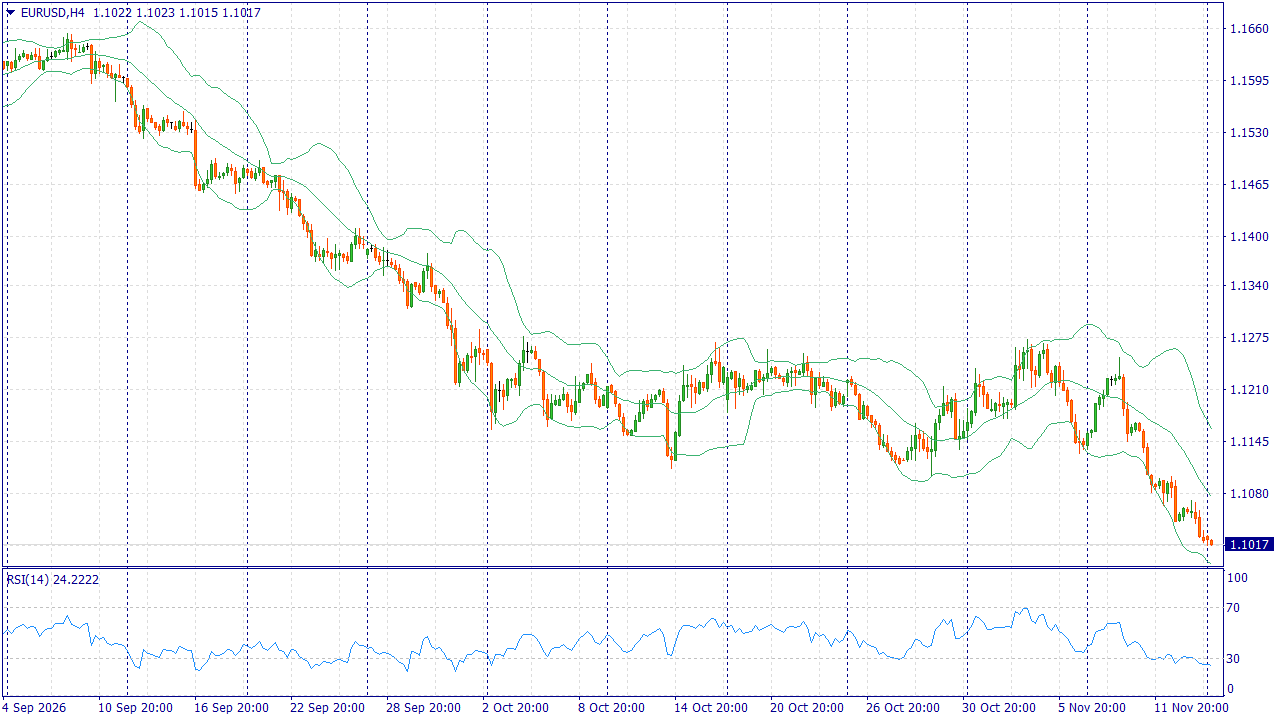
Fundamental Market Analysis for November 16, 2026 EURUSD Event to watch today: 19:00 EET. USD - Federal Reserve Board Chair Kevin Warsh will deliver a speech EURUSD: The Eurozone economy grew by 0.4% in the third quarter after 0.6% in the second, and employment remained unchanged over the quarter. Friday's Eurostat estimate confirmed the preliminary GDP growth rate. Growth gives the ECB room to tackle inflation, but slowing economic activity and lack of job gains are tempering expectations for a series of rate hikes. According to a Reuters poll, economists expect the deposit rate to be raised to 2.75% in December. In the US, producer prices rose by 0.3% month-on-month in October. Combined with previously released strong consumer inflation data, this maintains arguments for tight Fed policy. The dollar has already strengthened for several sessions in a row, and rate futures mainly price in a 25 basis point hike in December. Therefore, signals regarding Fed policy after December are more important for the continuation of the move. Today, investors will watch whether Kevin Warsh addresses inflation and rate prospects in his speech at the productivity and employment conference. Softer signals could lower US yields and help the euro. As long as the market retains grounds to expect further tightening in the US, the base case allows for a decline in EURUSD. Trading idea: SELL 1.1020, SL 1.1040, TP 1.0975 Connect Drawdown bonus 101% and trade with double your deposit! Bonus funds will help you increase your profits or withstand a sudden drawdown! You can find more analytical information on our website.
- Yesterday
-
 iman joined the community
- Last week
-
 enzzino joined the community
-
roboforex Market Fundamental Analysis by RoboForex
RBFX Support replied to RBFX Support's topic in Fundamental Analysis
EURUSD slumps towards 1.1050: inflation once again supports the dollar The EURUSD rate is falling for the fourth consecutive session and testing a key support level at 1.1044 amid a stronger dollar, elevated US inflation, and growing expectations of further Federal Reserve interest rate hikes. EURUSD forecast: key takeaways High US inflation strengthened expectations of a Federal Reserve interest rate hike in December and bolstered the dollar Rising oil prices following fresh hawkish statements from the US on Iran are once again increasing inflation risks EURUSD forecast for 13 November 2026: 1.1000 Fundamental analysis The EURUSD rate is falling for the fourth consecutive session and is currently trading at 1.1058. The pair remains under pressure as the dollar strengthens following higher-than-expected US inflation and growing expectations of further Federal Reserve monetary policy tightening. The CPI data released earlier this week fuelled expectations of a December interest rate hike. Federal Reserve official Christopher Waller suggested that a 50-basis-point increase could be possible if core inflation remains elevated. RoboForex Market Analysis & Forex Forecasts Attention! Forecasts presented in this section only reflect the author’s private opinion and should not be considered as guidance for trading. RoboForex bears no responsibility for trading results based on trading recommendations described in these analytical reviews. Sincerely, The RoboForex Team -
Market Technical Analysis by RoboForex
RBFX Support replied to RBFX Support's topic in Technical Analysis
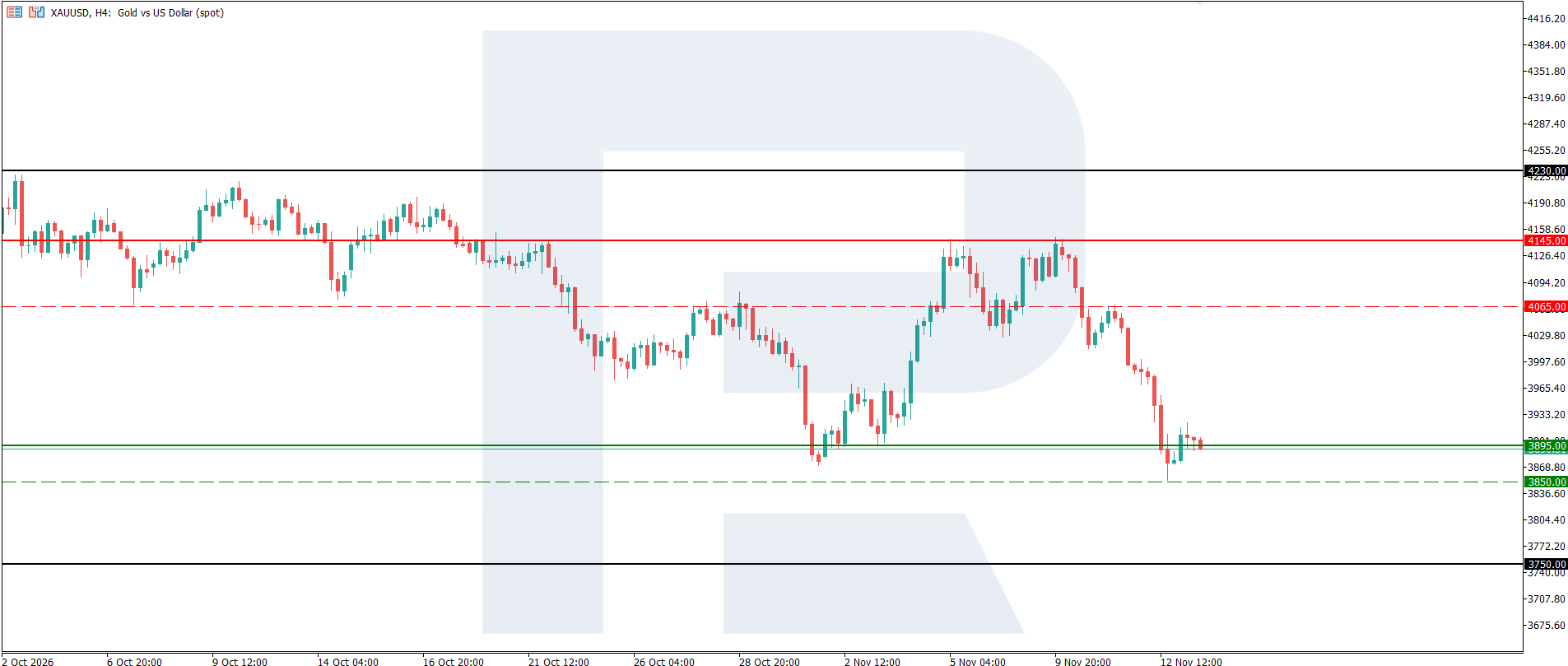
Rising US inflation weighs on gold: XAUUSD falls below 4,000 Gold prices continue to fall sharply amid a stronger US dollar, rising US government bond yields, and growing expectations of further Federal Reserve monetary policy tightening. Technical outlook Within its sideways channel, XAUUSD has once again moved towards the lower boundary. On the D1 chart, a resistance level has formed at 4,145. Support at 3,895 has been broken, and a new support level has yet to form. The fundamental backdrop for gold remains largely unfavourable. Read more - Gold Forecast Attention! Forecasts presented in this section only reflect the author’s private opinion and should not be considered as guidance for trading. RoboForex bears no responsibility for trading results based on trading recommendations described in these analytical reviews. Sincerely, The RoboForex Team
-
HFMarkets (hfm.com): Market analysis services.
AllForexnews replied to AllForexnews's topic in Fundamental Analysis
Date: 13th November 2026. Nvidia Stock Outlook: Risks After Jensen Huang's Exit. The Nvidia stock outlook has become increasingly uncertain following the resignation of Jensen Huang, the company's co-founder and chief executive for more than three decades. His departure comes at a difficult moment for the semiconductor giant. Investors were already questioning the sustainability of extraordinary spending on artificial intelligence infrastructure and the valuations attached to the companies benefiting from it. Now Nvidia faces a leadership transition alongside a sharp stock market correction. Shares have fallen more than 30% from their October record, while the company has lost its position as the world's most valuable publicly traded business. The central question for investors is whether Nvidia can preserve its competitive advantage in artificial intelligence without the executive who helped establish it as an industry leader. Nvidia Stock Falls 31.7% From Its Record High Nvidia's recent sell-off highlights how quickly investor expectations can change, even for a company reporting exceptional revenue growth. On 6 October 2026, Nvidia shares reached an all-time intraday high of $243.37. By the close of trading on 12 November, the stock had fallen to $166.19, representing a decline of approximately 31.7% from that peak. Thursday's trading session was particularly volatile. The share price briefly touched $148.80, approximately 14.3% below the previous closing price. However, Nvidia recovered a significant portion of those losses and ended the session down 4.34%. The intraday recovery suggests investors were far from unanimous about how to value the company after Huang's departure. Nevertheless, a rebound within a single trading session does not necessarily indicate that the broader correction has ended. The key distinction is between falling share prices and deteriorating business fundamentals. Nvidia's market value can decline because investors become less willing to pay a premium for its future earnings, even if the underlying business continues to expand. That distinction is particularly important when assessing the company's outlook. Apple Overtakes Nvidia as the World's Most Valuable Company Another significant development has been Nvidia's loss of its position at the top of the global market-capitalisation rankings. On 3 November, Nvidia had been the world's most valuable listed company, with a market value of approximately $4.99 trillion. The subsequent decline changed that ranking. At the US market close on 12 November 2026, the approximate market capitalisations of the three technology giants were: Nvidia therefore ranked second behind Apple, remaining ahead of Microsoft. Earlier in the day, pre-market projections had suggested Nvidia might fall into third place. However, those estimates did not reflect its eventual closing position. The change illustrates the scale of the repricing taking place across the technology sector. More importantly, it raises a fundamental question: is Wall Street responding to a temporary leadership shock, or reassessing the assumptions behind Nvidia's long-term valuation? Why Jensen Huang Matters So Much to Nvidia and AI Jensen Huang's departure carries unusual significance because his influence extended well beyond the responsibilities of a conventional chief executive. Since co-founding Nvidia in 1993, Huang helped transform the company from a graphics processor manufacturer into one of the most important providers of computing infrastructure for artificial intelligence. The company's competitive position rests on more than its graphics processing units. Nvidia has developed an integrated ecosystem combining advanced processors, high-speed networking, systems software and its CUDA programming platform. This infrastructure supports the training and deployment of sophisticated AI models used by cloud computing providers, technology companies, research institutions and emerging AI businesses. Huang also played a central role in Nvidia's relationships with major customers, technology partners and governments. His departure therefore introduces questions about strategic continuity, customer confidence and the company's ability to maintain its rapid pace of innovation. However, Nvidia's technological capabilities do not disappear with its founder. Its engineering teams, intellectual property, software ecosystem and commercial relationships remain embedded within the organisation. For investors, the real issue is whether the new leadership can preserve the execution standards and strategic direction that helped Nvidia achieve its dominant position. What Led to Jensen Huang's Departure? Nvidia confirmed on 12 November that Huang had resigned as president, chief executive officer and a member of its board of directors, following several days of controversy and questions surrounding corporate governance. On 8 November, Huang publicly acknowledged having been unfaithful to his wife, without identifying the other person involved. Reuters subsequently reported, citing people familiar with the matter, allegations involving additional personal relationships, including two with Nvidia employees. Separate reporting also raised suspicions about possible links between a businesswoman associated with the controversy and Chinese intelligence. Those allegations have not been publicly established as proven facts. Nvidia's board announced an independent investigation into reports that Huang may have been targeted by a foreign intelligence operation. The company stated that it had no reason to believe its trade secrets or US national security had been compromised. The investigation was subsequently placed under external legal supervision. From an investment perspective, the principal issues concern corporate oversight, potential regulatory consequences and the effectiveness of internal governance controls. These questions are more relevant to Nvidia's valuation than the personal details of the controversy. Who Is Colette Kress, Nvidia's Interim CEO? Following Huang's resignation, Nvidia appointed Colette Kress as interim chief executive officer. Kress will also continue serving as the company's chief financial officer, a position she has held since joining Nvidia in September 2013. Before Nvidia, she held senior finance roles at Microsoft and Cisco, giving her extensive experience in large technology businesses. Her appointment provides a degree of operational and financial continuity during a period of considerable uncertainty. The board also appointed Harvey C. Jones as its first chair and launched a search for a permanent CEO, considering both internal and external candidates. Kress's immediate priorities are likely to include maintaining customer relationships, preserving the existing product roadmap and ensuring that the company's substantial financial commitments remain aligned with its strategy. Investors will also be watching how the permanent succession process develops. A swift, orderly transition could help restore confidence. Conversely, prolonged uncertainty over leadership may continue to affect Nvidia's market valuation. Nvidia's Financial Results Tell a Different Story Despite the sharp decline in its share price, Nvidia's most recent published earnings continued to demonstrate substantial business growth. For the second quarter of fiscal 2027, reported on 26 August 2026, the company generated $96.22 billion in revenue, representing year-on-year growth of 106%. Data centre revenue reached approximately $89 billion, up 117% from the previous year, while the GAAP gross margin stood at 75%. For the third quarter, Nvidia had projected revenue of approximately $108 billion, plus or minus 2%. These figures demonstrate the scale of demand for Nvidia's AI computing infrastructure before the latest leadership crisis. However, strong historical performance does not guarantee future growth. Investors remain concerned about whether hyperscale cloud providers can sustain their extraordinary capital expenditure, whether export restrictions could further constrain Nvidia's access to China, and whether increasing competition might eventually put pressure on margins. The central challenge is therefore not simply maintaining revenue growth, but delivering results strong enough to justify the market's expectations. What Are Wall Street Analysts Saying About Nvidia? The reaction among Wall Street analysts has been mixed, reflecting the difference between confidence in Nvidia's technology and concern about its leadership. Goldman Sachs maintained a favourable assessment of Nvidia following Huang's departure. Analyst James Schneider acknowledged the significance of the event but suggested that the direct impact on financial performance over the next 12 to 18 months could remain limited. That view reflects the company's existing order commitments and established product development roadmap. Bernstein, however, downgraded Nvidia to Market-Perform and reduced its price target to $200. Analyst Stacy Rasgon highlighted the uncertainty created by the leadership transition despite the continued strength of the underlying business. Oppenheimer also downgraded the stock and withdrew its price target. Analyst Rick Schafer raised concerns about succession risks and the potential loss of key personnel. Meanwhile, RBC Capital Markets lowered its price target from $330 to $230 while maintaining an Outperform rating, suggesting that near-term fundamentals could remain resilient despite the growing uncertainty. These assessments represent the published views of financial analysts. They do not establish that institutional investors as a group are buying or selling Nvidia shares. Three principal concerns emerge from the research. Execution risk. Huang's direct involvement in product strategy, customer relationships and long-term planning raises questions about how efficiently Nvidia can operate without his leadership. AI ecosystem financing. Nvidia's influence extends beyond chip sales. Its investments and financing arrangements with infrastructure providers and AI companies have helped support the industry's expansion. Changes to those relationships could affect demand expectations across the sector. Valuation risk. Even if Nvidia continues delivering strong revenue growth, investors may assign a lower earnings multiple to the company if uncertainty about its future increases. This means Nvidia could continue expanding its operations while its share price remains under pressure. Could Nvidia's Competitors Benefit? The leadership transition may also influence purchasing decisions across the AI semiconductor market. Companies such as AMD, Broadcom and Marvell compete in different areas of computing, networking and data centre infrastructure. If major customers seek to reduce their dependence on Nvidia, some competitors could potentially benefit from increased interest in alternative solutions. The market reaction on 12 November offered an early indication of that possibility, with AMD and Broadcom shares advancing while Nvidia declined. Nevertheless, replacing Nvidia's technology is not straightforward. Its CUDA software ecosystem, integrated hardware platforms and established customer relationships create significant competitive barriers. Any meaningful shift in market share would depend on product performance, supply availability, software compatibility and total operating costs. Therefore, a leadership change alone does not establish that Nvidia's competitors will capture a substantial share of its business. Elon Musk Signals Interest in Hiring Jensen Huang Huang's resignation has also prompted speculation about his next professional move. Elon Musk publicly responded to a suggestion that he should hire the former Nvidia CEO by saying it would be an honour. The remark attracted attention because Nvidia's computing technology plays an important role in the AI initiatives of companies associated with Musk. The two executives also have longstanding business connections. However, there has been no confirmed formal job offer, announced position or publicly verified recruitment agreement. Musk's statement should therefore be interpreted as an expression of interest rather than evidence of an imminent appointment. Any future move involving Huang could become relevant to the wider AI industry, but its potential competitive implications remain speculative. Nvidia Stock Outlook: Three Scenarios for Investors Nvidia's future share price performance will depend on how successfully the company manages its leadership transition and whether its financial results continue supporting current growth expectations. Scenario 1: Stabilisation and Renewed Confidence An orderly succession process, resilient earnings and clear evidence of technological continuity could help improve investor sentiment. Under this scenario, markets may gradually shift their attention back towards data centre demand, margins and the company's ability to sustain its competitive position. A recovery in confidence would not necessarily mean an immediate return to previous share price highs. Scenario 2: Prolonged Leadership Uncertainty If the search for a permanent CEO takes longer than expected or investors become concerned about changes in strategic direction, volatility could remain elevated. Nvidia could continue reporting strong operating results while facing pressure on its valuation multiples. This scenario would underline the difference between business performance and investor confidence. Scenario 3: Additional Pressure on Growth Expectations Further regulatory complications, tighter trade restrictions or a slowdown in AI infrastructure investment could create a more challenging outlook. Such developments might affect both projected earnings and the valuation investors are willing to assign to Nvidia. This would represent a more fundamental concern than the leadership transition alone. These scenarios are not forecasts with guaranteed outcomes. Their relevance will depend on new financial information, corporate decisions and broader market conditions. Why 17 November Could Be a Key Date for Nvidia Nvidia is scheduled to report its third-quarter fiscal 2027 results on Tuesday, 17 November 2026. The earnings announcement will give investors an opportunity to assess the company's operational performance against the uncertainty surrounding its leadership. Particular attention is likely to focus on data centre revenue, gross margins, demand from major cloud providers, progress on the Vera Rubin platform and updated financial guidance. One important benchmark will be Nvidia's previous quarterly revenue outlook of $108 billion, plus or minus 2%. Investors will also be looking for reassurance about the continuity of the company's strategy, its commercial relationships and the process for appointing a permanent CEO. For traders monitoring NVDA, the Nasdaq and other AI-related equities, the announcement could produce substantial price movements. Market volatility may increase around major earnings releases, while leverage can amplify potential losses as well as gains. Conclusion: Nvidia Faces a Test Beyond Its Founder Jensen Huang's departure marks an important turning point for Nvidia, coming after a stock market correction of more than 30% from its all-time high. The loss of its position as the world's most valuable listed company illustrates the extent of the change in investor sentiment, but it does not automatically mean Nvidia has lost its technological leadership. The company retains an influential position in global AI infrastructure. Its challenge is to demonstrate that this competitive strength can endure under new leadership, alongside growing competition, regulatory scrutiny and increasingly demanding financial expectations. Ultimately, Nvidia's stock outlook will depend less on speculation about Huang's personal future and more on whether the company can translate its technological advantages into sustainable financial performance. The next earnings announcement, developments in the board investigation and the appointment of a permanent CEO will be central to assessing the risks and opportunities ahead. Always trade with strict risk management. Your capital is the single most important aspect of your trading business. Please note that times displayed based on local time zone and are from time of writing this report. Click HERE to access the full HFM Economic calendar. Want to learn to trade and analyse the markets? Join our webinars and get analysis and trading ideas combined with better understanding of how markets work. Click HERE to register for FREE! Click HERE to READ more Market news. Jarek Duque HFMarkets Disclaimer: This material is provided as a general marketing communication for information purposes only and does not constitute an independent investment research. Nothing in this communication contains, or should be considered as containing, an investment advice or an investment recommendation or a solicitation for the purpose of buying or selling of any financial instrument. All information provided is gathered from reputable sources and any information containing an indication of past performance is not a guarantee or reliable indicator of future performance. Users acknowledge that any investment in Leveraged Products is characterized by a certain degree of uncertainty and that any investment of this nature involves a high level of risk for which the users are solely responsible and liable. We assume no liability for any loss arising from any investment made based on the information provided in this communication. This communication must not be reproduced or further distributed without our prior written permission. -
Welcome to Indo-Investasi.com. Please feel free to browse around and get to know the others. If you have any questions please don't hesitate to ask.
-
 dieptrading joined the community
-
Fundamental Market Analysis for November 13, 2026 USDJPY Event to watch today: 15:30 EET. USD - Producer Price Index USDJPY: The Freshforex birthday celebration continues! To celebrate our 22nd anniversary, we are offering: Swap-free trading until November 15! A 220% drawdown bonus from $220! Double cashback — up to $40 per lot! Japanese Finance Minister Satoki Katayama described recent currency movements as one-sided and rapid today, stating that Tokyo will continue close coordination with the US Treasury. The Federal Reserve Bank of New York report released yesterday confirmed that the US Treasury participated in yen purchases during the summer. This increases the significance of the warning for the market and limits demand for the dollar against the yen. On the monetary policy front, arguments favoring the dollar remain stronger so far. Bank of Japan Board Member Toichiro Asada warned against a premature rate hike due to risks to economic growth. In the US, conversely, John Williams allowed for further tightening, and rising short-term yields maintain the attractiveness of dollar assets for investors utilizing interest rate differentials. A strong US producer price report could extend USDJPY gains if US yields hold at elevated levels. A weak reading could trigger the opposite move. Demand for the yen can also increase rapidly amid deteriorating stock market sentiment or actual currency purchases by authorities. Trading idea: BUY 159.95, SL 159.75, TP 160.40 Up to $20 per lot with real funds - get guaranteed income by joining the promotion Cashback! You can find more analytical information on our website.
-

VIP Membership - FREE upgrade for OLD and ACTIVE Members
⭐ option trader replied to MrAdmin's topic in Announcements
pls add me in VIP section..sir -
 1winbizpk changed their profile photo
-
1winbizpk joined the community
-

VIP Membership - FREE upgrade for OLD and ACTIVE Members
⭐ TraderF549 replied to MrAdmin's topic in Announcements
-
Welcome to Indo-Investasi.com. Please feel free to browse around and get to know the others. If you have any questions please don't hesitate to ask.
-
 QinShinHuang changed their profile photo
-
Welcome to Indo-Investasi.com. Please feel free to browse around and get to know the others. If you have any questions please don't hesitate to ask.
-
Market Technical Analysis by RoboForex
RBFX Support replied to RBFX Support's topic in Technical Analysis
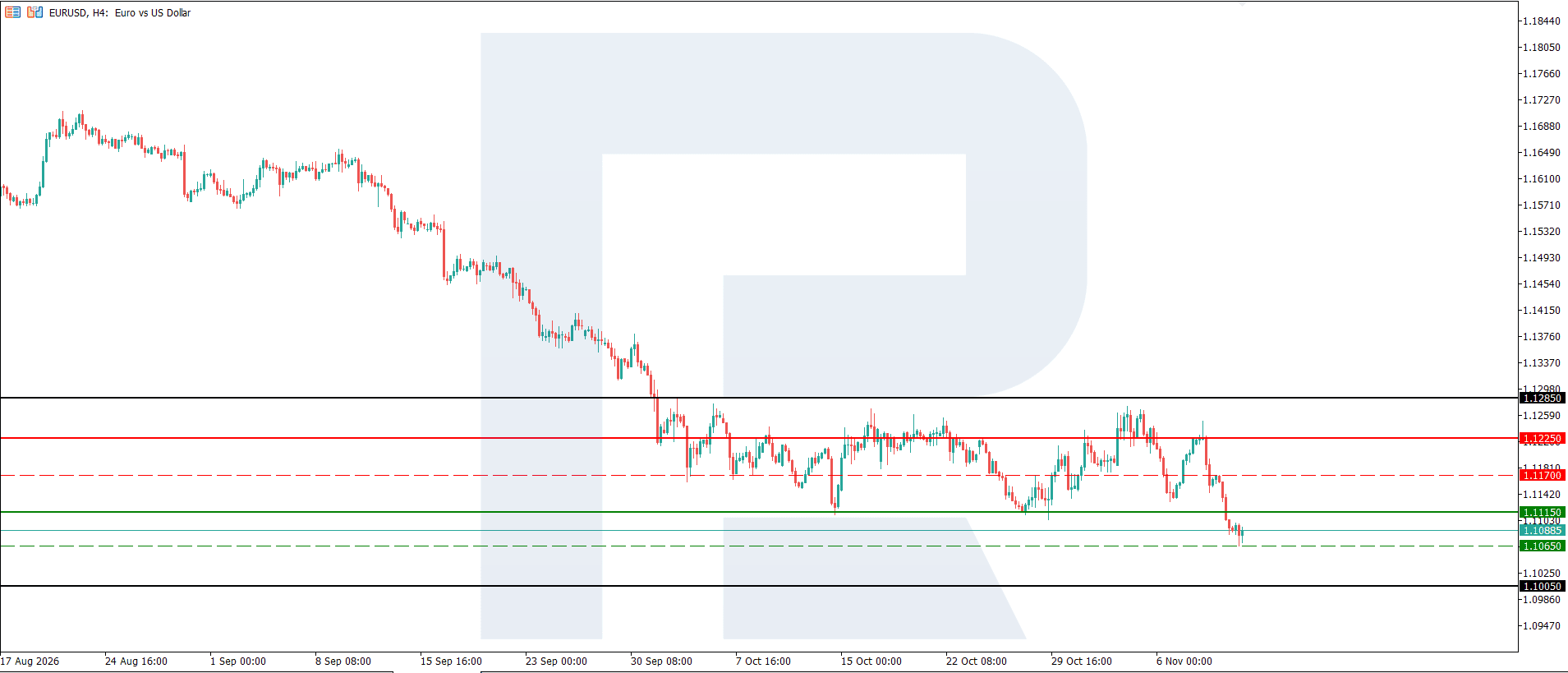
Euro hits its lowest level since early 2025: EURUSD falls below 1.1100 The main pressure on the euro came from the release of US inflation data, which increased the likelihood of an additional Federal Reserve interest rate hike as early as December. Technical outlook On the D1 chart, the EURUSD pair had been trading within a broad sideways channel, but a breakout below the 1.1115 support level has increased the likelihood of a continued downtrend. A resistance level has shifted to 1.1225, with a support level at 1.1115. Fundamental and technical factors indicate that the likelihood of a further decline in the EURUSD rate remains elevated. Read more - EURUSD Forecast Attention! Forecasts presented in this section only reflect the author’s private opinion and should not be considered as guidance for trading. RoboForex bears no responsibility for trading results based on trading recommendations described in these analytical reviews. Sincerely, The RoboForex Team
-
roboforex Market Fundamental Analysis by RoboForex
RBFX Support replied to RBFX Support's topic in Fundamental Analysis
Silver holds its ground against the dollar: can XAGUSD defend 51 USD? XAGUSD quotes are testing a key support area near 51 USD amid a strong dollar, elevated US Treasury yields, and growing expectations of further Federal Reserve interest rate hikes. XAGUSD forecast: key takeaways Higher-than-expected US inflation strengthened expectations of further Federal Reserve interest rate hikes and pushed the 10-year US Treasury yield above 5% Markets have fully priced in a December rate hike, with around an 88% probability of a 25-basis-point hike and a 12% probability of a 50-basis-point increase XAGUSD forecast for 12 November 2026: 53.71 Fundamental analysis Silver is showing resilience despite an unfavourable macroeconomic backdrop. In the previous session, XAGUSD managed to gain ground even as US bond yields and the dollar rose, signalling sustained demand for the metal following its recent decline. US inflation in October was higher than expected. Headline CPI rose by 0.4% month-on-month, above a forecast of 0.3%, while core CPI increased by 0.3%, compared to expectations of 0.2%. RoboForex Market Analysis & Forex Forecasts Attention! Forecasts presented in this section only reflect the author’s private opinion and should not be considered as guidance for trading. RoboForex bears no responsibility for trading results based on trading recommendations described in these analytical reviews. Sincerely, The RoboForex Team -
The dollar approached 160 yen. What could stop the USDJPY rally By the morning of November 12, the dollar had closely approached the 160 yen mark, rising to approximately 159.93 — a high not seen in over two months. Japan's Deputy Finance Minister Atsushi Mimura described the recent currency movements as too rapid and recalled the yen purchases made in summer, one of which Tokyo carried out jointly with Washington. Following his comments, the dollar retreated to the session low, then recovered some losses and traded around 159.70. Buyers continue to be supported by expectations of an interest rate hike by the Federal Reserve in December. In August, we identified the 160 level as a benchmark to assess how long the effect of the summer intervention would last. In the first sessions after publication, USDJPY remained below 160, but by the end of August it crossed this level again, reaching 160.39 on September 2. Now the market is testing this level again following US inflation data coming in above forecasts. FreshForex's birthday celebration continues! To celebrate our 22nd anniversary, we are offering: Swap-free trading until November 15! A 220% drawdown bonus from $220! Double cashback — up to $40 per lot! Why Tokyo is speaking about the exchange rate again At the end of July and beginning of August, Japan's Ministry of Finance spent approximately 15.4 trillion yen buying yen. At that time, USDJPY retreated from its July high of 163.99 and, at the peak of the yen's strengthening, fell to 155.20. This episode explains why even Mimura's warning caused dollar buyers to step back temporarily. Japanese authorities also have an internal reason to monitor the exchange rate. According to the Bank of Japan, import prices converted into yen rose by 24.8% year-on-year in October. The weaker the yen, the more expensive overseas purchases become for Japanese companies, making it harder for them to contain rising wholesale prices. Why the dollar held near 160 US consumer prices rose by 0.4% month-on-month in October against a forecast of 0.3%. After the release, traders became more confident about a Federal Reserve rate hike in December. As long as US assets offer higher yields, the interest rate differential supports demand for the dollar against the yen. Although the summer intervention sharply reversed the pair's trend, by the end of August the dollar's yield advantage helped it return to 160. According to analysts FreshForex, in the next few sessions USDJPY may break through the 160 mark and test 160.40, the area of the September 2 high. Such a scenario is supported by expectations of a Fed rate hike and the dollar's rapid recovery after Mimura's comments. Near 160, prepare for sharp exchange rate swings — even a new warning from Tokyo could quickly reverse the pair. For the Birthday, we have completely waived swaps! Top up your account from $220, activate promo code FF22 in your Client Area, and trade without swap fees!
-
HFMarkets (hfm.com): Market analysis services.
AllForexnews replied to AllForexnews's topic in Fundamental Analysis
Date: 12th November 2026. Anthropic's IPO: Bigger Than It Looks, Backed by Its Own Suppliers. Behind the record-sized headline sit two features investors should understand: a large pool of insider stock that can be sold from day one, and a $26bn cheque from the companies Anthropic pays for chips and computing power. Anthropic plans to price its NASDAQ listing on 18 November, with shares expected to trade the next day under the ticker ANT. At the top of its 70–78 range, the IPO raises about $64bn, or roughly $74bn with the greenshoe. Add a $26bn private placement and the total passes $100bn, rivalling SpaceX’s record June listing. Demand looks strong. The Financial Times reports that bankers expect to price above the range, lifting the valuation towards $1.5tn or more. But the headline numbers hide two things. The deal puts more stock on the market than the offering size suggests, and much of the money comes from Anthropic's own suppliers. The deal at a glance As of Wednesday, the formal range is unchanged at 70–78; any increase would come in an amended filing before pricing. Bigger than it looks: the insider stock outside the deal On paper, almost all the money goes to Anthropic. About 801.4mln of the 825mln shares are new. Existing holders sell only about 23.6mln, under 3% of the offering and worth up to roughly $1.8bn. Most of that comes from the founders. The Wall Street Journal reports that Dario Amodei, Daniela Amodei, and five other co-founders each plan to sell about $250mln worth of shares. Each would keep a stake worth around $18bn. The bigger number sits elsewhere in the filing. Non-founder insiders, such as employees and early investors, can sell up to 10% of their holdings on the first day of trading, without a lock-up. FT Alphaville's Craig Coben estimates that could mean as many as 316 mln shares, worth almost $25bn at the top of the range. That is potentially about 15 times the advertised secondary sale. It would lift total supply from 825 mln shares to around 1.14bn, roughly 38% more than the offering size suggests. The $26bn placement shares are not under underwriter lock-ups either. None of this is hidden; it is all disclosed, and nobody knows how much insiders will actually sell. What matters is where the selling happens. Shares in the bookbuild are priced and placed by the banks. Shares sold on day one go straight to the open market, at whatever price is available. Dilution is the second hidden number. About 13bn shares will be outstanding after the deal. Counting options, restricted stock units, and shares reserved for a charitable donation-matching programme lifts that to around 18bn. That is why the same share price produces headline valuations of about $1tn and about $1.4tn. Backed by its own suppliers: the $26bn placement Seven companies are buying $26bn of stock at the IPO price: AMD, Broadcom, Google, Micron, Microsoft, Nvidia and TSMC. Between them they supply most of what an AI lab spends money on: chips, memory, foundry capacity and cloud computing. That matters because Anthropic’s revised filing shows about $895bn of purchase commitments for compute and infrastructure. In plain terms, Anthropic’s suppliers are investing in Anthropic, and Anthropic’ will spend heavily with them. There are two ways to read this. The generous reading is a vote of confidence from the firms that know the AI supply chain best. The sceptical reading is that it adds to the ‘circular financing’ pattern critics see across the sector, where money flows from suppliers to customers and back again. As Coben notes, a stumble by Anthropic would weigh on the valuations of these same suppliers, so the placement is partly self-interest. Can Revenue Keep Up With the Commitments? The circularity question comes down to whether Anthropic can grow into its spending. The filing shows rapid growth set against even larger commitments. Two of these figures matter most, and both are easy to misread. First, run-rate is an annualised snapshot of recent sales, not revenue already booked. Second, the headline loss is inflated by accounting for convertible instruments, so it says more about the capital structure than about day-to-day operations. On valuation, $1.41tn is about 17 times run-rate revenue; $1.5tn would be about 18.5 times. Morningstar puts fair equity value at $1.7tn but says a plausible range runs from $500bn to $3tn, depending on how fast businesses adopt AI tools. That spread is the honest summary: the outcome hinges on growth that has not happened yet, set against spending commitments that are already signed. What to watch The final price. A raised range would need an amended filing before pricing, expected on 18 November. Pricing above $78 would confirm that demand has outrun last week’s caution. Day-one supply. How much insider stock hits the market on the first day may matter more for early trading than the IPO price itself. Retail exposure. A target of about 20% for retail investors is double or more the usual share. More individual investors will own the stock from the start, at a price set during a period of intense excitement. The wider AI trade. The listing follows a $3.2tn tech sell-off after the midterm elections, rising rate worries, and SoftBank’s revised US data-centre plans. Delays elsewhere in the AI build-out could weigh on sentiment towards Anthropic and its supplier-investors alike. The bottom line: demand for the deal looks strong, and the companies involved have every reason to want it to succeed. Whether early buyers are rewarded is a separate question, and the after-market, not the bookbuild, will answer it. Always trade with strict risk management. Your capital is the single most important aspect of your trading business. Please note that times displayed based on local time zone and are from time of writing this report. Click HERE to access the full HFM Economic calendar. Want to learn to trade and analyse the markets? Join our webinars and get analysis and trading ideas combined with better understanding of how markets work. Click HERE to register for FREE! Click HERE to READ more Market news. Andria Pichidi HFMarkets Disclaimer: This material is provided as a general marketing communication for information purposes only and does not constitute an independent investment research. Nothing in this communication contains, or should be considered as containing, an investment advice or an investment recommendation or a solicitation for the purpose of buying or selling of any financial instrument. All information provided is gathered from reputable sources and any information containing an indication of past performance is not a guarantee or reliable indicator of future performance. Users acknowledge that any investment in Leveraged Products is characterized by a certain degree of uncertainty and that any investment of this nature involves a high level of risk for which the users are solely responsible and liable. We assume no liability for any loss arising from any investment made based on the information provided in this communication. This communication must not be reproduced or further distributed without our prior written permission. -

VIP Membership - FREE upgrade for OLD and ACTIVE Members
FalconFactory replied to MrAdmin's topic in Announcements
Hi, pls add me to vip list -
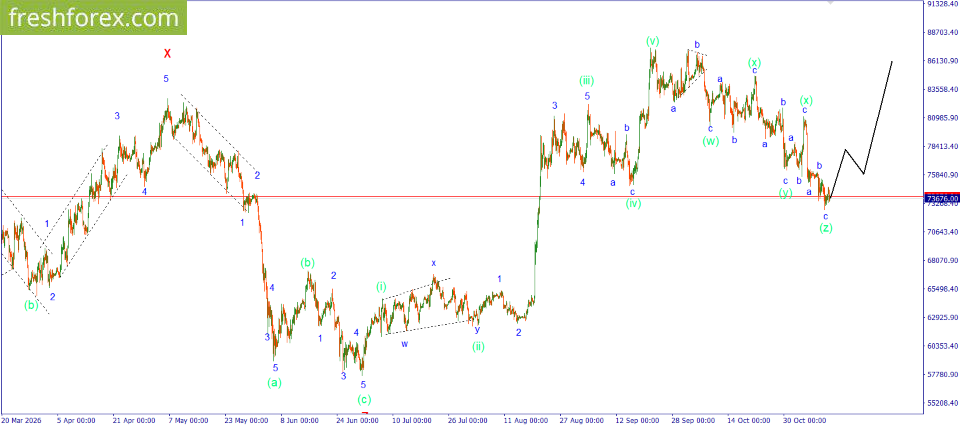
Elliott wave analysis of the market for November 12, 2026 BTCUSD The Freshforex birthday celebration continues! To celebrate our 22nd anniversary, we are offering: Swap-free trading until November 15! A 220% drawdown bonus from $220! Double cashback — up to $40 per lot! BTCUSD: BUY 74000, SL 72000, TP 95000. Nothing significant or interesting has happened with Bitcoin yet. The asset continues to remain under pressure but is trying not to drop even lower. For this reason, the scenario previously considered remains relevant. It is expected that the corrective decline took the form of a triple zigzag and has completed. Therefore, at the moment, preparation for a strong impulsive rally is underway. Thus, it makes sense to consider buying at current market levels with a potential upward target in the 95000 area. Investment idea: BUY 74000, SL 72000, TP 95000. Our company provides the opportunity to earn income not only from your trading. By attracting clients within the affiliate program, you can earn up to $30 per lot! You can find more analytical information on our website.