

⤴️-Paid Ad- Check advertising disclaimer here. Add your banner here.🔥
All Activity
- Today
-
Pivot levels are useful as reference zones, especially intraday, but I wouldn’t treat them as automatic support or resistance. They work better when price reaches them with other context like session highs/lows, structure or a liquidity sweep. The reaction at the level matters more than the level itself
-

Introduction To Online Forex Trading
binaryowner replied to StefGrig's topic in General Forex Discussions
HFM demo is useful for learning the platform and position sizing, but it doesn’t fully test execution or emotions. A small live account exposes the real spreads, slippage and withdrawal process without making every mistake expensive. Regulation is the first filter, not the whole broker check -
 kllshn joined the community
 -
Welcome to Indo-Investasi.com. Please feel free to browse around and get to know the others. If you have any questions please don't hesitate to ask.
-
 TraderDevil joined the community
 -
i Have it , but not for share
- Yesterday
-
 zapie joined the community
 -
Welcome to Indo-Investasi.com. Please feel free to browse around and get to know the others. If you have any questions please don't hesitate to ask.
-
 karinmueller joined the community
 - Last week
-
 agoutam joined the community
 -

roboforex Market Fundamental Analysis by RoboForex
RBFX Support replied to RBFX Support's topic in Fundamental Analysis
US Tech forecast: the index is trading sideways The US Tech index is trading in a sideways range with no sign of a trend reversal. The US Tech forecast for next week is positive. US Tech forecast: key takeaways Recent data: US CPI came in at 3.5% in June 2026 Market impact: this data is negative for the technology sectord Fundamental analysis The annual Consumer Price Index declined from 4.2% to 3.5%, while the market had expected 3.8%. Thus, inflation came in not only significantly below the previous reading, but also better than the forecast. An additional positive signal was that core inflation, which excludes food and energy prices, slowed from 2.9% to 2.6% year-on-year and remained unchanged compared to May. For the US Tech index, this data is predominantly positive. Technology companies are especially sensitive to interest rate expectations, as a significant portion of their market value is based on their expected future profits. RoboForex Market Analysis & Forex Forecasts Attention! Forecasts presented in this section only reflect the author’s private opinion and should not be considered as guidance for trading. RoboForex bears no responsibility for trading results based on trading recommendations described in these analytical reviews. Sincerely, The RoboForex Team -
Welcome to Indo-Investasi.com. Please feel free to browse around and get to know the others. If you have any questions please don't hesitate to ask.
-
Market Technical Analysis by RoboForex
RBFX Support replied to RBFX Support's topic in Technical Analysis
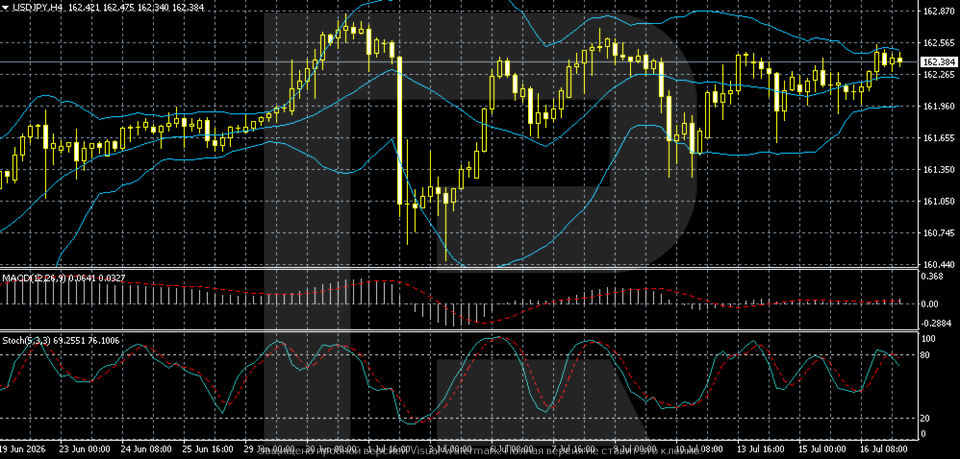
USDJPY: optimism persists The USDJPY pair is trading at 162.38, with the yen coming under pressure from many factors. Technical outlook On the H4 chart, the USDJPY pair is trading around 162.38 and retains a moderately upward bias after recovering from the 161.95 area. Quotes are holding above the middle Bollinger Band, although the attempt to consolidate above 162.50 has not yet continued. The USDJPY pair remains bullish. Read more - USDJPY Forecast Attention! Forecasts presented in this section only reflect the author’s private opinion and should not be considered as guidance for trading. RoboForex bears no responsibility for trading results based on trading recommendations described in these analytical reviews. Sincerely, The RoboForex Team
-
 fundamonae joined the community
 -

HFMarkets (hfm.com): Market analysis services.
AllForexnews replied to AllForexnews's topic in Fundamental Analysis
Date: 17th July 2026. Global Markets Fall as AI Stocks Slide, While Oil Prices Surge on Middle East Tensions. AI Sell-off Deepens as Global Markets Retreat, While Oil Prices Continue to Climb Global markets ended the week on the back foot as investors continued to move away from technology and AI-related stocks, triggering another wave of selling across major equity markets. At the same time, renewed tensions in the Middle East pushed oil prices higher, adding another layer of uncertainty for investors. Asian markets led the decline on Friday, with Japan’s Nikkei 225 dropping more than 5% in its worst session since March. Taiwan also suffered heavy losses, while Hong Kong and mainland China closed lower as investors reduced exposure to semiconductor and technology companies. The weakness follows another soft session on Wall Street, where the NASDAQ underperformed after several of this year’s strongest-performing AI stocks extended their recent decline. Investors Continue to Take Profits from AI Leaders After months of exceptional gains, investors are becoming increasingly cautious towards companies driving the AI boom. The latest earnings season has shifted attention away from impressive revenue growth and towards one key question: will the enormous investment in AI infrastructure generate enough profits to justify current valuations? That uncertainty has led many investors to lock in profits after one of the strongest technology rallies in recent years. Semiconductor companies were once again among the biggest losers. Taiwan Semiconductor Manufacturing Company (TSMC) fell sharply despite reporting strong quarterly earnings, while several Japanese chipmakers also recorded double-digit losses. The move suggests investors are becoming more selective, rewarding future profitability rather than simply strong earnings. This doesn’t necessarily signal the end of the AI story. Instead, markets appear to be taking a breather after a remarkable run higher, with investors reassessing how quickly AI spending can translate into sustainable returns. Rising Oil Prices Shift Attention to Geopolitics While equities struggled, oil continued to move in the opposite direction. Brent crude traded around $85 per barrel, while WTI crude approached $80, putting both benchmarks on track for their strongest weekly gains since April. The rally comes as military tensions between the United States and Iran continue to escalate, raising concerns about potential disruptions to global energy supplies. Investors remain focused on the Strait of Hormuz, one of the world’s most important oil shipping routes. Any disruption to traffic through the region could tighten global supply and push energy prices even higher. Higher Oil Could Keep Inflation Elevated The rise in oil prices has also revived concerns about inflation. While recent US economic data suggested inflation pressures were gradually easing, higher energy costs could slow that progress and complicate the Federal Reserve’s policy outlook. Recent economic reports paint a mixed picture. Consumer spending has softened slightly, but the labour market remains resilient and manufacturing activity continues to show signs of improvement. Overall, the US economy remains relatively stable, although investors are increasingly questioning whether interest rates may need to stay higher for longer. Dollar Holds Firm as Gold Weakens The US dollar remained well supported as investors sought safer assets amid the recent increase in market volatility. Meanwhile, gold came under pressure as stronger bond yields and expectations for higher interest rates reduced demand for the precious metal. The Japanese yen also remained near multi-decade lows against the dollar, despite renewed warnings from Japanese officials regarding possible intervention in the currency market. What Markets Are Watching Next The current market move appears to be driven more by positioning than panic. Investors are rotating out of this year's biggest winners, particularly AI and semiconductor stocks, while closely monitoring upcoming earnings for signs that massive AI investments can deliver long-term profitability. At the same time, developments in the Middle East remain a key risk for financial markets. Any further disruption to oil supply could keep energy prices elevated, increase inflationary pressures, and add further volatility across global markets. For now, traders are likely to remain cautious as they balance corporate earnings, geopolitical developments, and expectations for future central bank policy. Until there is greater clarity on all three fronts, volatility is expected to remain a dominant feature across global markets. Always trade with strict risk management. Your capital is the single most important aspect of your trading business. Please note that times displayed based on local time zone and are from time of writing this report. Click HERE to access the full HFM Economic calendar. Want to learn to trade and analyse the markets? Join our webinars and get analysis and trading ideas combined with better understanding of how markets work. Click HERE to register for FREE! Click HERE to READ more Market news. Andria Pichidi HFMarkets Disclaimer: This material is provided as a general marketing communication for information purposes only and does not constitute an independent investment research. Nothing in this communication contains, or should be considered as containing, an investment advice or an investment recommendation or a solicitation for the purpose of buying or selling of any financial instrument. All information provided is gathered from reputable sources and any information containing an indication of past performance is not a guarantee or reliable indicator of future performance. Users acknowledge that any investment in Leveraged Products is characterized by a certain degree of uncertainty and that any investment of this nature involves a high level of risk for which the users are solely responsible and liable. We assume no liability for any loss arising from any investment made based on the information provided in this communication. This communication must not be reproduced or further distributed without our prior written permission. -
Welcome to Indo-Investasi.com. Please feel free to browse around and get to know the others. If you have any questions please don't hesitate to ask.
-
 john dalton joined the community
 -
 Xander changed their profile photo
 -
Welcome to Indo-Investasi.com. Please feel free to browse around and get to know the others. If you have any questions please don't hesitate to ask.
-
 ruthlessty joined the community
 -
Welcome to Indo-Investasi.com. Please feel free to browse around and get to know the others. If you have any questions please don't hesitate to ask.
-
 QUBITLocal joined the community
 -
roboforex Market Fundamental Analysis by RoboForex
RBFX Support replied to RBFX Support's topic in Fundamental Analysis
JP 225 forecast: the index continues to decline The JP 225 stock index entered a downtrend as part of a correction, but the pace of decline is slowing. The JP 225 forecast for today is negative. JP 225 forecast: key takeaways Recent data: Japan’s industrial production rose by 0.1% month-on-month in May Market impact: the effect on the Japanese stock market is mixed Fundamental analysis Industrial production in Japan grew by only 0.1% month-on-month in June, compared to the forecast of 0.5%. The previous reading also stood at 0.5%. As a result, the actual data came in noticeably weaker than expected and indicates a significant slowdown in manufacturing activity growth. The initial reaction in the JP 225 may be negative. Weak industrial production figures could heighten concerns about the state of the Japanese economy and the sustainability of domestic demand. RoboForex Market Analysis & Forex Forecasts Attention! Forecasts presented in this section only reflect the author’s private opinion and should not be considered as guidance for trading. RoboForex bears no responsibility for trading results based on trading recommendations described in these analytical reviews. Sincerely, The RoboForex Team -
Market Technical Analysis by RoboForex
RBFX Support replied to RBFX Support's topic in Technical Analysis
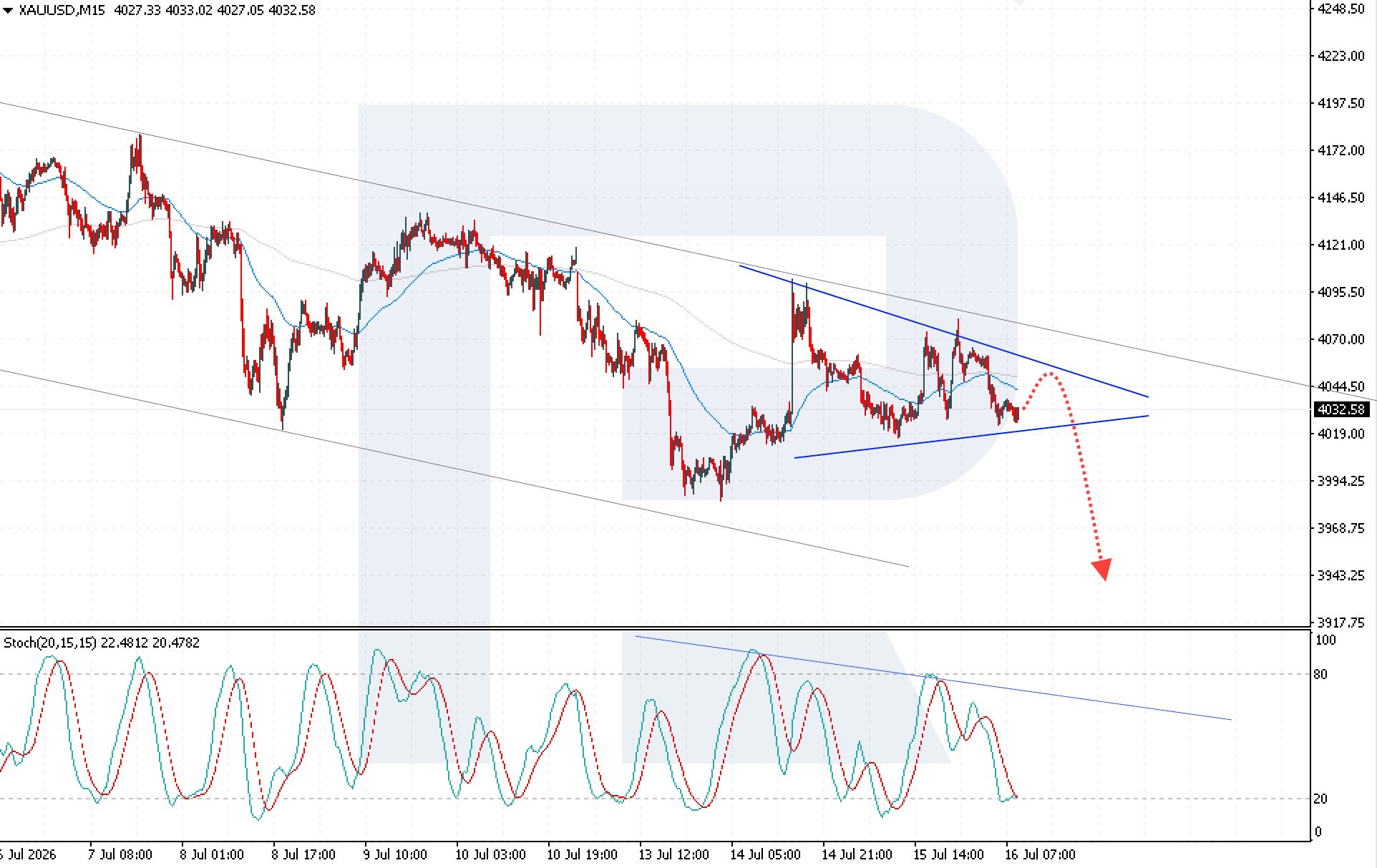
Gold (XAUUSD) remains under pressure despite weak US inflation XAUUSD quotes are correcting after testing a key resistance level, while market participants assess the impact of slowing US inflation. Prices currently stand at 4,032 USD Technical outlook XAUUSD quotes continue to consolidate within a Triangle pattern, remaining below the EMA-65, indicating that sellers have the upper hand. The baseline XAUUSD forecast for today suggests a downward momentum, with the nearest target at 3,945 USD. In the short term, XAUUSD remains under pressure, as quotes continue to trade below the EMA-65 and remain within the bearish Triangle pattern. Read more - Gold Forecast Attention! Forecasts presented in this section only reflect the author’s private opinion and should not be considered as guidance for trading. RoboForex bears no responsibility for trading results based on trading recommendations described in these analytical reviews. Sincerely, The RoboForex Team
-
HFMarkets (hfm.com): Market analysis services.
AllForexnews replied to AllForexnews's topic in Fundamental Analysis
Date: 16th July 2026. Can you please share the most recent response you received for this case? Global financial markets in mid-July 2026 were once again filled with challenges. The combination of geopolitical risks and uncertainty regarding the direction of US monetary policy was the main focus. Various factors, ranging from threats from Iran to statements by central bank officials, now have the potential to move the gold and currency markets in the coming days. Middle East Geopolitical Dynamics Tensions in the Middle East remain a focus for market participants. The Iranian Foreign Ministry issued a stern warning to Washington through the Tasnim news agency. Iran stated that the memorandum of understanding with the United States is valid only as long as its national interests are protected. Conversely, if any violations occur, Iran threatened to suspend all obligations and take retaliatory measures. This situation certainly boosted demand for safe-haven assets, such as gold and the US dollar, in the short term. Meanwhile, more positive news came from Rome. Negotiations between Israel and Lebanon were reportedly progressing smoothly. The two sides have reached a preliminary agreement to establish two pilot zones as a first step towards troop withdrawal. However, this process will still require several days to reach final preparations. Fed Policy Amid Inflation Uncertainty Federal Reserve officials have given mixed signals regarding the direction of interest rates. Christopher Waller, in a Senate confirmation hearing, emphasised that the price stability target has not been achieved. Therefore, the Fed will continue to evaluate all policy tools to maintain economic growth. Waller is also optimistic that investment in artificial intelligence will support job growth despite medium-term challenges. On the other hand, New York Fed President John Williams acknowledged that inflation remains too high. However, he sees optimistic signs that inflation may have passed its peak. He projects inflation will decline to 3.25% by the end of this year. Williams also added that the US labour market remains resilient, with unemployment projected at around 4.0%. Signals from the US and Canadian Economy Recent economic data has shown interesting movement. The US Producer Price Index (PPI) fell 0.3% in June, the largest decline since April 2025. This figure far exceeded market expectations. The decline was driven by lower energy costs. However, investment in artificial intelligence infrastructure continues to drive price increases in some sectors, leaving the possibility of further interest rate hikes open. Meanwhile, the Bank of Canada chose to maintain its interest rate at 2.25%. This decision was made at its sixth consecutive meeting. Governor Tiff Macklem believes the current interest rate level is appropriate to support Canada’s economic recovery. However, the central bank remains vigilant about the impact of Middle East tensions and US trade policy. Beige Book Economic Activity Report The latest Beige Book report shows a moderate increase in economic activity across nearly all Federal Reserve districts. Consumer spending recorded a slight increase, pressured by fuel prices. Meanwhile, the manufacturing sector grew fairly steadily, primarily due to strong demand in the defence industry and data centres. However, supply chain disruptions remain a challenge that requires attention. Upcoming Economic Agenda Investors should pay attention to several important events that could trigger market volatility: UK GDP (May): To be released at 2:00 PM WIB. SNB Minutes: Scheduled for 3:30 PM WIB. US Retail Sales (June): Key data release at 8:30 PM WIB. US Pending Home Sales: Data will be released at 10:00 PM WIB. Fed Officials' Speeches: Lorie Logan is scheduled to speak at 12:30 AM WIB, followed by Jeff Schmid at 1:25 AM WIB. Strategic Conclusion The current market landscape remains fraught with uncertainty. Unresolved geopolitical tensions, coupled with the Fed's dynamic policy signals, require high vigilance. Furthermore, tonight's release of US retail sales data will be a major catalyst for price movements. Stick to your classic technical discipline in managing risk in the bond, gold, and major currency markets. Always trade with strict risk management. Your capital is the single most important aspect of your trading business. Please note that times displayed based on local time zone and are from time of writing this report. Click HERE to access the full HFM Economic calendar. Want to learn to trade and analyse the markets? Join our webinars and get analysis and trading ideas combined with better understanding of how markets work. Click HERE to register for FREE! Click HERE to READ more Market news. Ady Phangestu HFMarkets Disclaimer: This material is provided as a general marketing communication for information purposes only and does not constitute an independent investment research. Nothing in this communication contains, or should be considered as containing, an investment advice or an investment recommendation or a solicitation for the purpose of buying or selling of any financial instrument. All information provided is gathered from reputable sources and any information containing an indication of past performance is not a guarantee or reliable indicator of future performance. Users acknowledge that any investment in Leveraged Products is characterized by a certain degree of uncertainty and that any investment of this nature involves a high level of risk for which the users are solely responsible and liable. We assume no liability for any loss arising from any investment made based on the information provided in this communication. This communication must not be reproduced or further distributed without our prior written permission. -
Hi Kesk and everyone! Thank you for all the perfect work!!! I have 2 small questions that I really need some help. 1. The 2 patches in the 1st post Kesk gave. I downloaded TSA and installed for no problem. But the Terra one seems not working. I use Chrome and keeps telling me FILES DOESNT EXIST 2. Once I got the TERRA, do I need to install every single TERRA UPDATE one by one? or just the newest update would be fine? In the updates links, I couldn't find TI.exe file. There is only update file. Is that what cause my TI is locked in the TSA? Thank you so much for the help !!!
-
 Paul9393 joined the community
 -
Welcome to Indo-Investasi.com. Please feel free to browse around and get to know the others. If you have any questions please don't hesitate to ask.
-
Welcome to Indo-Investasi.com. Please feel free to browse around and get to know the others. If you have any questions please don't hesitate to ask.
-
roboforex Market Fundamental Analysis by RoboForex
RBFX Support replied to RBFX Support's topic in Fundamental Analysis
XRP retains chances of reaching new local highs XRPUSD is undergoing a correction following a rise, but the price holding above key levels supports expectations of further growth. The price currently stands at 1.1076. XRPUSD forecast: key takeaways XRPUSD entered a moderate correction phase after a strong upward momentum Spot XRP ETFs in the US saw no net capital inflows for the first time in eight weeks The main reason for the pause in investment inflows was stronger resistance near 1.15 Fundamental analysis The XRPUSD rate moved into a moderate correction after the strong upward momentum formed a day earlier. Buyers tested the key resistance level near 1.1145 USD, where they encountered profit-taking, which triggered a local decline in prices. The fundamental backdrop remains mixed. For the week ending 13 July, spot XRP ETFs in the US did not record net capital inflows, breaking an eight-week series of steady investment, during which the funds attracted about 1.48 billion USD. RoboForex Market Analysis & Forex Forecasts Attention! Forecasts presented in this section only reflect the author’s private opinion and should not be considered as guidance for trading. RoboForex bears no responsibility for trading results based on trading recommendations described in these analytical reviews. Sincerely, The RoboForex Team