

⤴️-Paid Ad- Check advertising disclaimer here. Add your banner here.🔥
All Activity
- Past hour
-
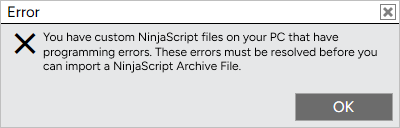
The errors are probably coming from a single file .cs file? If so, move that .cs file to another folder and see if that resolves the issue.
-
 jimmybarnacle joined the community
 -
i did it and i see so many error what do i do ?
-
In NinjaTrader’s Control Center, select New > NinjaScript Editor. Open any indicator by double-clicking it in the explorer on the right. Press F5 to compile. Look at the error list at the bottom. The NinjaScript File column identifies the file; the other columns show the error description and line number. Double-click an error to open the file at the problem location. NinjaTrader compiles all installed NinjaScript files, so you can open any indicator to run this check.
- Today
-
Welcome to Indo-Investasi.com. Please feel free to browse around and get to know the others. If you have any questions please don't hesitate to ask.
-
 ericvincent5 joined the community
 -
 Daniel reacted to a status update:
Welcome to Indo-Investasi.com. Please feel free to browse around and get to know the
Daniel reacted to a status update:
Welcome to Indo-Investasi.com. Please feel free to browse around and get to know the
-
im trying to add indicatoer it wont let me somehow

-
 Daniel joined the community
 -
 Echo_1010 joined the community
 -
 DRNAVNEET joined the community
 - Yesterday
-
Welcome to Indo-Investasi.com. Please feel free to browse around and get to know the others. If you have any questions please don't hesitate to ask.
-
 PascalKipruto joined the community
 -
Welcome to Indo-Investasi.com. Please feel free to browse around and get to know the others. If you have any questions please don't hesitate to ask.
-
 MelloYellow joined the community
 -
 newTra joined the community
 -
 Jose Gil changed their profile photo
 -
Welcome to Indo-Investasi.com. Please feel free to browse around and get to know the others. If you have any questions please don't hesitate to ask.
-
 blackredsnake joined the community
 -
 TheProfessor changed their profile photo
 - Last week
-

VIP Membership - FREE upgrade for OLD and ACTIVE Members
sillykiddo replied to MrAdmin's topic in Announcements
hi if you can look into my id you will see I am super super long time member.. -
 ⭐ JackSparrow440 changed their profile photo
 -
 ⭐ StrictlyTradeBiz changed their profile photo
 -
Welcome to Indo-Investasi.com. Please feel free to browse around and get to know the others. If you have any questions please don't hesitate to ask.
-
 Micron Hits Record Highs, but the Stock Barely Rises Micron (#Micron) released a strong quarterly earnings report and confirmed that demand for memory used in artificial intelligence systems remains high. However, the market reaction was much more muted than might have been expected after such results. In trading on September 30, #Micron shares rose above $1,082 but failed to break through $1,083 and closed the session around $1,066. No significant new momentum emerged after the earnings report either. For traders, this is an important signal: good news is already largely priced into the company’s valuation, so the market now needs increasingly strong catalysts for the rally to continue. Want to protect yourself from a stop-out? If you lose your deposit, FreshForex will compensate 50% of the insured funds! Learn more 25 for a risk-free start! Register, complete verification, enter promo code INDOINVEST10 in your Personal Area, and get a trading bonus with no deposit required. What matters now for #Micron and #NQ100: #Micron has hit resistance around $1,080–1,083. Buyers have approached the upper boundary several times but have so far failed to break and hold above it. This area is now becoming the nearest resistance level. $1,050 remains the first significant support level. As long as the stock holds above it, the current price action can be viewed as consolidation following a strong rally. A move below $1,050 would increase the likelihood of a deeper profit-taking phase. #NVIDIA remains an important part of the same story. Strong demand for memory used in AI servers confirms that investment in computing infrastructure is continuing. This supports not only #Micron but also the major manufacturers of artificial intelligence hardware. #NQ100 is holding above 30,000 points. The index closed the previous session around 30,400, maintaining its position near record highs. As long as the technology index remains above 30,000, overall interest in the artificial intelligence sector remains strong. The situation is particularly interesting because the industry’s fundamental backdrop remains strong, while #Micron’s share price has stopped reacting sharply to positive news. This means the market has moved from simply anticipating business growth to more closely assessing whether future results can exceed already-high expectations. According to FreshForex analysts, the base-case scenario for #Micron remains further growth. As long as the stock holds above $1,050, the current consolidation can be viewed as preparation for another attempt to break through the $1,083 area. Another argument supporting buyers is that Micron has already secured agreements covering a large portion of its HBM memory output for 2027, meaning the company has secured demand in advance for one of the most supply-constrained and profitable products used in AI servers. A sustained break above $1,083 could open the way toward $1,100–1,120, while #NQ100 remaining above 30,000 points would provide additional support for this scenario. Our trading platform offers 250+ instruments, including CFDs on stocks, indices, and cryptocurrencies. Choose your trading instruments and activate the 101% Drawdown Bonus on deposits starting from $101! Profit from the technology sector
 -
Welcome to Indo-Investasi.com. Please feel free to browse around and get to know the others. If you have any questions please don't hesitate to ask.
-

Market Technical Analysis by RoboForex
RBFX Support replied to RBFX Support's topic in Technical Analysis
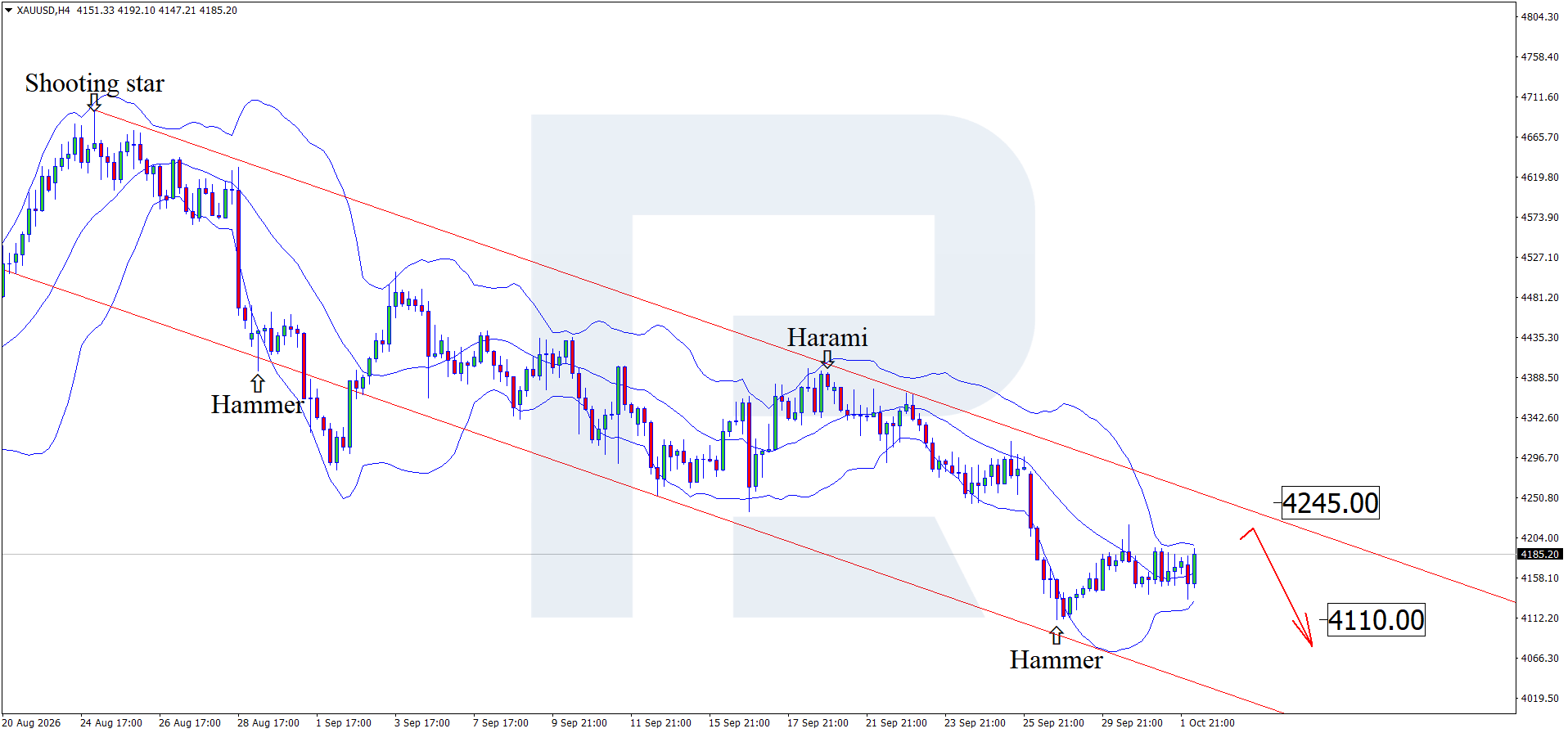
Gold awaits NFP: weak inflation gives XAUUSD a chance to recover Gold continues its corrective wave ahead of the release of US employment data (NFP), with prices hovering at 4,185 USD. Technical outlook On the H4 chart, XAUUSD prices formed a Hammer reversal pattern near the lower Bollinger Band and could continue a corrective wave as the pattern signal plays out. Since XAUUSD remains within a descending channel, the target for a pullback could be the 4,245 USD resistance level. The release of US employment data could provide additional momentum to XAUUSD and trigger a deeper correction. Read more - Gold Forecast Attention! Forecasts presented in this section only reflect the author’s private opinion and should not be considered as guidance for trading. RoboForex bears no responsibility for trading results based on trading recommendations described in these analytical reviews. Sincerely, The RoboForex Team
-
roboforex Market Fundamental Analysis by RoboForex
RBFX Support replied to RBFX Support's topic in Fundamental Analysis
EURUSD strengthens ahead of the Nonfarm Payrolls release The EURUSD pair is undergoing an upward correction as it attempts to recover from the lower boundary of the channel. The rate currently stands at 1.1256. EURUSD forecast: key takeaways Rising energy and fuel prices are adding to pressure on the eurozone industrial sector The likelihood of a Federal Reserve rate hike in October fell to 26.0% from 68.6% a week earlier EURUSD forecast for 2 October 2026: 1.1165 Fundamental analysis The EURUSD rate is correcting after four consecutive trading sessions of declines. On the daily chart, the price has reached the lower boundary of the descending channel, which could limit selling activity and create conditions for a local recovery in the pair. The main factor behind the EURUSD decline remains the aggressive sell-off in the US bond market, where the yield on 10-year US Treasuries has risen to a 24-year high of around 5.34%. RoboForex Market Analysis & Forex Forecasts Attention! Forecasts presented in this section only reflect the author’s private opinion and should not be considered as guidance for trading. RoboForex bears no responsibility for trading results based on trading recommendations described in these analytical reviews. Sincerely, The RoboForex Team -

HFMarkets (hfm.com): Market analysis services.
AllForexnews replied to AllForexnews's topic in Fundamental Analysis
[B]Date: 2nd October 2026.[/B] [B]Bitcoin Starts Q4 Near Key Resistance as ETF Demand and Fed Expectations Drive the Outlook.[/B] Bitcoin enters the fourth quarter trading close to recent highs, supported by improving institutional demand, stronger spot-market activity and a constructive longer-term technical structure. However, momentum has started to cool on the daily chart, leaving traders focused on whether Bitcoin can break through the next major resistance zone or enter a broader period of consolidation. With US spot Bitcoin ETF inflows strengthening and several important US economic releases approaching, Bitcoin's next major move could depend as much on developments in traditional financial markets as on crypto-specific factors. Bitcoin Technical Analysis: Longer-Term Momentum Remains Positive From a weekly perspective, Bitcoin continues to trade close to the upper Bollinger Band, suggesting that bullish momentum remains present despite the recent slowdown. The Relative Strength Index remains elevated but has not yet moved beyond the commonly watched 70 level associated with overbought conditions. Meanwhile, the Stochastic oscillator is already trading within overbought territory, making the coming weekly closes important for determining whether buyers can maintain the current momentum. The MACD also continues to support the broader bullish trend, with its histogram remaining firmly in positive territory. One particularly important technical development has been Bitcoin's move back above its 365-day moving average. According to CryptoQuant data referenced in the original analysis, this represents the first reclaim of the indicator since March 2023. Historically, the long-term moving average has attracted attention because sustained moves above it have often coincided with stronger phases of previous Bitcoin market cycles. However, historical performance does not guarantee that the same pattern will repeat. Bitcoin Daily Chart Shows Signs of Consolidation The shorter-term picture is more cautious. Bitcoin has pulled back from its latest high and is currently moving within a relatively narrow range. This suggests that the strong upward momentum seen previously has started to lose some strength. Both the RSI and Stochastic indicators are approaching elevated levels, while the MACD histogram has slipped slightly below its zero line. At the same time, the Average Directional Index, or ADX, has started moving lower. Because the ADX measures the strength of an existing trend rather than its direction, its decline suggests that Bitcoin's latest directional move is becoming less powerful. This does not necessarily signal a bearish reversal. Instead, it may indicate that the market is entering a period of consolidation while traders reassess valuations and incoming economic data. Key Bitcoin Support and Resistance Levels The immediate technical levels could become increasingly important if volatility rises. On the downside, the first significant support area sits around $83,000, followed by the psychological $80,000 level. Below this region, approximately $77,000 could also attract attention. This area is close to Bitcoin's aggregate Realized Price cited in the underlying market data, which measures the average acquisition price of Bitcoin currently held across the network. On the upside, initial resistance can be found near $85,000, followed by approximately $87,000. A potentially more important support area sits between $88,000 and $90,000. A sustained break above this region could suggest that the market is successfully absorbing the selling pressure created by existing holders. Beyond this area, approximately $96,000-$97,000 could develop into another major resistance zone. Bitcoin Levels to Watch Support: $83,000 Major psychological support: $80,000 Secondary support: approximately $77,000 Initial resistance: $85,000 Secondary resistance: $87,000 Major support zone: $88,000-$90,000 Higher resistance: approximately $96,000-$97,000 Bitcoin ETF Inflows Strengthen Institutional Demand One of the most supportive developments for Bitcoin has been the recovery in US spot Bitcoin ETF demand. US-listed spot Bitcoin ETFs recorded approximately $2.39 billion in weekly net inflows, their strongest weekly performance of 2026 according to the data cited in the original report. The significance lies not only in the size of the inflows but also in when they occurred. Demand remained relatively strong even as Bitcoin pulled back from above $87,000 towards the $83,000 area. This may indicate that institutional investors were willing to increase exposure during weaker price action rather than simply entering after strong rallies. The ETF market has also experienced a substantial improvement compared with earlier in the year. After recording a multi-billion-dollar year-to-date deficit during the summer, cumulative flows reportedly returned to positive territory. Spot-market trading volumes have also increased considerably compared with their August lows, providing another sign that participation is recovering. Continued ETF inflows could therefore remain one of the most important fundamental factors supporting Bitcoin during Q4. Options Market Points to Higher Resistance Levels Bitcoin derivatives markets are also providing useful information about investor positioning. Options activity has maintained a relatively bullish bias, with the put-to-call ratio remaining below 1 during the period covered by the report. Call options give traders the right to buy an asset at a predetermined price, while puts provide the right to sell. A lower put-to-call ratio can therefore indicate stronger demand for upside exposure, although options positioning should never be interpreted in isolation. Large positioning has also appeared around substantially higher Bitcoin strike prices for December expiry. Dealer hedging activity reportedly highlights the $95,000-$97,000 region as one of the first major resistance areas should Bitcoin extend its recovery. Bitcoin Remains Highly Sensitive to NASDAQ and Global Risk Sentiment Despite developments specific to the cryptocurrency market, Bitcoin continues to trade as part of the wider global risk environment. Recent price action demonstrated this relationship when Bitcoin, gold and the Nasdaq all declined during the same period. Bitcoin fell from around $84,500 towards $82,800, while US technology stocks and gold also came under pressure. Interestingly, the US Dollar Index also weakened during the move. That combination differs from a traditional flight-to-safety environment, in which investors would normally expect the dollar to strengthen. Instead, the simultaneous decline across several asset classes could point towards broader position reduction or deleveraging. For Bitcoin traders, this reinforces the importance of monitoring equity markets, Treasury yields and overall investor risk appetite rather than focusing exclusively on cryptocurrency developments. Federal Reserve Expectations Could Be Crucial for Bitcoin The Federal Reserve remains another major risk factor heading into the remainder of Q4. Two FOMC meetings remain during the quarter: October 27-28 and December 8-9. At the beginning of the period covered by the source material, financial markets were pricing a higher probability of another 25-basis-point increase in October than of unchanged interest rates. However, these probabilities can change rapidly following inflation, employment and economic-growth releases. Higher interest rates generally increase yields available on lower-risk assets while tightening financial conditions. This can create pressure on assets such as cryptocurrencies and growth stocks. Conversely, softer inflation or weaker economic data could reduce expectations for additional tightening, potentially improving sentiment towards risk assets. This means incoming US economic releases could become just as important for Bitcoin as crypto-specific news. US Inflation and Labour Data Come Into Focus Several important economic indicators could influence the Federal Reserve's next decision. Core PCE inflation remains particularly significant because it is one of the Fed's preferred measures of underlying inflation. A stronger-than-expected inflation reading could reinforce expectations that interest rates need to remain restrictive for longer. A weaker result, by contrast, could reduce pressure on policymakers to tighten monetary policy further. US economic growth is another factor traders will monitor closely. Strong GDP growth can demonstrate economic resilience, but it can also provide the Federal Reserve with greater flexibility to maintain higher interest rates. Labour-market data will also remain important tomorrow with NFP. If employment remains strong and unemployment stays low, policymakers may see less urgency to loosen financial conditions. Conversely, signs of material labour-market weakness could shift expectations towards a more cautious Fed stance. Bitcoin's reaction to upcoming macroeconomic releases may therefore depend heavily on how those figures change expectations for interest rates. Q4 Has Historically Been Strong for Bitcoin – But History Is Not a Guarantee The fourth quarter has historically produced some of Bitcoin's strongest returns. Bitcoin's average Q4 performance since 2013 has been particularly strong compared with other periods of the year. However, averages can be misleading. Bitcoin has also recorded weaker fourth quarters, and the structure of the cryptocurrency market has changed considerably over time. Institutional participation is significantly larger, spot ETFs have become an important source of market demand and Bitcoin is increasingly influenced by global liquidity conditions and monetary policy. Another important consideration is the gradual reduction in returns across Bitcoin's major historical cycles. Each successive cycle has produced a smaller multiple from its market low than the previous cycle. This trend could suggest that as Bitcoin matures into a larger asset class, investors may need to moderate expectations regarding the scale of future gains. Crypto Adoption Continues Despite Market Volatility While cryptocurrency prices have experienced considerable volatility, blockchain activity has remained relatively resilient. According to Chainalysis data cited in the source material, worldwide crypto activity declined only slightly over the year through June, despite a much larger fall in total cryptocurrency market capitalisation. A notable part of that activity came from areas outside speculative trading. Domestic peer-to-peer transactions expanded significantly, while international stablecoin transfers also increased. Stablecoin balances remained comparatively stable even as broader crypto asset values declined sharply, suggesting that blockchain-based payment and settlement activity may be developing independently from short-term market valuations. This distinction could become increasingly important as investors evaluate whether cryptocurrency adoption is being driven primarily by speculation or by growing financial utility. Tokenization Becomes a Larger Traditional Finance Theme Another longer-term development is the increasing interest in tokenized financial markets. US regulators have recently discussed the potential expansion of tokenized assets, on-chain financial infrastructure and round-the-clock trading. The CFTC has highlighted the possibility that financial markets could experience significant structural changes over the next decade as blockchain technology becomes more integrated into traditional finance. Regulatory developments around stablecoins, tokenized securities and 24-hour markets could therefore become an increasingly important theme for both cryptocurrency and traditional financial markets. Bitcoin Q4 Outlook: What Could Drive the Next Move? Bitcoin begins Q4 with several constructive factors behind it. Institutional ETF demand has strengthened, spot-market activity has recovered and Bitcoin's broader technical structure remains positive. However, the market is also approaching important resistance areas while short-term momentum indicators show signs of cooling. A stronger bullish scenario could develop if ETF inflows remain persistent and Bitcoin successfully breaks above the $88,000-$90,000 resistance region. A move beyond this supply zone could shift attention towards approximately $95,000-$97,000. The downside scenario would become more relevant if inflation remains elevated, Federal Reserve expectations turn increasingly hawkish or investors begin taking substantially larger profits into price strength. For now, the $83,000-$85,000 region may act as an important short-term battleground between buyers and sellers. Whether Bitcoin can defend its recent gains while absorbing overhead supply could determine if the cryptocurrency extends its recovery during Q4 or enters a broader consolidation phase. [B]Always trade with strict risk management. Your capital is the single most important aspect of your trading business.[/B] [B]Please note that times displayed based on local time zone and are from time of writing this report.[/B] Click [URL='https://www.hfm.com/hf/en/trading-tools/economic-calendar.html'][B]HERE[/B][/URL] to access the full HFM Economic calendar. Want to learn to trade and analyse the markets? Join our webinars and get analysis and trading ideas combined with better understanding of how markets work. Click [URL='https://www.hfm.com/en/trading-tools/trading-webinars.html'][B]HERE[/B][/URL] to register for FREE! [URL='https://analysis.hfm.com/'][B]Click HERE to READ more Market news.[/B][/URL] [B]Andria Pichidi HFMarkets[/B] [B]Disclaimer:[/B] This material is provided as a general marketing communication for information purposes only and does not constitute an independent investment research. Nothing in this communication contains, or should be considered as containing, an investment advice or an investment recommendation or a solicitation for the purpose of buying or selling of any financial instrument. All information provided is gathered from reputable sources and any information containing an indication of past performance is not a guarantee or reliable indicator of future performance. Users acknowledge that any investment in Leveraged Products is characterized by a certain degree of uncertainty and that any investment of this nature involves a high level of risk for which the users are solely responsible and liable. We assume no liability for any loss arising from any investment made based on the information provided in this communication. This communication must not be reproduced or further distributed without our prior written permission. -
MT5 support makes sense, especially if the indicator is going to be used with brokers that are gradually moving away from MT4. For beta testing I'd mainly check whether the signals match the web version exactly and whether anything changes with different symbols, broker feeds or time zones. Those little implementation differences can matter a lot
-
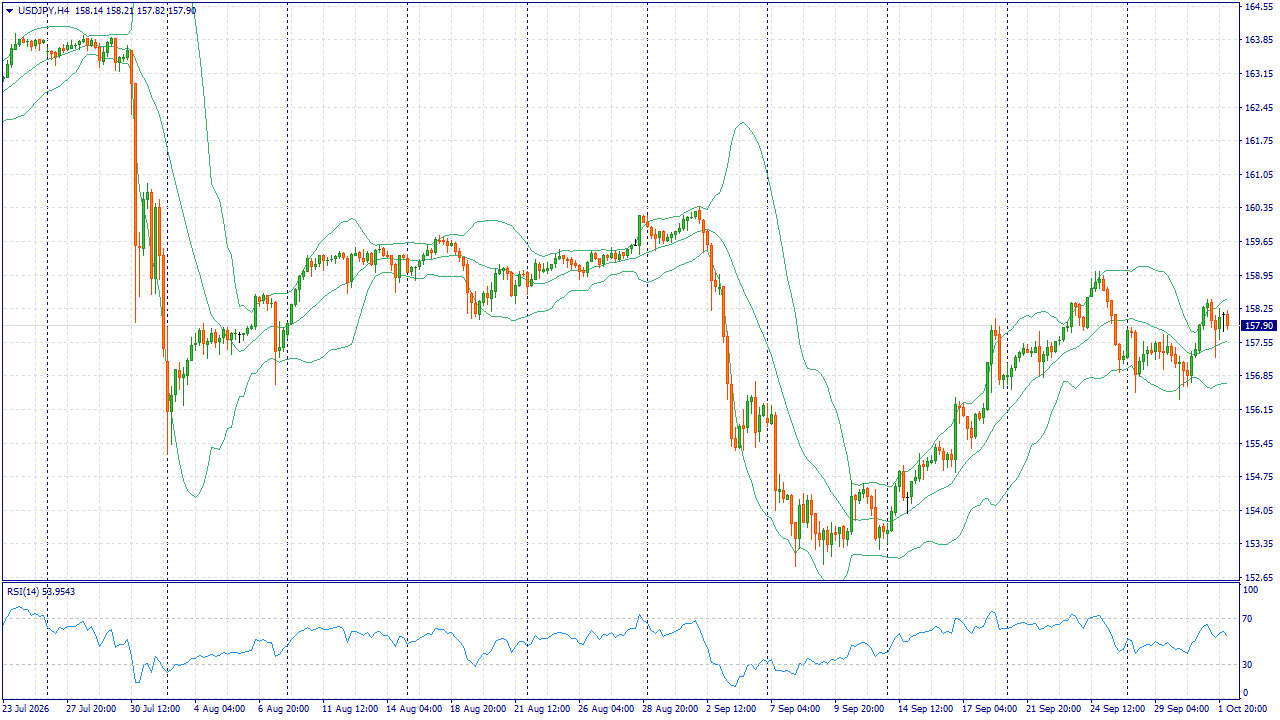
Fundamental Market Analysis for October 02, 2026 USDJPY Event to watch today: 15:30 EET. USD - Unemployment Rate USDJPY: $25 for a risk-free start! Register, complete verification, enter promo code INDOINVEST10 in your Personal Area, and get a trading bonus with no deposit required. Inflation in Tokyo gave the yen fresh support: the core measure excluding fresh food accelerated in September to 2.7% from 1.8%, exceeding expectations of 2.4%. Core inflation excluding fresh food and fuel reached 3%, and services inflation also strengthened. This expands the case for further Bank of Japan rate hikes, although part of the acceleration is linked to the end of subsidies. High US bond yields continue to support the dollar, but their rise cannot be fully explained by expectations of an imminent Fed rate hike. Softer US inflation and cautious signals from the regulator have reduced the likelihood of an immediate move. Amid European budget risks, safe-haven demand could support both the dollar and the yen, so their ratio requires separate assessment. For USD/JPY, the new Japanese inflation signal now creates grounds for a decline despite the persistent interest rate differential. The US employment report could cancel this scenario if strong wage growth again fuels expectations of Fed tightening. Prior to the release, the base idea is to sell the pair: yen support relies on new data, not just the risk of currency intervention. Trading idea: SELL 157.95, SL 158.30, TP 157.15 Our company provides the opportunity to earn income not only from your trading. By attracting clients within the affiliate program, you can earn up to $30 per lot! You can find more analytical information on our website.
-

VIP Membership - FREE upgrade for OLD and ACTIVE Members
KJs replied to MrAdmin's topic in Announcements
Dear Traderbeuty, Greetings!! Please add me as VIP Member. Warm Regards. -
Welcome to Indo-Investasi.com. Please feel free to browse around and get to know the others. If you have any questions please don't hesitate to ask.
-

VIP Membership - FREE upgrade for OLD and ACTIVE Members
juanfer replied to MrAdmin's topic in Announcements
Hi, I don't think I'm set up as a VIP; could you upgrade me? Thanks. -
p.s. demo trading is the perfect place to build that routine, but it takes serious patience. Don’t rush into high leverage, protect your capital first and keep learning every day.