

⤴️-Paid Ad- Check advertising disclaimer here. Add your banner here.🔥
Leaderboard

Popular Content
Showing content with the highest reputation on 04/13/2026 in all areas
-

Scalper
techfo and 6 others reacted to Ninja_On_The_Roof for a topic
Ahh shoot. So sorry guys! Added the wrong one. This one should be it. https://limewire.com/d/T7EMJ#wfdKyTqnlI7 points -

Elliott Wave for Amibroker 64 bit.
⭐ option trader and 3 others reacted to ⭐ Atomo12345 for a topic
Elliott Wave for Amibroker 64 bit. Please marie substitute the EWcount.dll in plugin. https://workupload.com/file/EmDyNXHSPGq4 points -
Cheers. This is 3.4.9 That was provided. If there is 3.4.10 or higher feel free to post it. https://workupload.com/file/F2TAkEuFBvJ3 points
-
Scalper
techfo and 2 others reacted to Ninja_On_The_Roof for a topic
https://workupload.com/file/UBCvQWpT4cA3 points -

Monkey man indicators
pygmalion5000 and one other reacted to mmicro for a topic
MMTUltimateDelta.zip2 points -
NQ Ultra - Futures Trading Bot // https://tradegreater.com/
NASDAQ reacted to Ninja_On_The_Roof for a topic
I personally, this one is one of the best out there. This one delivers. Quite honest, there are just way too many junkies floating around as far as for automated strategies and or bots. Just a nonstop headache for you to try to test them out, plugging in all kinds of templates and numbers, backtesting them all for weeks and months. Not to mention, by the time you have done all your desired testing, in the middle of all that, or at the end, then there are other indicators/bots popping out...Then now, you are once again, itchy and also wanna get your hands on them and, test them out too. Cycle keeps going and going.🤗1 point -
The AI function is in the formula editor and not the AFLwiz as far as I can tell You will also need to provide your own Google Gemini API key.1 point
-

Scalper
⭐ goldeneagle1 reacted to Historical-Ad1985 for a topic
password was 1234561 point -
Algobox pro latest version
FCScalper reacted to Ninja_On_The_Roof for a topic
FCScaler said this didnt work on his PC.1 point -
1 point
-
Hopefully it's ok now. Screenshot below: https://workupload.com/archive/xekVEP75hj
 1 point
 -
Algobox pro latest version
FCScalper reacted to Ninja_On_The_Roof for a topic
Sorry. I never tried it. Thought I saw folks posting it.1 point -
ScalperIntel IFVG
⭐ ajeet reacted to Ninja_On_The_Roof for a topic
https://limewire.com/d/Qbcaz#m7ErM8qTKD1 point -
N!njacators L!quidity Sweep
⭐ goldeneagle1 reacted to Ninja_On_The_Roof for a topic
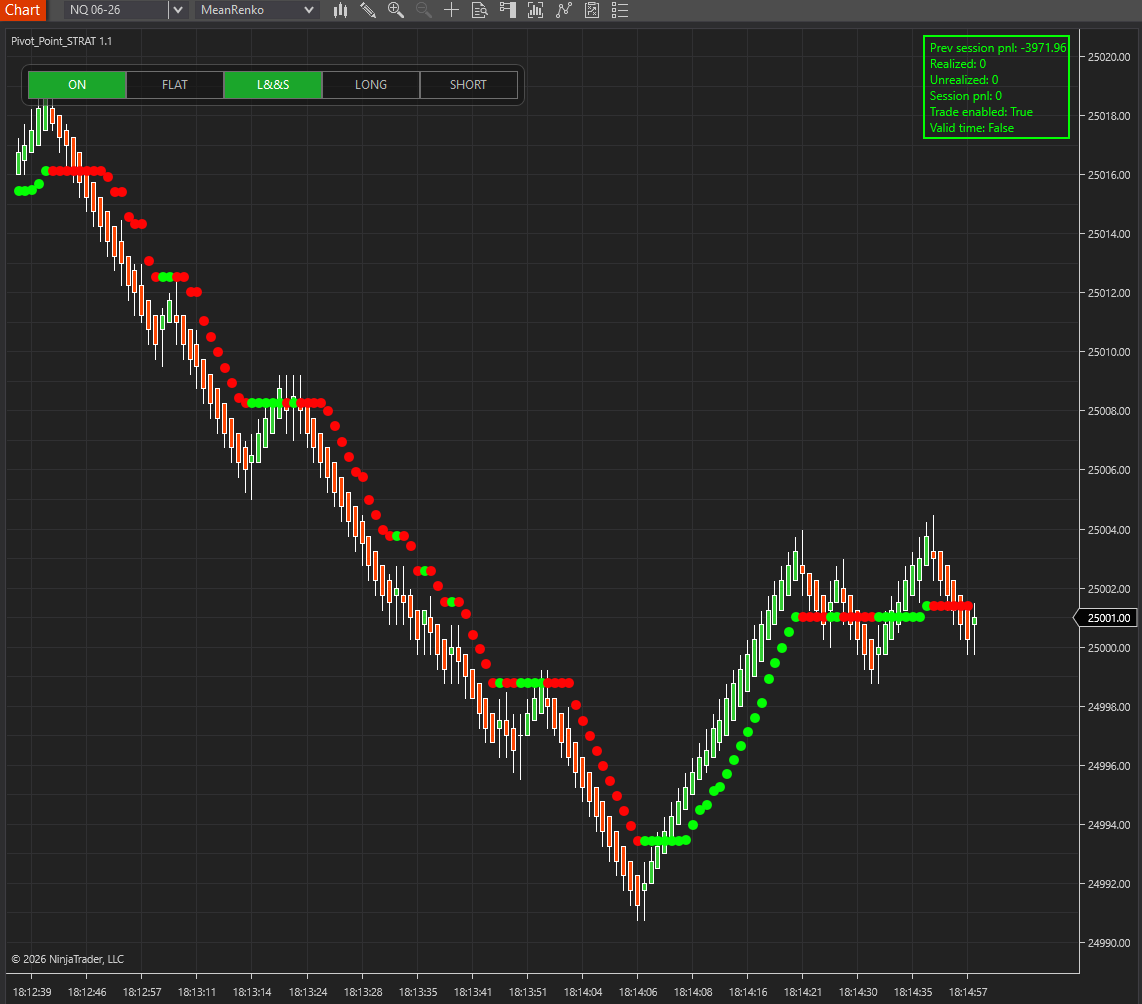
Yep. Looks very counter productive to me and also, dangerous and risky. Catching a very tiny bit of profit while going against the overall market structure, is just nuts. Not to say that, you won't make a buck here and there, but still. Doesn't look good to me!1 point -
Pivot_Point_STRAT proptradingindicatorscom
Dimdium reacted to Ninja_On_The_Roof for a topic
Awesome. Thanks. I also noticed, from your photo, that you use Tbar. Aren't you afraid that it does not show actual price?🤗1 point -
WOLFE WAVE
⭐ goldeneagle1 reacted to ⭐ fryguy1 for a topic
Check this reseller for Google Gemini https://www.z2u.com/product-876155/Google-AI-Gemini-Pro-12-Months-Family-Member-Account.html1 point -

WOLFE WAVE
⭐ goldeneagle1 reacted to kingmob6 for a topic
wolfie.txt1 point -
Fixed ... TWST Fusion Bot
Oana SSS reacted to Ninja_On_The_Roof for a topic
Here's a few templates for the Fusion. Use Fusion Control Panel to import them. https://limewire.com/d/CFJ75#9DP9pQcaOJ1 point -

AnchoredVP、AnchoredVWAP
⭐ goldeneagle1 reacted to CaptainJack for a topic
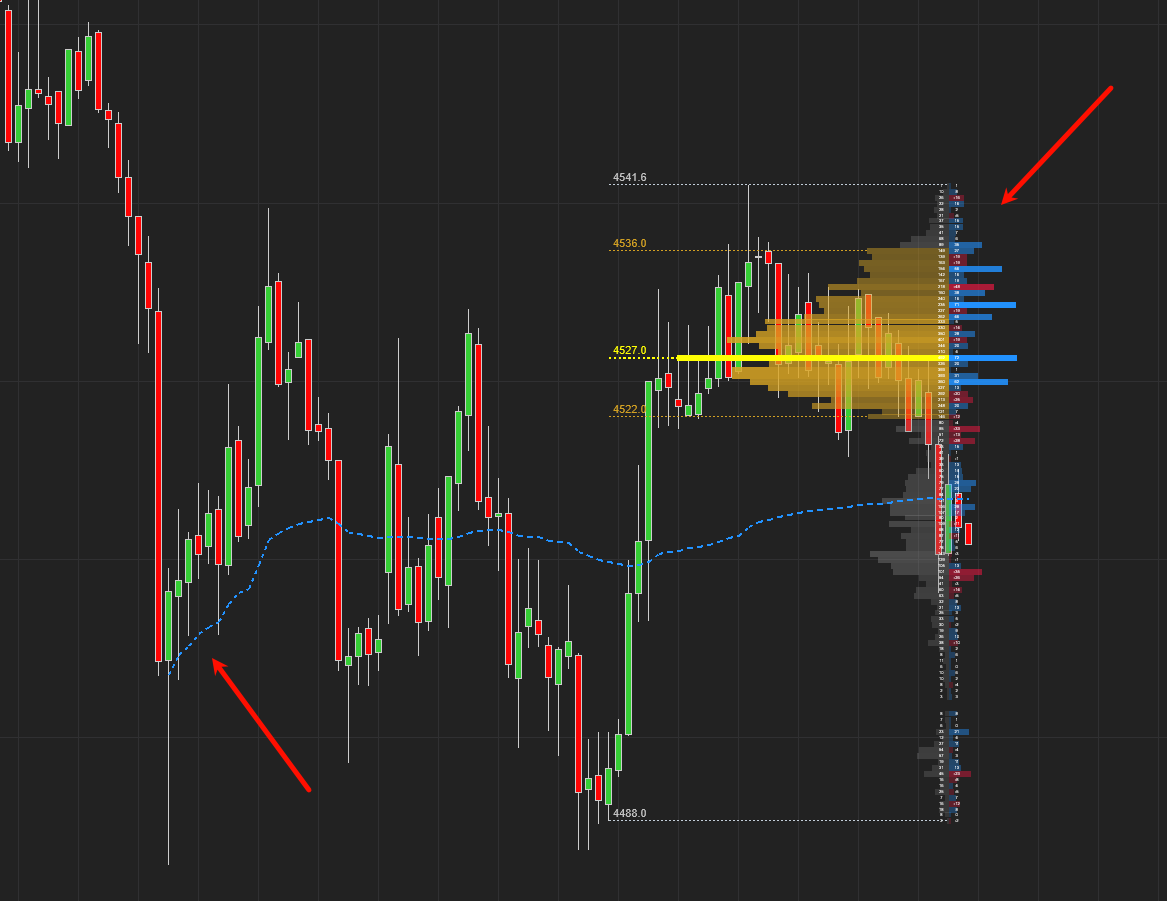
AnchoredVP、AnchoredVWAP AnchoredVP.zip AnchoredVWAP.zip
1 point -

WOLFE WAVE
⭐ goldeneagle1 reacted to Simion_Aretz for a topic
not sure if this is what you’re looking for BDTSTRindicator.zip1 point -

Nex Gen 3 Group Buy
⭐ goldeneagle1 reacted to ⭐ sean2003 for a topic
I also bought Nexgen 20 years ago. Their multi-timeframe Fibs are really good. Their software pings the license server multiple times. I also don't know that anyone was able to edu nexgen. Thanks1 point -

Nex Gen 3 Group Buy
⭐ goldeneagle1 reacted to Traderbeauty for a topic
i have a legit nexgen license from years ago and i can tell you that its not worth 160$. i would not send nadjib money unless he can prove that he has the real thing. as i said before- no one ever succeeded to edu nexgen. just be careful.1 point -

Nex Gen 3 Group Buy
⭐ goldeneagle1 reacted to roddizon1978 for a topic
Yes , Ninja Trader 8 have a T3 indicator but not as good as Think or swim has. As I have read John Novak incoporate all Tilson indicators on his system, That's why it is called T3, T stand for Tilson, that's why a lot of indicator creators, debunk him, because they said, he is just a copy cat. MACDBB was also another creation of Tilson. As For Fibs,I would said it is a part of a Elliot wave trade, but it doesn't work all the time, We have posted Ninjacator Elliot wave files in here. How do John knows when his Fibs will work. That is the question I want to know, but since we don't have his system, we will not know, In 2021, najib, posted in selling a multi machine Nexgen T3 for sale for $160. I will ask him if he have a new version. publis a N Tilson1 point -

WOLFE WAVE
⭐ goldeneagle1 reacted to imfm for a topic
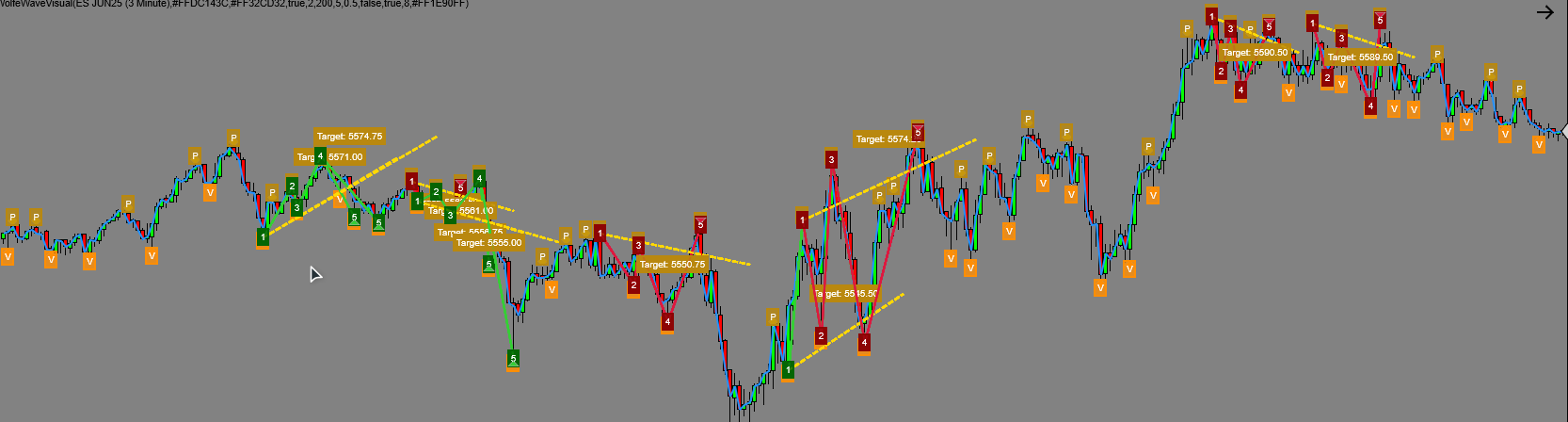
WolfeWaveVisual Indicator - User Manual Overview The WolfeWaveVisual indicator is designed to automatically identify and display Wolfe Wave patterns on your NinjaTrader 8 charts. This implementation features enhanced visualization, flexible detection parameters, and real-time alerts. Key Features Automatic Pattern Detection: Identifies both bullish and bearish Wolfe Wave patterns Clear Visual Markers: Highlights each swing point with diamonds and numbered labels ZigZag Visualization: Shows the underlying price structure used for pattern detection Target Price Projection: Calculates and displays potential price targets based on pattern geometry Configurable Parameters: Adjust sensitivity and visualization to suit different markets and timeframes Debug Mode: Provides detailed information about pattern detection process Real-time Alerts: Notifies you when new patterns form Parameter Settings Parameter Description Recommended Range FractalStrength Number of bars on each side to confirm swing points 2-5 MaxLookback Maximum number of bars to analyze for patterns 100-500 PatternTolerance Flexibility in pattern validation (higher = more patterns) 0.3-0.7 MinPointsForPattern Minimum number of swing points before pattern checking 5-10 ShowAllPoints Display all detected zigzag points True ShowTargetProjection Display target price projection lines True DebugMode Show detailed debug information True (initially) Color Settings Setting Description BullishColor Color for bullish Wolfe Wave patterns BearishColor Color for bearish Wolfe Wave patterns ZigZagColor Color for the zigzag connecting swing points Pattern Identification The indicator identifies two types of Wolfe Wave patterns: Bullish Wolfe Wave Forms during downtrends Consists of 5 points (3 valleys and 2 peaks) Point 5 is lower than point 3 Points 1-3 and 2-4 converge Potential buying opportunity at point 5 Bearish Wolfe Wave Forms during uptrends Consists of 5 points (3 peaks and 2 valleys) Point 5 is higher than point 3 Points 1-3 and 2-4 converge Potential selling opportunity at point 5 Troubleshooting Issue Solution No patterns detected Increase PatternTolerance, decrease FractalStrength Too many false patterns Decrease PatternTolerance, increase FractalStrength ZigZag lines missing Ensure ShowAllPoints is enabled No visual elements Check that the indicator is applied to price panel Tips for Best Results Use on higher timeframes (H1, H4, Daily) for more reliable patterns Combine with volume analysis and support/resistance levels Start with DebugMode enabled to understand detection process Adjust FractalStrength based on market volatility Consider patterns more reliable when they align with the overall trend Technical Notes Indicator recalculates on each new bar Pattern detection uses a zigzag-based approach Target prices are calculated using projection of line 1-3 Alerts trigger once when a pattern is first detected1 point -
WOLFE WAVE
⭐ goldeneagle1 reacted to imfm for a topic
1 point -
WOLFE WAVE
⭐ goldeneagle1 reacted to imfm for a topic
HERE AN UPDATE #region Using declarations using System; using System.Collections.Generic; using System.ComponentModel; using System.ComponentModel.DataAnnotations; using System.Linq; using System.Text; using System.Threading.Tasks; using System.Windows; using System.Windows.Input; using System.Windows.Media; using System.Xml.Serialization; using NinjaTrader.Cbi; using NinjaTrader.Gui; using NinjaTrader.Gui.Chart; using NinjaTrader.Gui.SuperDom; using NinjaTrader.Gui.Tools; using NinjaTrader.Data; using NinjaTrader.NinjaScript; using NinjaTrader.Core.FloatingPoint; using NinjaTrader.NinjaScript.DrawingTools; using NinjaTrader.NinjaScript.Indicators; #endregion namespace NinjaTrader.NinjaScript.Indicators { public class WolfeWaveVisual : Indicator { #region Variables private List<WolfePoint> peakPoints = new List<WolfePoint>(); private List<WolfePoint> valleyPoints = new List<WolfePoint>(); private int lastProcessedBar = 0; private bool isDebugMode = false; private int patternCount = 0; private class WolfePoint { public int BarIndex { get; set; } // Índice de la barra public double Price { get; set; } // Precio del punto public DateTime Time { get; set; } // Tiempo asociado public bool IsPeak { get; set; } // Si es pico (true) o valle (false) public WolfePoint(int barIndex, double price, DateTime time, bool isPeak) { BarIndex = barIndex; Price = price; Time = time; IsPeak = isPeak; } } private class WolfePattern { public WolfePoint Point1 { get; set; } public WolfePoint Point2 { get; set; } public WolfePoint Point3 { get; set; } public WolfePoint Point4 { get; set; } public WolfePoint Point5 { get; set; } public bool IsBullish { get; set; } public double TargetPrice { get; set; } } #endregion #region Properties [NinjaScriptProperty] [Range(1, 10)] [Display(Name="Fractal Strength", Description="Number of bars on each side to confirm fractals", Order=1, GroupName="Parameters")] public int FractalStrength { get; set; } [NinjaScriptProperty] [Range(1, 500)] [Display(Name="Max Lookback Bars", Description="Maximum number of bars to look back for patterns", Order=2, GroupName="Parameters")] public int MaxLookback { get; set; } [NinjaScriptProperty] [Range(0.1, 1.0)] [Display(Name="Pattern Tolerance", Description="Tolerance for validating patterns (0.1-1.0)", Order=3, GroupName="Parameters")] public double PatternTolerance { get; set; } [NinjaScriptProperty] [Display(Name="Show All ZigZag Points", Description="Show all detected zigzag points", Order=4, GroupName="Visualization")] public bool ShowAllPoints { get; set; } [NinjaScriptProperty] [Display(Name="Bullish Pattern Color", Order=5, GroupName="Visualization")] public Brush BullishColor { get; set; } [NinjaScriptProperty] [Display(Name="Bearish Pattern Color", Order=6, GroupName="Visualization")] public Brush BearishColor { get; set; } [NinjaScriptProperty] [Display(Name="ZigZag Line Color", Order=7, GroupName="Visualization")] public Brush ZigZagColor { get; set; } [NinjaScriptProperty] [Display(Name="Triangle Size", Description="Size of triangles marking pattern completion", Order=8, GroupName="Visualization")] public int TriangleSize { get; set; } [NinjaScriptProperty] [Display(Name="Show Target Projection", Description="Show target price projection", Order=9, GroupName="Visualization")] public bool ShowTargetProjection { get; set; } [NinjaScriptProperty] [Display(Name="Min Points For Pattern", Description="Minimum number of zigzag points needed before checking patterns", Order=10, GroupName="Parameters")] public int MinPointsForPattern { get; set; } [NinjaScriptProperty] [Display(Name="Debug Mode", Description="Show additional information for debugging", Order=11, GroupName="Parameters")] public bool DebugMode { get; set; } #endregion protected override void OnStateChange() { if (State == State.SetDefaults) { Description = "Wolfe Wave Indicator with Enhanced Visualization"; Name = "WolfeWaveVisual"; Calculate = Calculate.OnEachTick; // Vamos a calcular en cada tick para mayor precisión IsOverlay = true; DisplayInDataBox = true; DrawOnPricePanel = true; DrawHorizontalGridLines = true; DrawVerticalGridLines = true; PaintPriceMarkers = true; ScaleJustification = NinjaTrader.Gui.Chart.ScaleJustification.Right; // Establecer valores predeterminados FractalStrength = 2; MaxLookback = 200; PatternTolerance = 0.5; ShowAllPoints = true; BullishColor = Brushes.LimeGreen; BearishColor = Brushes.Crimson; ZigZagColor = Brushes.DodgerBlue; TriangleSize = 8; ShowTargetProjection = true; MinPointsForPattern = 5; DebugMode = true; // Crear plots para asegurar que el indicador aparezca en el gráfico AddPlot(new Stroke(ZigZagColor, 2), PlotStyle.Line, "ZigZag"); } else if (State == State.Configure) { // No necesita configuración adicional } else if (State == State.DataLoaded) { // Inicializar variables peakPoints.Clear(); valleyPoints.Clear(); lastProcessedBar = 0; isDebugMode = DebugMode; if (isDebugMode) { ClearOutputWindow(); Print("WolfeWaveVisual: Inicializado con Fractal=" + FractalStrength + ", Lookback=" + MaxLookback + ", Tolerance=" + PatternTolerance); } } else if (State == State.Historical) { // Limpiar gráfico al empezar RemoveDrawObjects(); } } protected override void OnBarUpdate() { // Asegurarse de que tenemos suficientes barras para el análisis if (CurrentBar < FractalStrength * 2 + 1) return; // Actualizar plots para asegurar que el indicador se ve Values[0][0] = Close[0]; // Solo procesar una vez por barra if (lastProcessedBar == CurrentBar) return; lastProcessedBar = CurrentBar; // Detectar y almacenar picos y valles FindZigZagPoints(); // Mostrar ZigZag si está habilitado if (ShowAllPoints) { DrawZigZag(); } // Solo buscar patrones si tenemos suficientes puntos if (peakPoints.Count >= MinPointsForPattern/2&&valleyPoints.Count >= MinPointsForPattern/2) { // Detectar patrones Wolfe Wave FindWolfeWavePatterns(); } } #region ZigZag Detection private void FindZigZagPoints() { // Primero, verificar si hay un nuevo pico if (IsPeak(FractalStrength)) { // Verificar si este pico ya fue agregado bool alreadyExists = false; foreach (var point in peakPoints) { if (point.BarIndex == CurrentBar - FractalStrength) { alreadyExists = true; break; } } if (!alreadyExists) { WolfePoint newPeak = new WolfePoint( CurrentBar - FractalStrength, High[FractalStrength], Time[FractalStrength], true ); peakPoints.Add(newPeak); if (isDebugMode) { Print("WolfeWaveVisual: Nuevo pico detectado en barra " + newPeak.BarIndex + " a precio " + newPeak.Price); } // Marca el pico visualmente string tagName = "Peak_" + newPeak.BarIndex; Draw.Diamond(this, tagName, false, FractalStrength, High[FractalStrength], Brushes.Gold); Draw.Text(this, "txt_" + tagName, false, "P", FractalStrength, High[FractalStrength] + 3*TickSize, 0, Brushes.White, new SimpleFont("Arial", 9), TextAlignment.Center, Brushes.DarkGoldenrod, Brushes.DarkGoldenrod, 80); } } // Luego, verificar si hay un nuevo valle if (IsValley(FractalStrength)) { // Verificar si este valle ya fue agregado bool alreadyExists = false; foreach (var point in valleyPoints) { if (point.BarIndex == CurrentBar - FractalStrength) { alreadyExists = true; break; } } if (!alreadyExists) { WolfePoint newValley = new WolfePoint( CurrentBar - FractalStrength, Low[FractalStrength], Time[FractalStrength], false ); valleyPoints.Add(newValley); if (isDebugMode) { Print("WolfeWaveVisual: Nuevo valle detectado en barra " + newValley.BarIndex + " a precio " + newValley.Price); } // Marca el valle visualmente string tagName = "Valley_" + newValley.BarIndex; Draw.Diamond(this, tagName, false, FractalStrength, Low[FractalStrength], Brushes.DarkOrange); Draw.Text(this, "txt_" + tagName, false, "V", FractalStrength, Low[FractalStrength] - 3*TickSize, 0, Brushes.White, new SimpleFont("Arial", 9), TextAlignment.Center, Brushes.DarkOrange, Brushes.DarkOrange, 80); } } // Limpia puntos antiguos fuera del lookback CleanupOldPoints(); } private bool IsPeak(int strength) { if (CurrentBar < strength * 2) return false; double middleHigh = High[strength]; // Verificar las barras a la izquierda (barras más antiguas) for (int i = 1; i <= strength; i++) { if (High[strength + i] >= middleHigh) return false; } // Verificar las barras a la derecha (barras más recientes) for (int i = 1; i <= strength; i++) { if (High[strength - i] >= middleHigh) return false; } return true; } private bool IsValley(int strength) { if (CurrentBar < strength * 2) return false; double middleLow = Low[strength]; // Verificar las barras a la izquierda (barras más antiguas) for (int i = 1; i <= strength; i++) { if (Low[strength + i] <= middleLow) return false; } // Verificar las barras a la derecha (barras más recientes) for (int i = 1; i <= strength; i++) { if (Low[strength - i] <= middleLow) return false; } return true; } private void CleanupOldPoints() { // Mantener solo los puntos dentro del lookback int lookbackBar = Math.Max(0, CurrentBar - MaxLookback); // Limpiar picos antiguos peakPoints.RemoveAll(p => p.BarIndex < lookbackBar); // Limpiar valles antiguos valleyPoints.RemoveAll(v => v.BarIndex < lookbackBar); } private void DrawZigZag() { // Combinar todos los puntos List<WolfePoint> allPoints = new List<WolfePoint>(); allPoints.AddRange(peakPoints); allPoints.AddRange(valleyPoints); // Ordenar por índice de barra (del más antiguo al más reciente) allPoints = allPoints.OrderBy(p => p.BarIndex).ToList(); // Dibujar líneas ZigZag entre puntos consecutivos for (int i = 0; i < allPoints.Count - 1; i++) { WolfePoint current = allPoints[i]; WolfePoint next = allPoints[i + 1]; // Solo conectar si son de tipos diferentes (pico a valle o valle a pico) if (current.IsPeak != next.IsPeak) { string tagName = "ZigZag_" + current.BarIndex + "_" + next.BarIndex; Draw.Line(this, tagName, false, CurrentBar - current.BarIndex, current.Price, CurrentBar - next.BarIndex, next.Price, ZigZagColor, DashStyleHelper.Solid, 1); } } } #endregion #region Wolfe Wave Pattern Detection private void FindWolfeWavePatterns() { FindBullishWolfeWaves(); FindBearishWolfeWaves(); } private void FindBullishWolfeWaves() { // Verificar si tenemos suficientes valles (necesitamos al menos 3) y picos (necesitamos al menos 2) if (valleyPoints.Count < 3 || peakPoints.Count < 2) return; // Ordenar puntos de más recientes a más antiguos List<WolfePoint> sortedValleys = valleyPoints.OrderByDescending(v => v.BarIndex).ToList(); List<WolfePoint> sortedPeaks = peakPoints.OrderByDescending(p => p.BarIndex).ToList(); // Si no tenemos al menos un valle reciente para el punto 5, no hay patrón if (sortedValleys.Count == 0) return; // Comenzar con el valle más reciente como punto 5 WolfePoint point5 = sortedValleys[0]; // Buscar un pico antes del punto 5 para ser el punto 4 WolfePoint point4 = null; foreach (var peak in sortedPeaks) { if (peak.BarIndex < point5.BarIndex&&peak.Price > point5.Price) { point4 = peak; break; } } if (point4 == null) return; // Buscar un valle antes del punto 4 para ser el punto 3 WolfePoint point3 = null; foreach (var valley in sortedValleys) { if (valley.BarIndex < point4.BarIndex&&valley.Price < point4.Price) { point3 = valley; break; } } if (point3 == null) return; // Buscar un pico antes del punto 3 para ser el punto 2 WolfePoint point2 = null; foreach (var peak in sortedPeaks) { if (peak.BarIndex < point3.BarIndex&&peak.Price > point3.Price) { point2 = peak; break; } } if (point2 == null) return; // Buscar un valle antes del punto 2 para ser el punto 1 WolfePoint point1 = null; foreach (var valley in sortedValleys) { if (valley.BarIndex < point2.BarIndex&&valley.Price < point2.Price) { point1 = valley; break; } } if (point1 == null) return; // Verificar si es un patrón Wolfe Wave Bullish válido if (IsBullishWolfeWaveValid(point1, point2, point3, point4, point5)) { // Calcular el objetivo de precio double targetPrice = CalculateBullishTarget(point1, point3, point5); // Dibujar el patrón DrawBullishWolfeWave(point1, point2, point3, point4, point5, targetPrice); if (isDebugMode) { Print("WolfeWaveVisual: Patrón ALCISTA encontrado en barra " + CurrentBar); } } } private void FindBearishWolfeWaves() { // Verificar si tenemos suficientes picos (necesitamos al menos 3) y valles (necesitamos al menos 2) if (peakPoints.Count < 3 || valleyPoints.Count < 2) return; // Ordenar puntos de más recientes a más antiguos List<WolfePoint> sortedPeaks = peakPoints.OrderByDescending(p => p.BarIndex).ToList(); List<WolfePoint> sortedValleys = valleyPoints.OrderByDescending(v => v.BarIndex).ToList(); // Si no tenemos al menos un pico reciente para el punto 5, no hay patrón if (sortedPeaks.Count == 0) return; // Comenzar con el pico más reciente como punto 5 WolfePoint point5 = sortedPeaks[0]; // Buscar un valle antes del punto 5 para ser el punto 4 WolfePoint point4 = null; foreach (var valley in sortedValleys) { if (valley.BarIndex < point5.BarIndex&&valley.Price < point5.Price) { point4 = valley; break; } } if (point4 == null) return; // Buscar un pico antes del punto 4 para ser el punto 3 WolfePoint point3 = null; foreach (var peak in sortedPeaks) { if (peak.BarIndex < point4.BarIndex&&peak.Price > point4.Price) { point3 = peak; break; } } if (point3 == null) return; // Buscar un valle antes del punto 3 para ser el punto 2 WolfePoint point2 = null; foreach (var valley in sortedValleys) { if (valley.BarIndex < point3.BarIndex&&valley.Price < point3.Price) { point2 = valley; break; } } if (point2 == null) return; // Buscar un pico antes del punto 2 para ser el punto 1 WolfePoint point1 = null; foreach (var peak in sortedPeaks) { if (peak.BarIndex < point2.BarIndex&&peak.Price > point2.Price) { point1 = peak; break; } } if (point1 == null) return; // Verificar si es un patrón Wolfe Wave Bearish válido if (IsBearishWolfeWaveValid(point1, point2, point3, point4, point5)) { // Calcular el objetivo de precio double targetPrice = CalculateBearishTarget(point1, point3, point5); // Dibujar el patrón DrawBearishWolfeWave(point1, point2, point3, point4, point5, targetPrice); if (isDebugMode) { Print("WolfeWaveVisual: Patrón BAJISTA encontrado en barra " + CurrentBar); } } } private bool IsBullishWolfeWaveValid(WolfePoint p1, WolfePoint p2, WolfePoint p3, WolfePoint p4, WolfePoint p5) { // Verificar la secuencia de tiempo if (!(p1.BarIndex < p2.BarIndex&&p2.BarIndex < p3.BarIndex&&p3.BarIndex < p4.BarIndex&&p4.BarIndex < p5.BarIndex)) { return false; } // Verificar que los puntos alternan entre picos y valles if (!(p1.IsPeak == false&&p2.IsPeak == true&&p3.IsPeak == false&&p4.IsPeak == true&&p5.IsPeak == false)) { return false; } // Para patrones bullish, el punto 5 debe ser más bajo que el punto 3 if (p5.Price >= p3.Price) { if (isDebugMode) Print("WolfeWaveVisual: Patrón BULLISH rechazado - Punto 5 no es más bajo que Punto 3"); return false; } // El punto 4 debe ser más alto que el punto 2 if (p4.Price <= p2.Price) { if (isDebugMode) Print("WolfeWaveVisual: Patrón BULLISH rechazado - Punto 4 no es más alto que Punto 2"); return false; } // Calcular pendientes double slope13 = CalculateSlope(p1, p3); double slope24 = CalculateSlope(p2, p4); double slope14 = CalculateSlope(p1, p4); // En un patrón bullish, la pendiente 1-3 debe ser menos positiva (o más negativa) que la pendiente 2-4 // Permitimos cierta tolerancia double tolerance = Math.Abs(slope24 * PatternTolerance); if (slope13 >= slope24 + tolerance) { if (isDebugMode) Print("WolfeWaveVisual: Patrón BULLISH rechazado - Pendiente 1-3 no converge con 2-4"); return false; } return true; } private bool IsBearishWolfeWaveValid(WolfePoint p1, WolfePoint p2, WolfePoint p3, WolfePoint p4, WolfePoint p5) { // Verificar la secuencia de tiempo if (!(p1.BarIndex < p2.BarIndex&&p2.BarIndex < p3.BarIndex&&p3.BarIndex < p4.BarIndex&&p4.BarIndex < p5.BarIndex)) { return false; } // Verificar que los puntos alternan entre picos y valles if (!(p1.IsPeak == true&&p2.IsPeak == false&&p3.IsPeak == true&&p4.IsPeak == false&&p5.IsPeak == true)) { return false; } // Para patrones bearish, el punto 5 debe ser más alto que el punto 3 if (p5.Price <= p3.Price) { if (isDebugMode) Print("WolfeWaveVisual: Patrón BEARISH rechazado - Punto 5 no es más alto que Punto 3"); return false; } // El punto 4 debe ser más bajo que el punto 2 if (p4.Price >= p2.Price) { if (isDebugMode) Print("WolfeWaveVisual: Patrón BEARISH rechazado - Punto 4 no es más bajo que Punto 2"); return false; } // Calcular pendientes double slope13 = CalculateSlope(p1, p3); double slope24 = CalculateSlope(p2, p4); double slope14 = CalculateSlope(p1, p4); // En un patrón bearish, la pendiente 1-3 debe ser más positiva (o menos negativa) que la pendiente 2-4 // Permitimos cierta tolerancia double tolerance = Math.Abs(slope24 * PatternTolerance); if (slope13 <= slope24 - tolerance) { if (isDebugMode) Print("WolfeWaveVisual: Patrón BEARISH rechazado - Pendiente 1-3 no converge con 2-4"); return false; } return true; } private double CalculateSlope(WolfePoint start, WolfePoint end) { if (end.BarIndex == start.BarIndex) return 0; return (end.Price - start.Price) / (end.BarIndex - start.BarIndex); } #endregion #region Visualization Methods private void DrawBullishWolfeWave(WolfePoint p1, WolfePoint p2, WolfePoint p3, WolfePoint p4, WolfePoint p5, double targetPrice) { patternCount++; string patternId = "Bull_" + CurrentBar + "_" + patternCount; // Calcular las coordenadas de barra para el dibujo (distancia desde la barra actual) int x1 = CurrentBar - p1.BarIndex; int x2 = CurrentBar - p2.BarIndex; int x3 = CurrentBar - p3.BarIndex; int x4 = CurrentBar - p4.BarIndex; int x5 = CurrentBar - p5.BarIndex; // Dibujar líneas conectando los puntos Draw.Line(this, patternId + "_1_2", false, x1, p1.Price, x2, p2.Price, BullishColor, DashStyleHelper.Solid, 2); Draw.Line(this, patternId + "_2_3", false, x2, p2.Price, x3, p3.Price, BullishColor, DashStyleHelper.Solid, 2); Draw.Line(this, patternId + "_3_4", false, x3, p3.Price, x4, p4.Price, BullishColor, DashStyleHelper.Solid, 2); Draw.Line(this, patternId + "_4_5", false, x4, p4.Price, x5, p5.Price, BullishColor, DashStyleHelper.Solid, 2); // Dibujar líneas de proyección si está habilitado if (ShowTargetProjection) { // Extender la línea 1-3 para proyectar el objetivo de precio // Calculamos la barra donde la proyección alcanzaría el objetivo double slope13 = CalculateSlope(p1, p3); int barsFromPoint1 = p5.BarIndex - p1.BarIndex; int projectionBars = barsFromPoint1 + Math.Min(50, barsFromPoint1 / 2); // Dibujar proyección desde punto 1 hasta el objetivo Draw.Line(this, patternId + "_target", false, x1, p1.Price, CurrentBar - (p1.BarIndex + projectionBars), targetPrice, Brushes.Gold, DashStyleHelper.Dash, 2); // Etiquetar el precio objetivo Draw.Text(this, patternId + "_targetlabel", false, "Target: " + FormatPrice(targetPrice), CurrentBar - (p1.BarIndex + projectionBars/2), targetPrice, 0, Brushes.White, new SimpleFont("Arial", 10), TextAlignment.Center, Brushes.DarkGoldenrod, Brushes.DarkGoldenrod, 80); } // Etiquetar los puntos Draw.Text(this, patternId + "_p1", false, "1", x1, p1.Price, 0, Brushes.White, new SimpleFont("Arial", 10), TextAlignment.Center, Brushes.DarkGreen, Brushes.DarkGreen, 80); Draw.Text(this, patternId + "_p2", false, "2", x2, p2.Price, 0, Brushes.White, new SimpleFont("Arial", 10), TextAlignment.Center, Brushes.DarkGreen, Brushes.DarkGreen, 80); Draw.Text(this, patternId + "_p3", false, "3", x3, p3.Price, 0, Brushes.White, new SimpleFont("Arial", 10), TextAlignment.Center, Brushes.DarkGreen, Brushes.DarkGreen, 80); Draw.Text(this, patternId + "_p4", false, "4", x4, p4.Price, 0, Brushes.White, new SimpleFont("Arial", 10), TextAlignment.Center, Brushes.DarkGreen, Brushes.DarkGreen, 80); Draw.Text(this, patternId + "_p5", false, "5", x5, p5.Price, 0, Brushes.White, new SimpleFont("Arial", 10), TextAlignment.Center, Brushes.DarkGreen, Brushes.DarkGreen, 80); // Dibujar un triángulo para marcar el patrón completo Draw.TriangleUp(this, patternId + "_marker", false, x5, p5.Price - 2 * TickSize, BullishColor); Alert("WolfeWave_Bull", Priority.Medium, "Wolfe Wave Bullish Pattern", NinjaTrader.Core.Globals.InstallDir + @"\sounds\Alert1.wav", 0, Brushes.LimeGreen, Brushes.Black); } private void DrawBearishWolfeWave(WolfePoint p1, WolfePoint p2, WolfePoint p3, WolfePoint p4, WolfePoint p5, double targetPrice) { patternCount++; string patternId = "Bear_" + CurrentBar + "_" + patternCount; // Calcular las coordenadas de barra para el dibujo (distancia desde la barra actual) int x1 = CurrentBar - p1.BarIndex; int x2 = CurrentBar - p2.BarIndex; int x3 = CurrentBar - p3.BarIndex; int x4 = CurrentBar - p4.BarIndex; int x5 = CurrentBar - p5.BarIndex; // Dibujar líneas conectando los puntos Draw.Line(this, patternId + "_1_2", false, x1, p1.Price, x2, p2.Price, BearishColor, DashStyleHelper.Solid, 2); Draw.Line(this, patternId + "_2_3", false, x2, p2.Price, x3, p3.Price, BearishColor, DashStyleHelper.Solid, 2); Draw.Line(this, patternId + "_3_4", false, x3, p3.Price, x4, p4.Price, BearishColor, DashStyleHelper.Solid, 2); Draw.Line(this, patternId + "_4_5", false, x4, p4.Price, x5, p5.Price, BearishColor, DashStyleHelper.Solid, 2); // Dibujar líneas de proyección si está habilitado if (ShowTargetProjection) { // Extender la línea 1-3 para proyectar el objetivo de precio // Calculamos la barra donde la proyección alcanzaría el objetivo double slope13 = CalculateSlope(p1, p3); int barsFromPoint1 = p5.BarIndex - p1.BarIndex; int projectionBars = barsFromPoint1 + Math.Min(50, barsFromPoint1 / 2); // Dibujar proyección desde punto 1 hasta el objetivo Draw.Line(this, patternId + "_target", false, x1, p1.Price, CurrentBar - (p1.BarIndex + projectionBars), targetPrice, Brushes.Gold, DashStyleHelper.Dash, 2); // Etiquetar el precio objetivo Draw.Text(this, patternId + "_targetlabel", false, "Target: " + FormatPrice(targetPrice), CurrentBar - (p1.BarIndex + projectionBars/2), targetPrice, 0, Brushes.White, new SimpleFont("Arial", 10), TextAlignment.Center, Brushes.DarkGoldenrod, Brushes.DarkGoldenrod, 80); } // Etiquetar los puntos Draw.Text(this, patternId + "_p1", false, "1", x1, p1.Price, 0, Brushes.White, new SimpleFont("Arial", 10), TextAlignment.Center, Brushes.DarkRed, Brushes.DarkRed, 80); Draw.Text(this, patternId + "_p2", false, "2", x2, p2.Price, 0, Brushes.White, new SimpleFont("Arial", 10), TextAlignment.Center, Brushes.DarkRed, Brushes.DarkRed, 80); Draw.Text(this, patternId + "_p3", false, "3", x3, p3.Price, 0, Brushes.White, new SimpleFont("Arial", 10), TextAlignment.Center, Brushes.DarkRed, Brushes.DarkRed, 80); Draw.Text(this, patternId + "_p4", false, "4", x4, p4.Price, 0, Brushes.White, new SimpleFont("Arial", 10), TextAlignment.Center, Brushes.DarkRed, Brushes.DarkRed, 80); Draw.Text(this, patternId + "_p5", false, "5", x5, p5.Price, 0, Brushes.White, new SimpleFont("Arial", 10), TextAlignment.Center, Brushes.DarkRed, Brushes.DarkRed, 80); // Dibujar un triángulo para marcar el patrón completo Draw.TriangleDown(this, patternId + "_marker", false, x5, p5.Price + 2 * TickSize, BearishColor); Alert("WolfeWave_Bear", Priority.Medium, "Wolfe Wave Bearish Pattern", NinjaTrader.Core.Globals.InstallDir + @"\sounds\Alert2.wav", 0, Brushes.Crimson, Brushes.Black); } private double CalculateBullishTarget(WolfePoint p1, WolfePoint p3, WolfePoint p5) { double slope = CalculateSlope(p1, p3); int barDiff = p5.BarIndex - p1.BarIndex; double targetPrice = p1.Price + slope * barDiff; // Asegurar que el objetivo sea razonable (si es demasiado bajo, ajustarlo) return Math.Max(targetPrice, p5.Price + 5 * TickSize); } private double CalculateBearishTarget(WolfePoint p1, WolfePoint p3, WolfePoint p5) { double slope = CalculateSlope(p1, p3); int barDiff = p5.BarIndex - p1.BarIndex; double targetPrice = p1.Price + slope * barDiff; // Asegurar que el objetivo sea razonable (si es demasiado alto, ajustarlo) return Math.Min(targetPrice, p5.Price - 5 * TickSize); } private string FormatPrice(double price) { return Instrument.MasterInstrument.FormatPrice(price); } #endregion } }1 point -
WOLFE WAVE
⭐ goldeneagle1 reacted to roddizon1978 for a topic
Can I have your script created version for the NT8, please, I will tried it on my end.1 point -
WOLFE WAVE
⭐ goldeneagle1 reacted to roddizon1978 for a topic
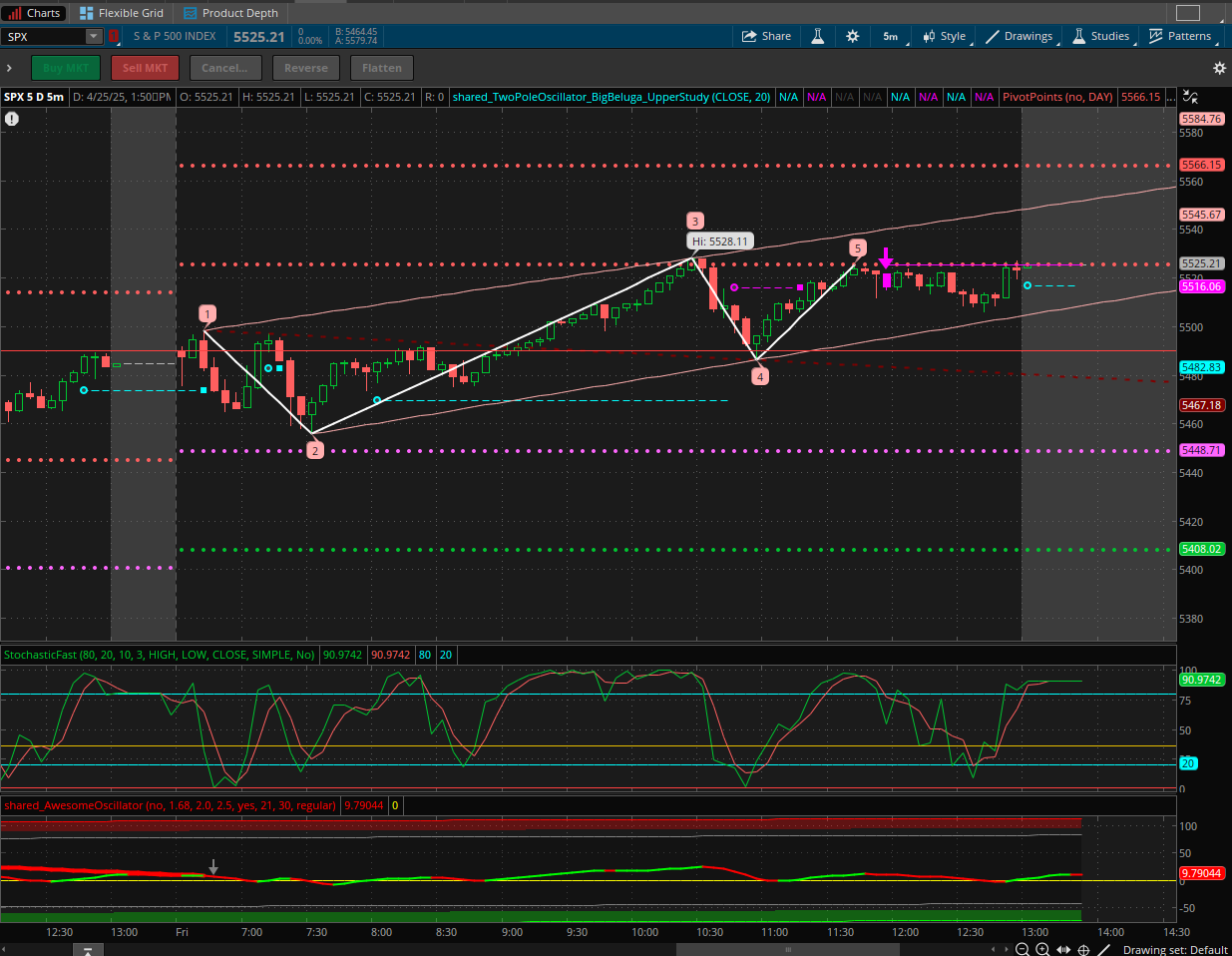
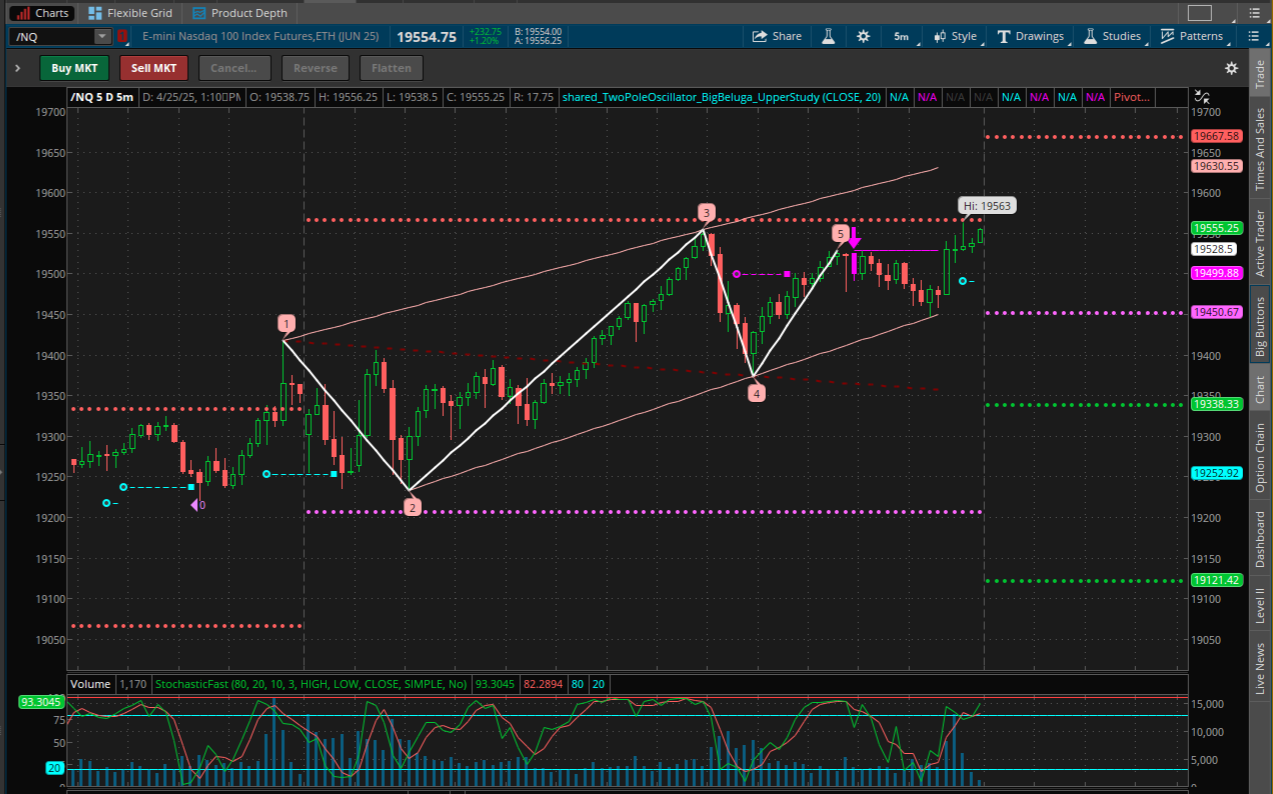
Should look like this. Let me copy your files and compile' The chart is a classic Elliot waves Hey can you convert a Pine script to NT8 too ?
1 point -
WOLFE WAVE
⭐ goldeneagle1 reacted to imfm for a topic
1 point -
WOLFE WAVE
⭐ goldeneagle1 reacted to imfm for a topic
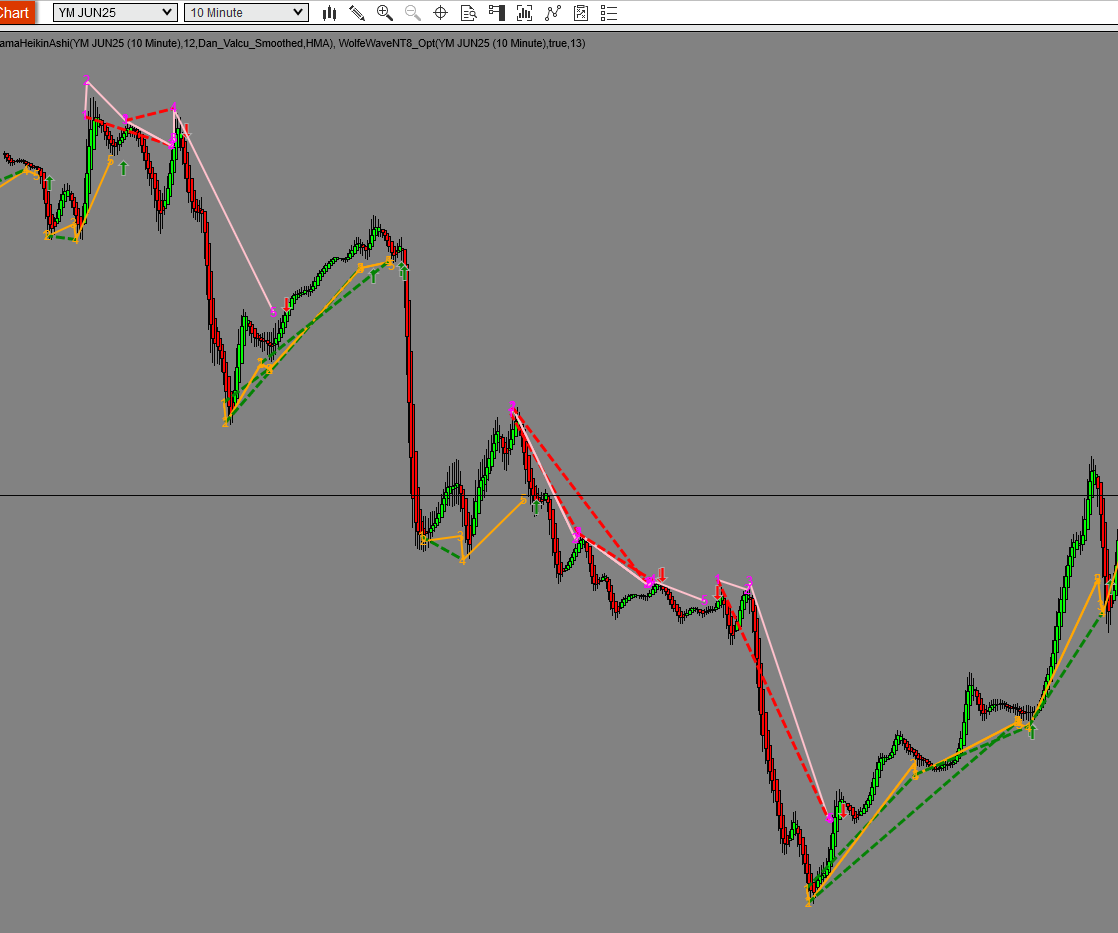
Hello, here is the first BETA release from Convert. Could you send me a screenshot of how it looks in ThinkorSwim? #region Using declarations using System; using System.Collections.Generic; using System.ComponentModel; using System.ComponentModel.DataAnnotations; using System.Linq; using System.Text; using System.Threading.Tasks; using System.Windows; using System.Windows.Input; using System.Windows.Media; using System.Xml.Serialization; using NinjaTrader.Cbi; using NinjaTrader.Gui; using NinjaTrader.Gui.Chart; using NinjaTrader.Gui.SuperDom; using NinjaTrader.Gui.Tools; using NinjaTrader.Data; using NinjaTrader.NinjaScript; using NinjaTrader.Core.FloatingPoint; using NinjaTrader.NinjaScript.DrawingTools; using NinjaTrader.NinjaScript.Indicators; #endregion namespace NinjaTrader.NinjaScript.Indicators { public class WolfeWaveNT8_Opt : Indicator { [Range(2, 50), NinjaScriptProperty] public int WaveLength { get; set; } = 13; [NinjaScriptProperty] public bool LabelPoints { get; set; } = true; private struct Extremum { public int BarIndex; public double Price; } private List<Extremum> swingHighs = new List<Extremum>(); private List<Extremum> swingLows = new List<Extremum>(); private int lastBullPatternBar = -1; private int lastBearPatternBar = -1; protected override void OnStateChange() { if (State == State.SetDefaults) { Name = "WolfeWaveNT8_Opt"; IsOverlay = true; Description = "Wolfe Wave para NinjaTrader 8 - optimizado"; } } protected override void OnBarUpdate() { if (CurrentBar < WaveLength) return; // Detectar máximos y mínimos de swing una sola vez para esta barra if (High[WaveLength / 2] == MAX(High, WaveLength)[WaveLength / 2]) { int idx = CurrentBar - WaveLength / 2; double price = High[WaveLength / 2]; // Evita añadir dos veces el mismo punto (por ejemplo en el primer ciclo) if (swingHighs.Count == 0 || swingHighs[swingHighs.Count - 1].BarIndex != idx) swingHighs.Add(new Extremum() { BarIndex = idx, Price = price }); if (swingHighs.Count > 20) swingHighs.RemoveAt(0); } if (Low[WaveLength / 2] == MIN(Low, WaveLength)[WaveLength / 2]) { int idx = CurrentBar - WaveLength / 2; double price = Low[WaveLength / 2]; if (swingLows.Count == 0 || swingLows[swingLows.Count - 1].BarIndex != idx) swingLows.Add(new Extremum() { BarIndex = idx, Price = price }); if (swingLows.Count > 20) swingLows.RemoveAt(0); } // Wolfe Bullish if (swingLows.Count >= 5) { var pts = swingLows.GetRange(swingLows.Count - 5, 5); // Revisa si este patrón ya se dibujó (no lo repite) if (pts[4].BarIndex != lastBullPatternBar) { // Patrón Wolfe básico: puedes ampliar reglas aquí a gusto if (pts[0].Price < pts[2].Price&&pts[2].Price < pts[4].Price) { string tagBase = "BullWolfe_" + pts[0].BarIndex + "_" + pts[4].BarIndex; // Limpia tags antiguos de este patrón si existen for (int i = 0; i < 5; i++) RemoveDrawObject("BullP" + (i + 1) + "_" + tagBase); for (int i = 0; i < 4; i++) RemoveDrawObject("BullWolfe" + i + "_" + tagBase); RemoveDrawObject("BullTarget" + tagBase); RemoveDrawObject("BullArrow" + tagBase); // Dibuja líneas for (int i = 0; i < 4; i++) { Draw.Line( this, "BullWolfe" + i + "_" + tagBase, false, CurrentBar - pts[i].BarIndex, pts[i].Price, CurrentBar - pts[i + 1].BarIndex, pts[i + 1].Price, Brushes.Orange, DashStyleHelper.Solid, 2 ); } Draw.Line( this, "BullTarget" + tagBase, false, CurrentBar - pts[0].BarIndex, pts[0].Price, CurrentBar - pts[3].BarIndex, pts[3].Price, Brushes.Green, DashStyleHelper.Dash, 3 ); // Puntos y flecha solo si se solicita if (LabelPoints) { for (int i = 0; i < 5; i++) { int barsAgo = CurrentBar - pts[i].BarIndex; Draw.Text( this, "BullP" + (i + 1) + "_" + tagBase, false, (i + 1).ToString(), barsAgo, pts[i].Price - TickSize * 2, 0, Brushes.Orange, new SimpleFont("Arial", 13), TextAlignment.Center, Brushes.Transparent, Brushes.Transparent, 100 ); } // Flecha entrada en p5 Draw.ArrowUp(this, "BullArrow" + tagBase, false, 0, pts[4].Price - TickSize * 2, Brushes.Green); } lastBullPatternBar = pts[4].BarIndex; } } } // Wolfe Bearish if (swingHighs.Count >= 5) { var pts = swingHighs.GetRange(swingHighs.Count - 5, 5); if (pts[4].BarIndex != lastBearPatternBar) { if (pts[0].Price > pts[2].Price&&pts[2].Price > pts[4].Price) { string tagBase = "BearWolfe_" + pts[0].BarIndex + "_" + pts[4].BarIndex; for (int i = 0; i < 5; i++) RemoveDrawObject("BearP" + (i + 1) + "_" + tagBase); for (int i = 0; i < 4; i++) RemoveDrawObject("BearWolfe" + i + "_" + tagBase); RemoveDrawObject("BearTarget" + tagBase); RemoveDrawObject("BearArrow" + tagBase); for (int i = 0; i < 4; i++) { Draw.Line( this, "BearWolfe" + i + "_" + tagBase, false, CurrentBar - pts[i].BarIndex, pts[i].Price, CurrentBar - pts[i + 1].BarIndex, pts[i + 1].Price, Brushes.Pink, DashStyleHelper.Solid, 2 ); } Draw.Line( this, "BearTarget" + tagBase, false, CurrentBar - pts[0].BarIndex, pts[0].Price, CurrentBar - pts[3].BarIndex, pts[3].Price, Brushes.Red, DashStyleHelper.Dash, 3 ); if (LabelPoints) { for (int i = 0; i < 5; i++) { int barsAgo = CurrentBar - pts[i].BarIndex; Draw.Text( this, "BearP" + (i + 1) + "_" + tagBase, false, (i + 1).ToString(), barsAgo, pts[i].Price + TickSize * 2, 0, Brushes.Magenta, new SimpleFont("Arial", 13), TextAlignment.Center, Brushes.Transparent, Brushes.Transparent, 100 ); } Draw.ArrowDown(this, "BearArrow" + tagBase, false, 0, pts[4].Price + TickSize * 2, Brushes.Red); } lastBearPatternBar = pts[4].BarIndex; } } } } } }1 point