

⤴️-Paid Ad- Check advertising disclaimer here. Add your banner here.🔥
All Activity
- Past hour
-
 slow.crown0117 joined the community
 - Today
-
Welcome to Indo-Investasi.com. Please feel free to browse around and get to know the others. If you have any questions please don't hesitate to ask.
-
Welcome to Indo-Investasi.com. Please feel free to browse around and get to know the others. If you have any questions please don't hesitate to ask.
-

Premium Link Generator
alexreader799 replied to ⭐ sisirchow's topic in General Discussions and Lounge
Great discussion going on here! Just wanted to drop a quick tip for anyone who might struggle with translating complex phrases or posts on the go. I've been using this free online translator https://www.deepl.com/uk/translator for a while now, and it’s been a lifesaver for catching all the details in the threads. Hope someone finds it useful! -
alexreader799 joined the community
-
 wiretor673 joined the community
 -

Market Technical Analysis by RoboForex
RBFX Support replied to RBFX Support's topic in Technical Analysis
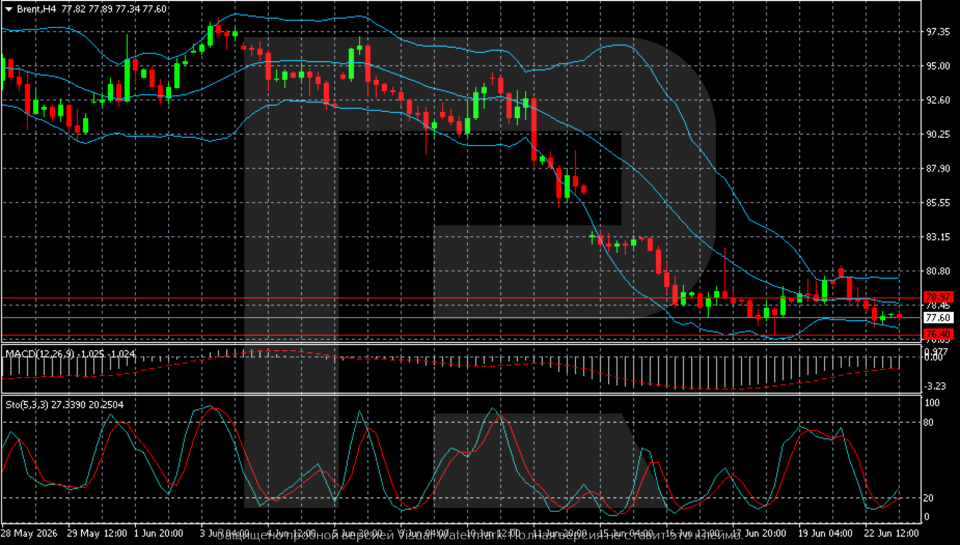
Brent under pressure: sellers have the upper hand Brent is trading near 77.60 USD. The market is pricing in the removal of part of the geopolitical premium and news from Hormuz. Technical outlook On the H4 chart, Brent remains in a downtrend after the sharp decline from the June highs near 97. After plunging into the 77–78 per barrel area, the market moved into a consolidation phase, but buyers have so far failed to form a stable recovery. Brent prices remain under pressure as part of the geopolitical premium is removed. Read more - Brent Forecast Attention! Forecasts presented in this section only reflect the author’s private opinion and should not be considered as guidance for trading. RoboForex bears no responsibility for trading results based on trading recommendations described in these analytical reviews. Sincerely, The RoboForex Team
-
roboforex Market Fundamental Analysis by RoboForex
RBFX Support replied to RBFX Support's topic in Fundamental Analysis
Ethereum (ETHUSD) is betting on Ethlabs Ethereum (ETHUSD) is hovering around 1,728 USD on Tuesday, with the market excited about the idea of launching Ethlabs. ETHUSD forecast: key takeaways The Ethereum (ETHUSD) price is moving sideways Ethereum’s status as core infrastructure may be strengthened ETHUSD forecast for 23 June 2026: 1,710 or 1,775 Fundamental analysis The price of Ethereum (ETHUSD) is holding near 1,728 USD after a modest rise. The launch of the independent research organisation Ethlabs may support the long-term investment case for Ethereum. Former leading developers from the Ethereum Foundation created the new non-profit centre, which will focus on preparing the network for broader institutional adoption. Ethlabs’ priorities include faster settlement, cross-network interoperability, greater network scalability, better infrastructure for issuing tokenised assets, and further development of Ethereum’s economic model RoboForex Market Analysis & Forex Forecasts Attention! Forecasts presented in this section only reflect the author’s private opinion and should not be considered as guidance for trading. RoboForex bears no responsibility for trading results based on trading recommendations described in these analytical reviews. Sincerely, The RoboForex Team -

HFMarkets (hfm.com): Market analysis services.
AllForexnews replied to AllForexnews's topic in Fundamental Analysis
Date: 23rd June 2026. Why Are Stocks Falling Today? AI Selloff, Fed Concerns and Falling Oil Prices. Global markets weakened on Tuesday as investors took profits in technology stocks, monitored progress in US-Iran peace talks, and prepared for key US inflation data later this week. While falling oil prices would typically support risk sentiment, concerns over elevated interest rates and a stronger US Dollar weighed on equities, Gold, and cryptocurrencies. For traders, the focus is increasingly shifting away from geopolitics and back toward inflation, central bank policy, and the sustainability of the AI-driven stock market rally. AI Stocks Lead Global Market Decline The biggest story in financial markets today is the sharp decline in technology stocks. After months of strong gains driven by enthusiasm surrounding artificial intelligence, investors are beginning to question whether current valuations can be justified. The weakness was particularly visible in Asia, where South Korea’s KOSPI index plunged more than 6% amid concerns that major semiconductor and AI-related stocks have become overstretched. The selling pressure spread across global markets: NASDAQ futures fell more than 1% S&P 500 futures declined around 0.8% The MSCI All Country World Index slipped 0.5% Asian equities fell more than 2% from record highs Technology stocks have been one of the main drivers behind the stock market’s gains throughout 2026. As a result, any sign of weakness in the sector is having a disproportionate impact on overall market sentiment. Micron Earnings Become a Major Test for AI Stocks Attention is now turning to Micron Technology’s earnings report on Wednesday, which could become one of the most important events of the week for equity traders. Many analysts view Micron’s results as a critical test of whether AI-related spending remains strong enough to support the extraordinary rally seen across semiconductor stocks this year. Several leading chip manufacturers have already recorded gains of hundreds of percent in 2026, making earnings expectations exceptionally high. Any indication that demand for AI infrastructure is slowing could trigger further profit-taking across the technology sector. Oil Prices Fall as US-Iran Peace Talks Progress Oil prices continued to decline after the United States and Iran reported progress in ongoing negotiations aimed at reaching a lasting peace agreement. Brent crude traded below $78 per barrel after falling more than 3% during the previous session, while West Texas Intermediate (WTI) crude remained near $74 per barrel. Several developments contributed to the decline: The US granted a 60-day waiver allowing some Iranian oil exports. Tanker traffic through the Strait of Hormuz is gradually recovering. Gulf producers are increasing exports through alternative routes. Markets are reducing the geopolitical risk premium that had supported oil prices. The reopening of energy supply routes and expectations of additional Iranian crude entering global markets have eased fears of a prolonged supply shock. However, traders remain cautious as negotiations continue and disagreements remain over certain aspects of the agreement. Why Gold Prices Are Falling Gold prices fell more than 1% on Tuesday despite lingering geopolitical uncertainty. Normally, ongoing tensions in the Middle East would support demand for safe-haven assets. However, investors are increasingly focused on inflation and interest rates rather than geopolitical risks. The key factor weighing on Gold is the growing expectation that US interest rates may remain higher for longer. Federal Reserve chairman Kevin Warsh reinforced this view last week by delivering a hawkish message focused heavily on returning inflation to the central bank’s 2% target. Higher interest rates tend to reduce the appeal of non-yielding assets such as Gold while simultaneously strengthening the US Dollar. Silver also came under pressure, declining more than 3% during the session. The US Dollar Remains Strong The US Dollar continues to outperform many major currencies as traders adjust to a more hawkish Federal Reserve outlook. Despite lower oil prices and improving geopolitical conditions, the Dollar remains supported by expectations that US interest rates could stay elevated for longer than previously expected. This strength has been particularly evident against the Japanese Yen. The Yen remains close to its weakest level since the 1980s, trading above 161 per Dollar despite repeated intervention efforts from Japanese authorities. Recent discussions between Japan’s Finance Minister Satsuki Katayama and US Treasury Secretary Scott Bessent have increased speculation that further intervention may be possible if the currency continues to weaken. However, markets remain sceptical that intervention alone can reverse the trend without higher Japanese interest rates. Japanese Bond Markets Signal Rate Hike Concerns Japan’s latest five-year government bond auction attracted weaker-than-expected demand, highlighting growing concerns about future interest rate increases. The bid-to-cover ratio fell to its lowest level since February, suggesting investors remain cautious about holding bonds while inflation risks persist. Although the Bank of Japan recently raised interest rates to their highest level since 1995, many investors believe the central bank may still be behind the curve. A weaker Yen, imported inflation, and rising wage pressures continue to fuel expectations that further tightening may eventually be required. For currency traders, developments in Japan remain particularly important as they could influence both the Yen and broader global bond markets. Core PCE Inflation Data Becomes the Week’s Most Important Event While traders continue to monitor developments in the Middle East, the most important economic release this week may be the US Core Personal Consumption Expenditures (Core PCE) inflation report. Core PCE is the Federal Reserve’s preferred measure of inflation and could significantly influence expectations for future interest rate decisions. A higher-than-expected reading could: Support the US Dollar Push Treasury yields higher Increase pressure on Gold Trigger additional volatility in stock markets A softer inflation reading could ease concerns about future rate hikes and support risk assets. As a result, many traders are likely to remain cautious until the data is released. Cryptocurrency Markets Also Under Pressure Risk aversion was not limited to stocks. Bitcoin fell more than 1%, and Ethereum also moved lower as investors reduced exposure to risk-sensitive assets. The decline mirrors weakness seen across technology stocks and reflects broader concerns surrounding higher interest rates and tighter financial conditions. What Traders Should Watch Next Several major themes are likely to drive markets over the coming days: Micron earnings and the outlook for AI-related spending. US Core PCE inflation data, which could reshape interest rate expectations. US Dollar strength and its impact on Gold and global currencies. Oil prices and further developments in US-Iran peace negotiations Japanese Yen intervention risks and potential Bank of Japan policy changes. Technology sector performance, particularly whether the recent AI-driven rally can continue. Market Outlook The market narrative appears to be shifting. For much of 2026, investors focused on AI optimism and geopolitical developments. Today, attention is increasingly returning to inflation, interest rates, and economic fundamentals. The recent pullback in technology stocks does not necessarily signal the end of the AI boom. However, it does suggest that markets are becoming more sensitive to valuations, earnings performance, and monetary policy expectations. With AI stocks facing a key earnings test, inflation data due later this week, and central banks maintaining a hawkish stance, traders should prepare for elevated volatility across stocks, currencies, commodities, and cryptocurrencies in the days ahead. Always trade with strict risk management. Your capital is the single most important aspect of your trading business. Please note that times displayed based on local time zone and are from time of writing this report. Click HERE to access the full HFM Economic calendar. Want to learn to trade and analyse the markets? Join our webinars and get analysis and trading ideas combined with better understanding of how markets work. Click HERE to register for FREE! Click HERE to READ more Market news. Andria Pichidi HFMarkets Disclaimer: This material is provided as a general marketing communication for information purposes only and does not constitute an independent investment research. Nothing in this communication contains, or should be considered as containing, an investment advice or an investment recommendation or a solicitation for the purpose of buying or selling of any financial instrument. All information provided is gathered from reputable sources and any information containing an indication of past performance is not a guarantee or reliable indicator of future performance. Users acknowledge that any investment in Leveraged Products is characterized by a certain degree of uncertainty and that any investment of this nature involves a high level of risk for which the users are solely responsible and liable. We assume no liability for any loss arising from any investment made based on the information provided in this communication. This communication must not be reproduced or further distributed without our prior written permission. - Yesterday
-
 Marc joined the community
 -
 MMenendez joined the community
 -
 rgelfer joined the community
 -
 yellow joined the community
 -
THANK YOU @kesk @banker2882 FOR THE GREAT WORK ! STILL FACING THAT BUG WITH THE 64.v IT CAN NOT READ THE META-STOCK FILES . THE 32.V CAN READ BEFORE , BUT WITH THE LATEST CRACKS WITH @banker2882 I CAN NOT OPEN THE 32.V CORRECTLY , IT OPENS WITH THE (TI) IS LOCKED ! AND I THINK I AM NOT THE ONLY ONE FACING THIS PROBLEM .. THERE IS 3 OPTIONS WHEN WE OPEN THE (TI) : THE FIRST ONE OPENS THE 64.V CORRECTLY . THE SECOND ONE OPENS THE SAME 64.v ! THE THIRD ONE OPENS THE 32.V WITH THE SERVER LOGIN AND WHEN YOU IGNORE IT , THE (TI) WILL BE LOCKED ! THE ONLY SOLUTION NOW FOR ME IS GOING BACK TO THE OLD @kesk UPDATES .. HOPING A FIXING SOON TO TRY THE LAST UPDATES WITH YOU FELLOWS 🙂 THANK YOU AGAIN @kesk @banker2882
-
 comado091 joined the community
 -
Welcome to Indo-Investasi.com. Please feel free to browse around and get to know the others. If you have any questions please don't hesitate to ask.
-
 jupia7 joined the community
 -
 Petros reacted to a status update:
Welcome to Indo-Investasi.com. Please feel free to browse around and get to know the
Petros reacted to a status update:
Welcome to Indo-Investasi.com. Please feel free to browse around and get to know the
-
roboforex Market Fundamental Analysis by RoboForex
RBFX Support replied to RBFX Support's topic in Fundamental Analysis
EURUSD has yielded to the sellers: there is a chance of a move lower The EURUSD pair is holding low near 1.1464 as market sentiment has shifted in favour of the US dollar. EURUSD forecast: key takeaways The EURUSD pair remains under the control of the bears The market is monitoring the Middle East and preparing for the release of US PCE data EURUSD forecast for 22 June 2026: 1.1415 Fundamental analysis The EURUSD rate is hovering around 1.1464 on Monday. Investors are assessing new signals around a peace settlement between the US and Iran, while also preparing for the release of the key US inflation report. According to the latest reports, Washington and Tehran have agreed on a roadmap to conclude a final agreement within the next 60 days. RoboForex Market Analysis & Forex Forecasts Attention! Forecasts presented in this section only reflect the author’s private opinion and should not be considered as guidance for trading. RoboForex bears no responsibility for trading results based on trading recommendations described in these analytical reviews. Sincerely, The RoboForex Team -
Market Technical Analysis by RoboForex
RBFX Support replied to RBFX Support's topic in Technical Analysis
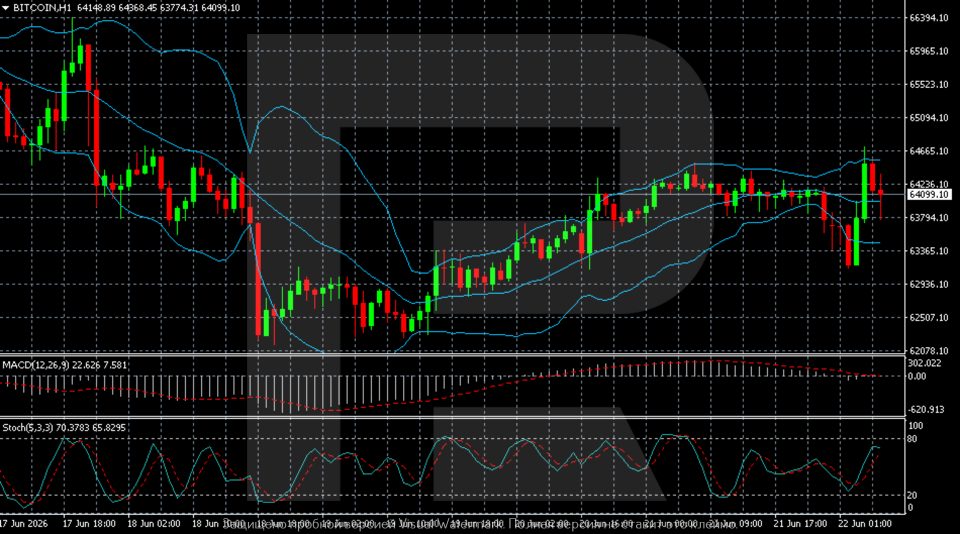
Bitcoin at great risk if the Middle East does not calm down The BTC price is falling towards 64,100 USD, with investors concerned about geopolitical uncertainty. Technical outlook On the hourly chart, BTCUSD continues to trade sideways after recovering from the local low around 62,200. In recent days, buyers managed to push quotes back above 64,000, but an attempt to consolidate above 64,500 ended in a correction. The BTC price has fallen and then paused. Read more - BTCUSD Forecast Attention! Forecasts presented in this section only reflect the author’s private opinion and should not be considered as guidance for trading. RoboForex bears no responsibility for trading results based on trading recommendations described in these analytical reviews. Sincerely, The RoboForex Team
-
HFMarkets (hfm.com): Market analysis services.
AllForexnews replied to AllForexnews's topic in Fundamental Analysis
Date: 22th June 2026. Currency Market: UK PM To Resign. The British Pound is the day’s best performing currency as markets expect the resignation of the UK Prime Minister. The Pound is currently trading 0.12% higher, while the second best performing currency is the US Dollar, up 0.3%. However, technical analysts are cautious about the GBPUSD and trading against the US Dollar due to Fed hawkishness. The worst performing currencies of the past week were the Swiss Franc, New Zealand Dollar and the Canadian Dollar. The Canadian Dollar is particularly under pressure from poor Canadian economic data and lower oil prices. The currency market is likely to witness further volatility this afternoon as Canada releases its Consumer Price Index. Furthermore, tomorrow’s PMI reports are likely to see higher volatility on the US Dollar, Euro and Great British Pound. Why is PM Starmer Resigning? The resignation of Prime Minister Keir Starmer is not necessarily a new story for the UK, nor is it yet confirmed. The PM’s resignation has been a theme in UK politics since 2025 when the Peter Mandelson scandal came to light. Peter Mandelson's appointment by Keir Starmer attracted significant criticism and negatively affected perceptions of his leadership. However, the reason for the resignation is the growing internal rebellion within the party since the poor local election results. Leadership challenges is also another reason, particularly from Andy Burnham, who has gained substantial support among Labour MPs and is widely viewed as a potential successor. If Andy Burnham becomes the new UK Prime Minister, markets will closely watch whether he replaces the UK Chancellor. If he appoints a new Chancellor, the GBP will likely experience higher volatility. However, the GBP outlook will depend on the replacement and their views on the UK’s monetary policy. The effect of Andry Burnham being appointed cannot be known. On the one hand, Mr Burnham has well-respected economists as advisors. These include ex-BOE members and Goldman Sachs economists. Additionally, he has spoken about making cuts to welfare, which goes down well with investors. However, on the other hand, many investors fear he is looking to loosen fiscal policy which in the past has significantly damaged the Pound. Great British Pound - Up in the Short-term, But Long-Term Pressures Remain During the Asian session, the GBPUSD is witnessing both up and down volatility but continues to maintain bearish signals. The GBP index is trading higher so far, but the US Dollar is the best performing currency of the month. For this reason, even if the GBP can build momentum to form a bullish impulse wave, technical analysts will remain cautious of a downward correction. Particularly as markets expect the Federal Reserve to turn hawkish over the remainder of 2026. Meanwhile, the GBPCAD and GBPCHF are witnessing stronger buy signals and have a higher possibility of upward price movement. HFM - GBPCHF 6-Hour Chart Canadian Dollar - Lower Oil Prices Pressure the CAD The Canadian Dollar has particularly come under pressure due to its correlation with oil prices. Crude Oil prices have fallen more than 16% in this market putting immense pressure on the CAD. Oil prices continue to decline on Monday as the US-Iran peace process progresses further. A key new release for the Canadian Dollar will be this afternoon’s Consumer Price Index. Analysts expect the CPI to read 0.7%, higher than the previous month but not the highest this year. If the inflation figure reads higher the CAD may attempt a correction, however, a weaker figure could seriously pressure the CAD. USDCAD is showing short-term momentum remaining slightly in favour of buyers. On the 1-minute chart, the pair continues producing quick swings while holding above nearby support levels. The 5-minute chart presents a more defined structure of higher highs and higher lows, indicating that buyers are retaining control despite resistance limiting stronger upside progress. HFM - USDCAD 6-Hour Chart Meanwhile, the 15-minute chart shows the pair consolidating within a broader intraday trend, suggesting the market is assessing whether sufficient momentum exists for a continuation higher. Overall, the technical outlook remains cautiously bullish while USDCAD holds above its recent support zones. A break above resistance could encourage buyers, while a move below support would increase the risk of a deeper pullback. The price of the USDCAD remains above all moving averages and seems very bullish. However, investors are cautious the price may be overstretched in the medium-term after increasing in value for 5 consecutive days and 4 consecutive weeks. Key Takeaway Points: The British Pound leads currency gains as markets increasingly expect Prime Minister Keir Starmer's resignation as early as this morning. Andy Burnham becoming Prime Minister could trigger higher GBP volatility, especially if he replaces the current Chancellor. The Canadian Dollar remains under pressure from weaker economic data and lower oil prices. Markets turn their attention to today’s Canadian inflation. USDCAD remains bullish, though investors are cautious after five consecutive daily gains and four consecutive weekly gains. Always trade with strict risk management. Your capital is the single most important aspect of your trading business. Please note that times displayed based on local time zone and are from time of writing this report. Click HERE to access the full HFM Economic calendar. Want to learn to trade and analyse the markets? Join our webinars and get analysis and trading ideas combined with better understanding of how markets work. Click HERE to register for FREE! Click HERE to READ more Market news. Michalis Efthymiou HFMarkets Disclaimer: This material is provided as a general marketing communication for information purposes only and does not constitute an independent investment research. Nothing in this communication contains, or should be considered as containing, an investment advice or an investment recommendation or a solicitation for the purpose of buying or selling of any financial instrument. All information provided is gathered from reputable sources and any information containing an indication of past performance is not a guarantee or reliable indicator of future performance. Users acknowledge that any investment in Leveraged Products is characterized by a certain degree of uncertainty and that any investment of this nature involves a high level of risk for which the users are solely responsible and liable. We assume no liability for any loss arising from any investment made based on the information provided in this communication. This communication must not be reproduced or further distributed without our prior written permission. - Last week


.png.e5fb4506cd2fab8e77a13c89de1df86b.png)