⤴️-Paid Ad- Check advertising disclaimer here. Add your banner here.🔥
All Activity
- Past hour
-

VIP Membership - FREE upgrade for OLD and ACTIVE Members
lalelulilo replied to MrAdmin's topic in Announcements
Hi @Traderbeauty I hope you are well. I am here for more than 4 years, is it possible to consider granting me access to VIP Vault, please? Thank you so much in advance. - Today
-
 FXX reacted to a post in a topic:
requet jack gillen
-
 Weekly review: XAUUSD, #SP500, #BRENT | November 27, 2026 XAUUSD: BUY 3604.45, SL 3534.45, TP 3758.45 For gold, the main change has been a weakening of expectations for sharp tightening by the Federal Reserve. By the start of the week, the market stopped pricing in an immediate 50 basis point rate hike in December, and the dollar retreated from recent highs. This reduces pressure on the metal, which yields no interest income. However, a more moderate rate hike remains likely and limits the scale of recovery. The key test will be the release of the US Personal Consumption Expenditures (PCE) price index on November 25. Slowing inflation could weaken rate hike expectations and support XAUUSD through lower yields. A strong report would return advantage to the dollar. The weekly growth idea relies on maintaining more moderate Fed expectations; accelerating prices could invalidate it. Trading idea: BUY 3604.45, SL 3534.45, TP 3758.45 #SP500: SELL 7084, SL 7194, TP 6809 US stocks remain sensitive to doubts about the profitability of artificial intelligence investments. On Friday, the S&P 500 lost 3.7%, and on Monday, futures began to recover. Post-selloff gains ease market conditions, but alone they do not confirm improving future profits: investors need evidence that spending on computing infrastructure will yield expected returns. Lowered expectations for sharp Fed rate hikes support company valuations, however, expensive borrowing continues to complicate financing for large projects. US inflation data this week could alter the cost of money and demand for stocks. As long as corporate concerns persist, the base scenario for #SP500 allows for a decline; softer price data could weaken it. Trading idea: SELL 7084, SL 7194, TP 6809 #BRENT: SELL 89.95, SL 92.15, TP 85.55 The oil market is assessing supply recovery amid ongoing transport risks. In its November report, the IEA expects an oil surplus in the fourth quarter due to increased exports from the Persian Gulf. Recent EIA data showed an increase in US commercial inventories by 3.4 million barrels. This weakens fears of an immediate shortage and restrains oil prices. New inventory data and expectations ahead of the OPEC+ meetings on November 29 are important this week, already beyond the review horizon. Production decisions have not yet been made. Reports of attacks on vessels over the weekend raise disruption risks and limit selling. As long as export flows continue, the weekly #BRENT idea assumes a decline; confirmed supply disruptions could change the scenario. Trading idea: SELL 89.95, SL 92.15, TP 85.55 FreshForex offers a wonderful bonus 300% on every deposit from $100, providing an opportunity to increase trading volumes! You can find more analytical information on our website.
-

Market Technical Analysis by RoboForex
RBFX Support replied to RBFX Support's topic in Technical Analysis
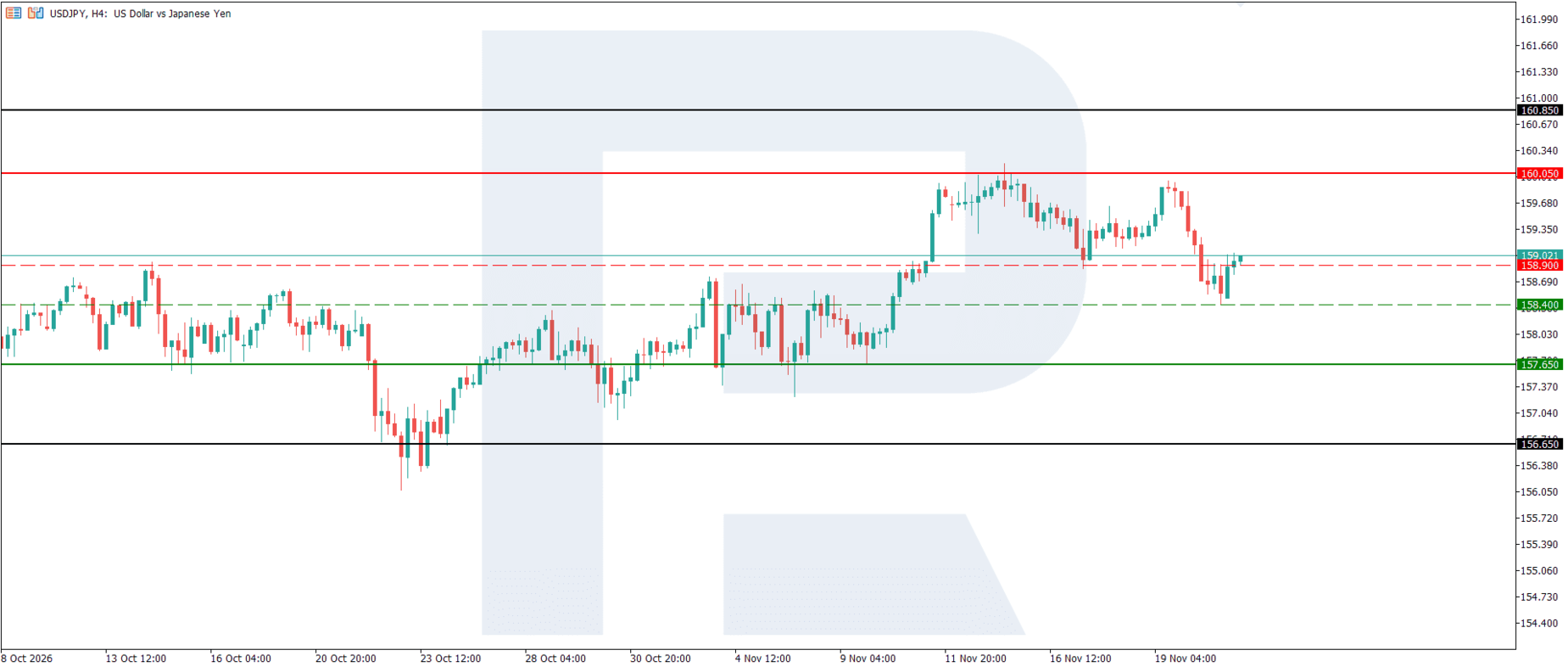
USDJPY strengthens: a stock market sell-off boosts demand for the yen Despite continued support for the US dollar from the Federal Reserve's hawkish policy, growing expectations of Bank of Japan rate hikes and the risk of currency intervention limit the pair's further upside potential. The USDJPY rate currently stands at 159.02. Technical outlook On the D1 chart, the USDJPY pair is trading in an uptrend, with the resistance level at 160.05 and the support level at 157.65. On the H4 chart, local resistance has shifted to 158.90, while support is located at 158.40. Fundamentally, the USDJPY pair continues to benefit from the substantial interest rate differential between the US and Japan. Read more - USDJPY Forecast Attention! Forecasts presented in this section only reflect the author’s private opinion and should not be considered as guidance for trading. RoboForex bears no responsibility for trading results based on trading recommendations described in these analytical reviews. Sincerely, The RoboForex Team
-
roboforex Market Fundamental Analysis by RoboForex
RBFX Support replied to RBFX Support's topic in Fundamental Analysis
EURUSD remains below 1.1000 ahead of a data-heavy week The EURUSD pair is hovering near 19-month lows after five consecutive sessions of declines. Higher-than-expected eurozone inflation has so far failed to support the euro, while hawkish Federal Reserve expectations have kept the dollar in the lead. EURUSD forecast: key takeaways The likelihood of an ECB rate hike in December exceeds 90%, but the market has already priced in this scenario, which has yet to provide support for the euro This week, the focus will be on eurozone and US PMIs, core PCE, US GDP, and the minutes of the ECB's October meeting EURUSD forecast for 23 November 2026: 1.0900 Fundamental analysis The EURUSD pair remains below the psychological 1.1000 level and is hovering near its 19-month low. The pair ended last week with a sharp decline despite several macroeconomic signals that were positive for the euro. Eurostat's final figures showed that eurozone core inflation for October was revised upwards to 2.6% year-on-year from the preliminary 2.5%, while headline inflation remained at 4.0%. RoboForex Market Analysis & Forex Forecasts Attention! Forecasts presented in this section only reflect the author’s private opinion and should not be considered as guidance for trading. RoboForex bears no responsibility for trading results based on trading recommendations described in these analytical reviews. Sincerely, The RoboForex Team -

HFMarkets (hfm.com): Market analysis services.
AllForexnews replied to AllForexnews's topic in Fundamental Analysis
Date: 23rd November 2026. French Economic Weakness Pressures the Euro Despite Strong German Data. The Euro was performing relatively well during the US Dollar’s bullish trend when compared with other currencies. The EUR/USD fell by 1.50% which was considerably lower than the declines experienced by other currencies. Currently, the Euro is November’s third best-performing currency after the US Dollar and Japanese Yen, which both hold safe haven statuses. During the Asian session, the Euro saw a bullish increase against most currencies, particularly against the Dollar. However, the latest French Purchasing Managers’ Indexes are applying pressure, turning the trend to a retracement. European PMI Reports Since the French PMI reports, the EUR/USD has fallen 0.16% shaking its attempt to rise back to 1.13000. The French economy has been under pressure from riots, nationwide strikes, and conflicts over the new budget. However, for now, the developments are having a small impact on the Euro. The French Services PMI rose from 46.2 to 46.6, but remained slightly below expectations of 46.7. Despite the modest increase, the Services PMI remains below its six-month average of 48.9. Another key concern is the French Manufacturing PMI, which fell from 49.5 to 47.9, its lowest level so far in 2026. Meanwhile, Germany’s Manufacturing and Services PMI reports painted a different picture from France. The German Services PMI rose from 52.5 to 54.0, while the Manufacturing PMI increased from 54.2 to 55.5. However, the positive German PMI figures have so far failed to support the Euro, as investors remain focused on France’s challenging economic conditions. The Euro and French Budget Crisis The Euro has performed relatively well in November. However, its value will also largely depend on upcoming political developments in France. On 29 November, the Senate is scheduled to vote on the revenue section of the budget bill, followed by a vote on the entire bill on 9 December. The final deadline for approving the budget is the end of December. If France’s budget negotiations deteriorate, the Euro could come under selling pressure as political uncertainty weakens investor confidence in the Eurozone’s second-largest economy. In 2013 and 2014, the Euro came under immense pressure from multiple countries experiencing something similar to France, although the earlier banking crisis was significantly worse. A prolonged deadlock could increase French bond yields, widen the spread against other bonds, and raise concerns about France’s stability. This could lead investors to reduce their exposure to the Euro, particularly if negotiations fail to produce a budget agreement. US Dollar and the Federal Reserve The US Dollar continues to hold on to gains from the past four weeks, but in the latest sessions has remained sideways. The sideways price movement is indicating that investors are taking a pause while further price drivers come to light. Investors are also contemplating whether the Federal Reserve may opt to pause in December as the stock market witnesses a strong sell-off. Also supporting a pause is the decline in oil prices, particularly if the price continues to fall below $80 per barrel. Nonetheless, most market participants, 96% to be exact, are expecting the Federal Reserve to hike in December. The upcoming Core PCE Price Index and NFP employment data will also largely determine whether the Fed will pause, hike, or opt for multiple consecutive hikes. EUR/USD - Technical Analysis HFM - EURUSD 2-Hour Chart Since Thursday, the EUR/USD has been trading in range-bound conditions, largely due to the price falling to a 20-month low. Investors are opting for the 1.0980/1.1000 range as a pause while they determine the next trend. Despite the range-bound conditions, the price maintains mainly a bearish bias on most timeframes. The price remains below most moving averages and in the ‘sell’ zone within most oscillators. On smaller timeframes, the price remains at a neutral level, particularly as the Euro declined after the PMI release. If the price increases above 1.1000, the bullish breakout and price momentum will again indicate a bullish trend. However, traders must be cautious of the range’s resistance level. If the price falls below the 200-period simple moving average at 1.09800, signals will flip from a neutral indication to a bearish one. Key Takeaways: The Euro remains November’s third-best-performing currency despite the US Dollar’s recent strength. Weak French PMI figures pressure the Euro, overshadowing stronger German economic data. France’s upcoming budget votes could increase political uncertainty and trigger further Euro weakness. EUR/USD remains bearish overall, with the Fed’s December rate decision and upcoming US data likely to influence its next move. Always trade with strict risk management. Your capital is the single most important aspect of your trading business. Please note that times displayed based on local time zone and are from time of writing this report. Click HERE to access the full HFM Economic calendar. Want to learn to trade and analyse the markets? Join our webinars and get analysis and trading ideas combined with better understanding of how markets work. Click HERE to register for FREE! Click HERE to READ more Market news. Michalis Efthymiou HFMarkets Disclaimer: This material is provided as a general marketing communication for information purposes only and does not constitute an independent investment research. Nothing in this communication contains, or should be considered as containing, an investment advice or an investment recommendation or a solicitation for the purpose of buying or selling of any financial instrument. All information provided is gathered from reputable sources and any information containing an indication of past performance is not a guarantee or reliable indicator of future performance. Users acknowledge that any investment in Leveraged Products is characterized by a certain degree of uncertainty and that any investment of this nature involves a high level of risk for which the users are solely responsible and liable. We assume no liability for any loss arising from any investment made based on the information provided in this communication. This communication must not be reproduced or further distributed without our prior written permission. -
 ⭐ learningfx started following VIP Membership - FREE upgrade for OLD and ACTIVE Members
-
-
hello kesk, i was with you in the Timingsolution & Nifty Updates - 2 years ago but i forgot my password and etc, i cant seem to find the Timingsolution & Nifty Updates - 3, will you help me out please? i just wanted to keep my timing solution updated and share research with community. thank you.
-
kaybel joined the community
-
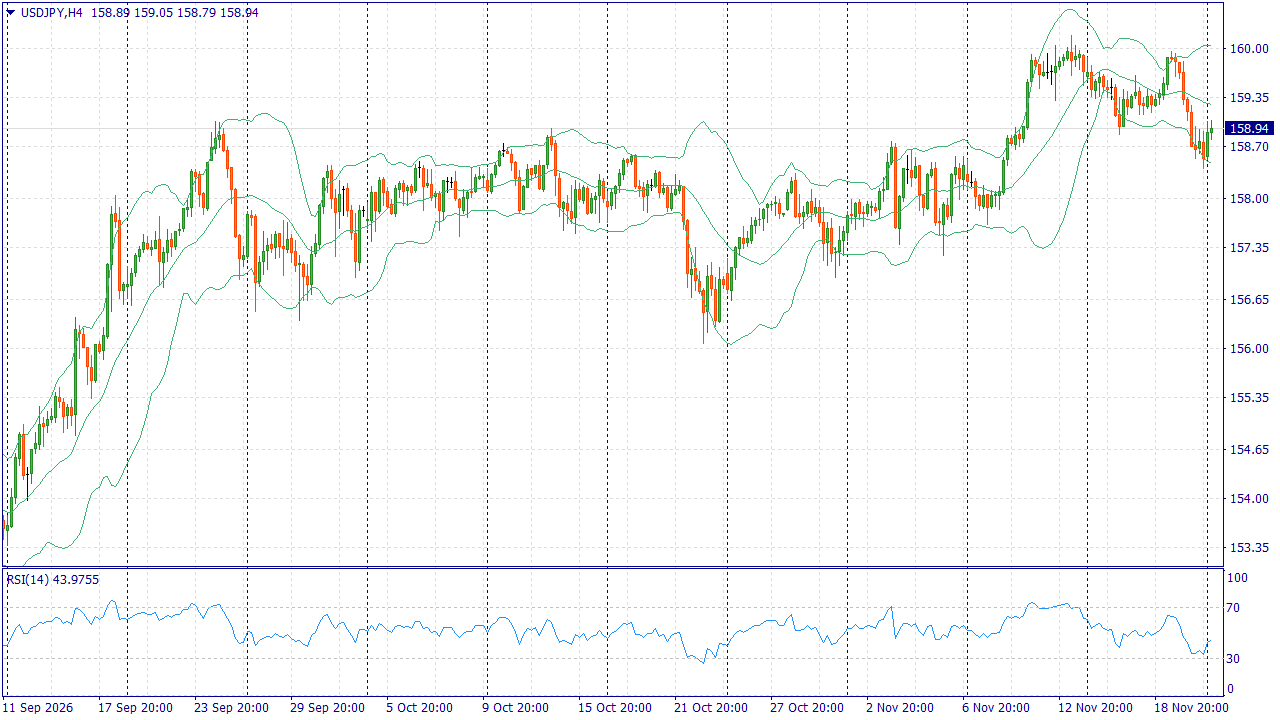
Fundamental Market Analysis for November 23, 2026 USDJPY Event to watch today: 16:45 EET. USD - Composite PMI Index USDJPY: The yen weakened on Monday as risk appetite recovered following last week's sell-off. Safe-haven demand for the Japanese currency declined, and USDJPY rose even amid a softening overall dollar momentum. Today, this pair characteristic is more important than the dollar's dynamics against the euro: continued improvement in sentiment could support demand for the US dollar against the yen. Japan's core inflation accelerated in October to 2.2% from 2.1%, maintaining expectations of a Bank of Japan rate hike. However, the result was below the forecast of 2.3%, and the probability of a December move, according to market estimates on Friday, decreased slightly. This supports the yen in the medium term but does not provide new confirmation of a faster narrowing of the interest rate gap with the US. The Fed is still viewed by the market as a regulator capable of raising rates in December, which preserves the interest rate argument in favor of the dollar. With steady US PMI data and no new safe-haven demand, the USDJPY scenario allows for moderate growth. A decline in US yields or harsh warnings from Japanese authorities could invalidate it; the risk of Tokyo's reaction limits the potential of the idea. Trading idea: BUY 159.00, SL 158.75, TP 159.55 FreshForex offers a wonderful bonus 300% on every deposit from $100, providing an opportunity to increase trading volumes! You can find more analytical information on our website.
-
Welcome to Indo-Investasi.com. Please feel free to browse around and get to know the others. If you have any questions please don't hesitate to ask.
- Yesterday
-
 mostbetpakistanp69d joined the community
-
Trying my luck again. If someone has anything by this educator. AKA: Newfuturestrading, masterspalace, ThirdRealmInstitute. All past videos of his whatsoever. Thanks. https://www.youtube.com/@ThirdRealmInstitute/videos
-

VIP Membership - FREE upgrade for OLD and ACTIVE Members
Traderbeauty replied to MrAdmin's topic in Announcements
MEMBERS which are not in VIP If you have been here for less than a year dont bother to ask unless you shared some amazing stuff or posted very supportive posts. If thats not the case then pls DO NOT ask for the VIP - it just pisses me off ... Traderbeauty-Jane -
VIP Membership - FREE upgrade for OLD and ACTIVE Members
Traderbeauty replied to MrAdmin's topic in Announcements
approved enjoy jane -
VIP Membership - FREE upgrade for OLD and ACTIVE Members
Traderbeauty replied to MrAdmin's topic in Announcements
approve enjoy jane pleasure having you here since 2008 -
Welcome to Indo-Investasi.com. Please feel free to browse around and get to know the others. If you have any questions please don't hesitate to ask.
-
 mostbetpakpk joined the community
-

VIP Membership - FREE upgrade for OLD and ACTIVE Members
⭐ learningfx replied to MrAdmin's topic in Announcements
Hi TraderBeauty, Good day, hope you still remember me, do kindly add me to the VIP vault as I was here a few year ago. Thank you - Last week
-
 k33k33 joined the community
-

VIP Membership - FREE upgrade for OLD and ACTIVE Members
Sergiy23 replied to MrAdmin's topic in Announcements
Please add me to VIP. Thanks -
HFMarkets (hfm.com): Market analysis services.
AllForexnews replied to AllForexnews's topic in Fundamental Analysis
Date: November 20, 2026. Global Stocks Crash as AI Sell-Off Deepens: Is a Rebound Coming? Global stock markets continue to decline as growing concerns surrounding Artificial Intelligence (AI) valuations and higher interest rates weigh on investor sentiment. Asian stocks are experiencing their worst week since March 2020, while the NASDAQ 100 remains under pressure despite strong earnings from Nvidia and Anthropic's historic IPO. However, as technology valuations fall to multi-year lows relative to expected earnings, investors are questioning whether the correction could eventually create opportunities. Asian Stocks Record Their Worst Week Since 2020 Asian stock markets experienced significant losses on Friday as investors continued reducing their exposure to technology and semiconductor companies. MSCI's Asia-Pacific index excluding Japan declined 3.3%, bringing its weekly losses to 8.5%, the worst performance since March 2020. Japan's Nikkei 225 fell approximately 5% on Friday, while South Korea's KOSPI declined 5.2%. Taiwan experienced particularly severe losses, with its stock market falling 17.5% throughout the week. The declines followed another negative session on Wall Street, where the S&P 500 fell approximately 2% and the NASDAQ Composite lost 2.3%. The selling pressure reflects growing concerns about whether the AI industry's future earnings can justify the substantial investments already committed to data centers and semiconductor infrastructure. Why Is the AI Sector Continuing to Decline? With Asian markets heavily exposed to semiconductor manufacturers, the deterioration in sentiment towards AI companies is having a particularly significant impact on regional indicators. Investors are increasingly questioning the profitability of AI infrastructure investments, particularly as companies continue committing enormous amounts of capital to developing advanced technologies. Anthropic's record IPO failed to restore confidence in the broader sector. Despite raising approximately $81.3 billion and closing its first trading session 17% above its offering price, the NASDAQ 100 still declined 2.2%. Similarly, Nvidia's stronger-than-expected earnings failed to prevent further selling pressure. This suggests that investors are becoming more selective, with strong earnings alone no longer sufficient to support valuations. Additionally, expectations of another Federal Reserve interest rate increase in December are adding pressure to growth stocks. Higher borrowing costs can reduce the attractiveness of companies whose valuations depend heavily on future profits. Could Technology Stocks Be Approaching a Rebound? Despite the negative sentiment, some analysts believe the latest correction may be creating attractive opportunities. The NASDAQ100, S&P500, and Philadelphia Semiconductor Index are trading at multi-year lows relative to expected earnings. Interestingly, the decline is occurring despite relatively resilient earnings expectations. This suggests that investors are not necessarily questioning the immediate profitability of technology companies, but rather whether their longer-term growth prospects justify current valuations. Furthermore, significant selling in leveraged technology ETFs suggests that speculative positions have already been reduced considerably. However, lower valuations do not necessarily indicate that the market has reached a bottom. Further declines remain possible if companies reduce AI spending or the Federal Reserve adopts a more aggressive monetary policy stance. Gold Declines While the Japanese Yen Strengthens The global sell-off is also affecting currencies and commodities. Gold has declined towards $3,550 per ounce despite heightened market uncertainty, pressured by a stronger US Dollar and expectations of higher interest rates. Meanwhile, the Japanese Yen strengthened approximately 0.4% against the Dollar as investors increased their exposure to traditional safe-haven currencies. US Treasury yields also declined as investors shifted towards government bonds, highlighting the growing demand for defensive assets. Stock Market Outlook The coming sessions will be important in determining whether the technology sector can stabilize. Although earnings expectations remain relatively strong and valuations have become more attractive, investors are likely to remain cautious ahead of the Federal Reserve's December decision. A recovery in semiconductor stocks, alongside continued earnings growth, could support the NASDAQ 100. However, renewed concerns about AI investment returns or a larger-than-expected interest rate increase could extend the correction. The key question is whether the recent decline represents a temporary adjustment in technology valuations or the beginning of a more prolonged downturn in the AI sector. Click HERE to access the full HFM Economic calendar. Want to learn to trade and analyze the markets? Join our webinars and get analysis and trading ideas combined with better understanding of how markets work. Click HERE to register for FREE! Click HERE to READ more Market news. Andria Pichidi HFMarkets Disclaimer: This material is provided as a general marketing communication for information purposes only and does not constitute an independent investment research. Nothing in this communication contains, or should be considered as containing, an investment advice or an investment recommendation or a solicitation for the purpose of buying or selling of any financial instrument. All information provided is gathered from reputable sources and any information containing an indication of past performance is not a guarantee or reliable indicator of future performance. Users acknowledge that any investment in Leveraged Products is characterized by a certain degree of uncertainty and that any investment of this nature involves a high level of risk for which the users are solely responsible and liable. We assume no liability for any loss arising from any investment made based on the information provided in this communication. This communication must not be reproduced or further distributed without our prior written permission. -
Market Technical Analysis by RoboForex
RBFX Support replied to RBFX Support's topic in Technical Analysis
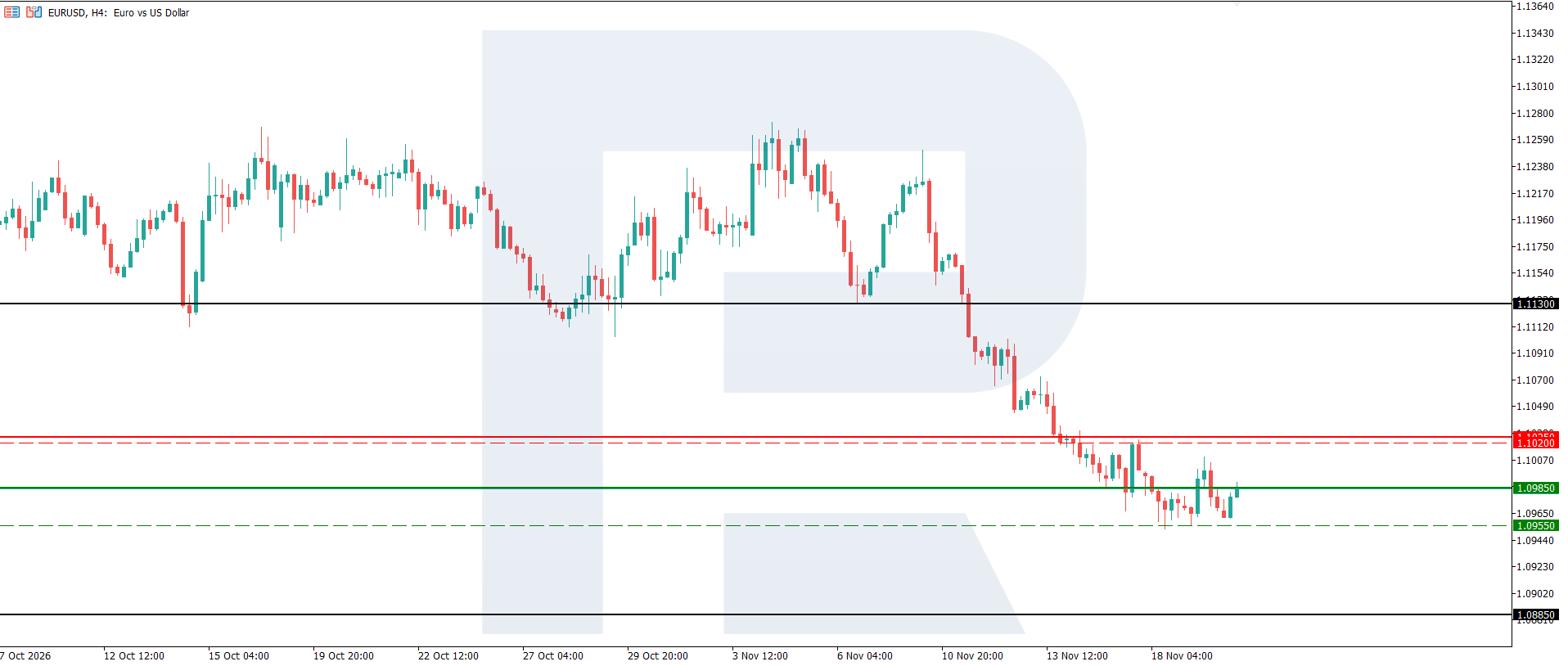
EURUSD declines, but the pace of the fall is slowing The euro remains under pressure primarily due to the widening interest rate differential between the US and the eurozone and persistent concerns about the outlook for the European economy. The EURUSD rate currently stands at 1.0980. Technical outlook On the D1 chart, the EURUSD pair is trading in a strong downtrend. The resistance level has shifted to 1.1025, while support at 1.0985 has been broken and a new support level has yet to form. On the H4 chart, local resistance has formed near 1.1020, while support has shifted from 1.1135 to 1.0955. The US central bank is maintaining a higher interest rate and signalling its readiness to tighten policy further, giving the dollar an advantage. Read more - EURUSD Forecast Attention! Forecasts presented in this section only reflect the author’s private opinion and should not be considered as guidance for trading. RoboForex bears no responsibility for trading results based on trading recommendations described in these analytical reviews. Sincerely, The RoboForex Team
-
roboforex Market Fundamental Analysis by RoboForex
RBFX Support replied to RBFX Support's topic in Fundamental Analysis
XAUUSD hits new lows amid hawkish Federal Reserve expectations XAUUSD prices remain under strong pressure, reaching their lowest level since September 2025. Hawkish signals from the Federal Reserve, a strong dollar, and renewed concerns about US-Iran relations continue to favour sellers. XAUUSD forecast: key takeaways The minutes of the Federal Reserve's October meeting showed that almost all policymakers expect further interest rate hikes to bring inflation back to the 2% target The market has almost fully priced in a 25-basis-point rate hike in December and anticipates further tightening in early 2027 XAUUSD forecast for 20 November 2026: 3,470 Fundamental analysis Gold has extended its decline to a fifth consecutive session, approaching its lowest levels since September 2025. The main factor weighing on prices remains a reassessment of the Federal Reserve's monetary policy outlook. The minutes of the October FOMC meeting, published on Wednesday, confirmed the central bank's hawkish stance. RoboForex Market Analysis & Forex Forecasts Attention! Forecasts presented in this section only reflect the author’s private opinion and should not be considered as guidance for trading. RoboForex bears no responsibility for trading results based on trading recommendations described in these analytical reviews. Sincerely, The RoboForex Team -
 Libor83 joined the community
-
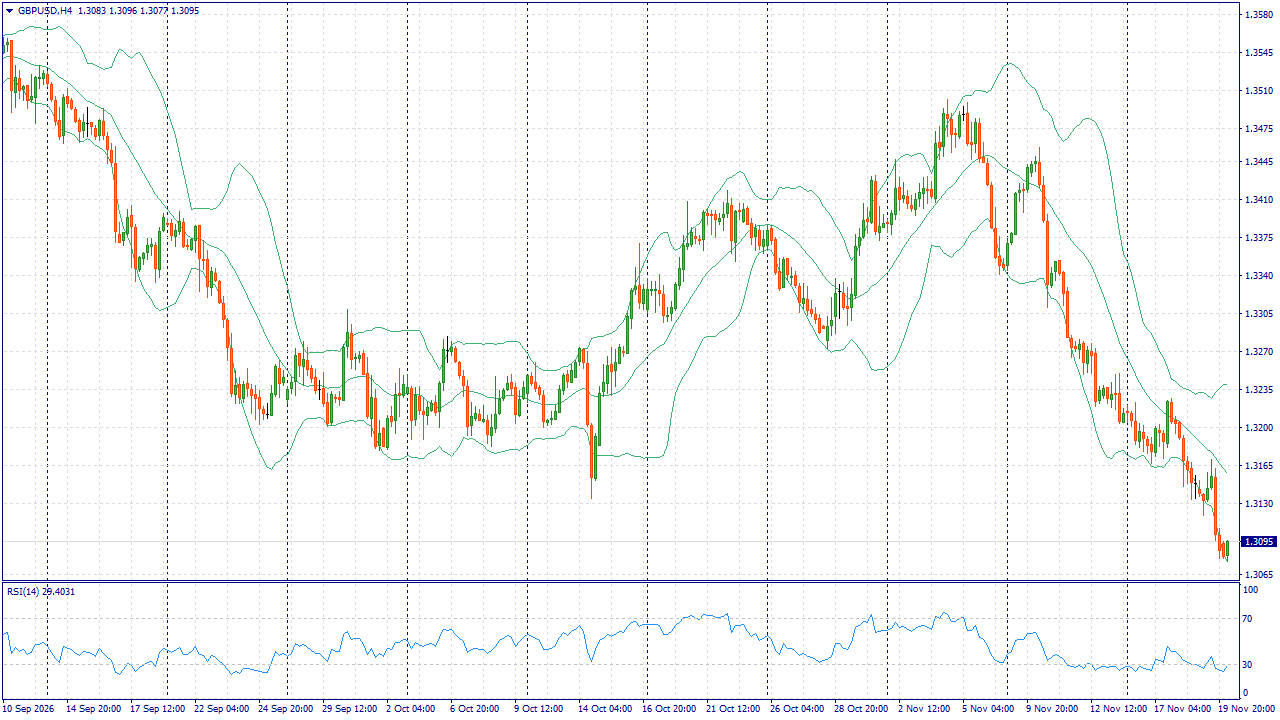
Fundamental Market Analysis for November 20, 2026 GBPUSD GBPUSD: The November survey of British households showed an improvement in sentiment: the consumer confidence index rose from -24 to -22 points after a sharp drop a month earlier. This reduces concerns about a decline in spending, but the negative index value indicates buyer caution. For the pound, the result serves as local support, although it is not enough to change today's dollar advantage. The Bank of England is forced to take into account the acceleration of British inflation and the state of the labor market. Andrew Bailey noted yesterday that weakening employment no longer looks sustainable, although spare capacity remains. This leaves room for a tight interest rate stance. At the same time, expectations of a December Fed rate hike and demand for the dollar amid declining interest in risky assets have a more direct impact on GBPUSD. Retail trade data will be released later; until they are published, their result cannot be considered confirmation of demand recovery. A strong report or a weakening dollar could limit pound sales. Until such signals appear, the scenario suggests a moderate decline in GBPUSD, despite some improvement in British consumer sentiment. Trading idea: SELL 1.3095, SL 1.3125, TP 1.3025 Connect Drawdown bonus 101% and trade with double your deposit! Bonus funds will help you increase your profits or withstand a sudden drawdown! You can find more analytical information on our website.
-
Welcome to Indo-Investasi.com. Please feel free to browse around and get to know the others. If you have any questions please don't hesitate to ask.
-
Welcome to Indo-Investasi.com. Please feel free to browse around and get to know the others. If you have any questions please don't hesitate to ask.