

⤴️-Paid Ad- Check advertising disclaimer here. Add your banner here.🔥
All Activity
- Today
-

roboforex Market Fundamental Analysis by RoboForex
RBFX Support replied to RBFX Support's topic in Fundamental Analysis
US 30 index forecast: the index is testing the support level The US 30 index is testing the support level as part of a correction. The US 30 forecast for today is positive. US 30 forecast: key takeaways Recent data: US PPI declined by 0.3% in June 2026 Market impact: the data has a positive impact on the stock market Fundamental analysis A 0.3% monthly decline in the US Producer Price Index, compared to the expected flat reading, and following a 0.6% increase in May, is generally a favourable signal for the US 30 index. The result came in noticeably weaker than expected and indicates easing price pressures at the producer level. The initial reaction of the US 30 index to such data could be positive. Lower producer prices could bolster expectations of a more accommodative monetary policy from the Federal Reserve. RoboForex Market Analysis & Forex Forecasts Attention! Forecasts presented in this section only reflect the author’s private opinion and should not be considered as guidance for trading. RoboForex bears no responsibility for trading results based on trading recommendations described in these analytical reviews. Sincerely, The RoboForex Team -
Market Technical Analysis by RoboForex
RBFX Support replied to RBFX Support's topic in Technical Analysis
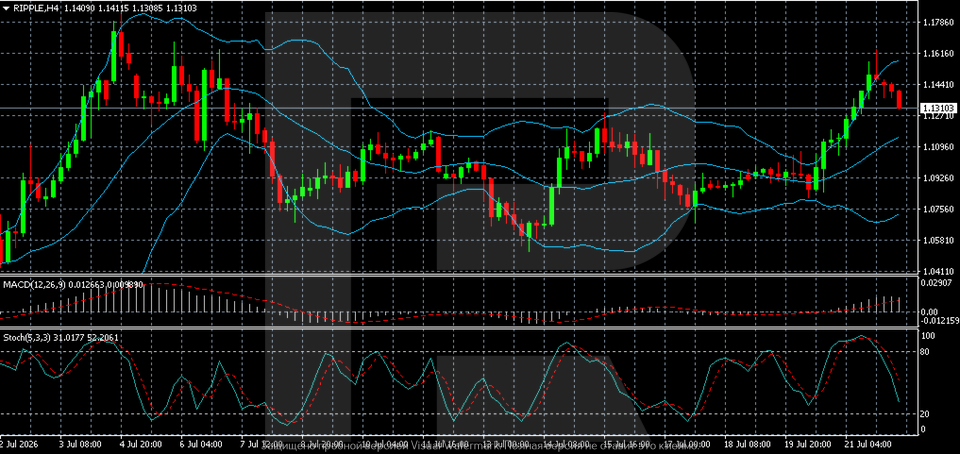
XRP (XRPUSD) is under pressure, but only temporarily The XRP (XRPUSD) price has pulled back to 1.1310. The token is following the broader trend, but its own news flow remains positive. Technical outlook On the XRPUSD H4 chart, the price is correcting after a sharp rise towards the 1.1500–1.1600 area and is currently trading near 1.1310. The price has pulled back from the upper Bollinger Band but is holding above the indicator's middle line. The XRP price has temporarily declined, but the overall outlook remains positive. Read more - XRPUSD Forecast Attention! Forecasts presented in this section only reflect the author’s private opinion and should not be considered as guidance for trading. RoboForex bears no responsibility for trading results based on trading recommendations described in these analytical reviews. Sincerely, The RoboForex Team
-

HFMarkets (hfm.com): Market analysis services.
AllForexnews replied to AllForexnews's topic in Fundamental Analysis
Date: 22nd July 2026. Big Tech Earnings vs Rising Oil Prices: Market Outlook. Financial markets are approaching a pivotal moment as two powerful themes collide. On one side, investors are betting that another strong earnings season from the world’s largest technology companies will reignite the artificial intelligence rally. On the other, escalating tensions in the Middle East are driving oil prices sharply higher, threatening to revive inflation and delay expectations for lower interest rates. For CFD traders, these competing forces are creating opportunities across equity indices, commodities, and currency markets. The next few trading sessions could determine whether risk appetite continues to recover or shifts back towards defensive assets. Alphabet and Tesla Earnings Could Set the Tone for Global Markets Investor attention is firmly focused on earnings from Alphabet and Tesla, the first of the ‘Magnificent Seven’ companies to report this quarter. Their results will provide fresh insight into whether massive investment in artificial intelligence is beginning to generate sustainable returns. Technology stocks have already experienced significant volatility this month. After a sharp correction pushed the Philadelphia Semiconductor Index into bear-market territory, bargain hunters helped drive a strong rebound. However, expectations remain extremely high. This means the market is no longer rewarding companies simply for beating earnings estimates. Investors are looking for stronger revenue growth, improving profit margins, and, perhaps most importantly, confident guidance on future AI spending. If Alphabet delivers another optimistic outlook, it could restore confidence across the technology sector ahead of earnings from Microsoft, Meta, Apple, and Amazon. A weaker-than-expected report, however, could trigger another round of profit-taking in AI-related shares. Trading Implications For index traders, the NASDAQ 100 is likely to remain the most sensitive market. Positive earnings guidance could support another move higher, while disappointing forecasts may quickly spill over into the broader S&P 500 as investors reduce exposure to high-growth technology stocks. Rising Oil Prices Bring Inflation Back Into Focus While earnings dominate the headlines, crude oil is quietly becoming one of the most important drivers of broader market sentiment. Brent crude has climbed above $92 per barrel, its highest level in several weeks, after hopes for immediate US-Iran negotiations faded. Continued military activity in the Middle East and ongoing threats to shipping routes through the Strait of Hormuz have renewed concerns about global energy supplies. Higher oil prices matter because they increase production and transportation costs across the global economy, making it more difficult for inflation to continue slowing. After several months of improving inflation data, investors are once again questioning whether central banks may need to keep interest rates higher for longer. US Treasury yields have already risen to their highest levels in roughly two months as markets reassess the outlook for monetary policy. Trading implications Should Brent establish itself above $90–92, inflation expectations could continue rising. That environment may support energy stocks while creating headwinds for growth-oriented sectors such as technology. Conversely, any easing of geopolitical tensions could quickly trigger profit-taking in crude oil and improve sentiment across equity markets. Gold Defies Higher Bond Yields Gold’s recent performance has been particularly noteworthy. Normally, higher Treasury yields reduce the appeal of non-yielding assets like gold. Instead, bullion has climbed back above $4,100 per ounce, supported by continued geopolitical uncertainty and ongoing purchases from central banks. The simultaneous rise in both gold and bond yields suggests investors are increasingly using precious metals as a hedge against geopolitical risks rather than simply reacting to changes in interest rates. As long as tensions in the Middle East remain elevated, gold may continue attracting defensive capital even if the US dollar stays firm. Trading implications Gold traders should monitor developments in both the Middle East and US interest-rate expectations. Escalating geopolitical risks could extend bullion’s rally, while stronger-than-expected corporate earnings and improving risk sentiment may encourage some rotation back into equities. The Japanese Yen Remains Under Heavy Pressure Currency markets are reflecting the same macroeconomic themes. The Japanese yen has weakened beyond ¥163 per US dollar, reaching its lowest level since 1986. Rising US bond yields, elevated oil prices, and Japan's dependence on imported energy continue to weigh heavily on the currency. Japanese officials have once again warned they are prepared to intervene if excessive volatility continues, but markets remain unconvinced that verbal intervention alone will reverse the trend. Meanwhile, strong demand at Japan’s latest 40-year government bond auction indicates that higher domestic yields are beginning to attract long-term investors, although this has done little to support the yen. Trading Implications USD/JPY remains highly sensitive to changes in US Treasury yields. Any further rise in yields could keep the pair supported, while unexpected intervention from Japanese authorities remains the biggest short-term downside risk. Can AI Optimism Continue to Outweigh Geopolitical Risks? Markets are currently balancing two very different narratives. The first is the long-term growth story surrounding artificial intelligence, which continues to support technology valuations despite recent volatility. The second is a renewed inflation story driven by higher oil prices and geopolitical uncertainty, raising the possibility that central banks may maintain restrictive monetary policy for longer than previously expected. At present, corporate earnings are helping investors overlook many of these macroeconomic risks. However, that balance could shift quickly if technology companies fail to justify current valuations. Market Outlook For CFD traders, the coming days may prove decisive. If Alphabet and Tesla deliver strong earnings alongside confident guidance, equity markets could extend their recent recovery and reinforce the AI investment theme. However, if results disappoint while oil prices continue climbing, markets may increasingly focus on rising inflation, higher bond yields, and slowing economic momentum. The key markets to watch include the NASDAQ 100, S&P 500, Brent crude, Gold, and USD/JPY, where volatility is likely to remain elevated as investors respond to both corporate earnings and geopolitical developments. Always trade with strict risk management. Your capital is the single most important aspect of your trading business. Please note that times displayed based on local time zone and are from time of writing this report. Click HERE to access the full HFM Economic calendar. Want to learn to trade and analyse the markets? Join our webinars and get analysis and trading ideas combined with better understanding of how markets work. Click HERE to register for FREE! Click HERE to READ more Market news. Andria Pichidi HFMarkets Disclaimer: This material is provided as a general marketing communication for information purposes only and does not constitute an independent investment research. Nothing in this communication contains, or should be considered as containing, an investment advice or an investment recommendation or a solicitation for the purpose of buying or selling of any financial instrument. All information provided is gathered from reputable sources and any information containing an indication of past performance is not a guarantee or reliable indicator of future performance. Users acknowledge that any investment in Leveraged Products is characterized by a certain degree of uncertainty and that any investment of this nature involves a high level of risk for which the users are solely responsible and liable. We assume no liability for any loss arising from any investment made based on the information provided in this communication. This communication must not be reproduced or further distributed without our prior written permission. -
 Victoire reacted to a post in a topic:
James Dalton: Live Markets Seminar - Shadow Trader
Victoire reacted to a post in a topic:
James Dalton: Live Markets Seminar - Shadow Trader
-
can anyone reupload please to mega
-
 zeroedge joined the community
 -
 ⭐ ahmed ibrahim reacted to a post in a topic:
Timingsolution & Nifty Updates - 3
⭐ ahmed ibrahim reacted to a post in a topic:
Timingsolution & Nifty Updates - 3
- Yesterday
-
Welcome to Indo-Investasi.com. Please feel free to browse around and get to know the others. If you have any questions please don't hesitate to ask.
-
 Market Fundamental Analysis for July 22, 2026 EURUSD EURUSD: The euro enters the session amid mixed expectations ahead of the ECB meeting. Higher energy prices are supporting expectations of a further rate increase. However, a survey of eurozone companies points to slower expected growth in selling prices and wages. This reduces the urgency of additional monetary tightening and limits independent support for the European currency. The US dollar is driving the market during the current session. The currency remains close to a one-week high, while the yield on the 10-year US Treasury note has approached 4.6%. Fluctuations in oil prices and tensions in the Middle East are increasing inflation risks. As a result, the market remains cautious about a rapid easing of Federal Reserve policy, supporting demand for the dollar. For EUR/USD, the timing of these factors remains decisive. A possible ECB rate increase relates to future meetings and has not yet received clear new confirmation, while elevated US Treasury yields are already supporting the dollar during the current session. In the absence of a strong local catalyst from the eurozone, the fundamental base case continues to favor a decline in the pair. Trading idea: SELL 1.1415, SL 1.1440, TP 1.1355
 -
FreshForexTeamOriginal joined the community
-
 azerios joined the community
 -
 FAZx47 joined the community
 -

Anybody can recommend a broker for News trading??
bluemac replied to venturefx's topic in Forex Brokers
True. Question: How do you check execution history? I do 2 things: 1. Open demo and live tick chart during CPI, record spread spike screenshot 2. Check last 3 news, did the broker give off-quotes? How long freeze? HFM was clean for me last CPI, slipped but filled. Some brokers freeze 10 sec, that’s worse than slippage. What was your worst slippage on HFM vs IB during NFP? Mine HFM with 14 pips Gold, IB with 9 pips. Size matters, what lot you used? -
Great point since swap and slippage are actually the hidden killers. Do you close before news or hold? I used to hold, thought the spread can be the same. Then saw Gold slipped 2$ on NFP and hit SL that was never hit on demo price. Now rule: Demo to check, live to trade only London/NY, close before high impact, no Wed hold unless swap positive. How much slippage you saw on HFM during last CPI? Mine was around 18 pips on XAU.
-
 calvin joined the community
 -
Market Technical Analysis by RoboForex
RBFX Support replied to RBFX Support's topic in Technical Analysis
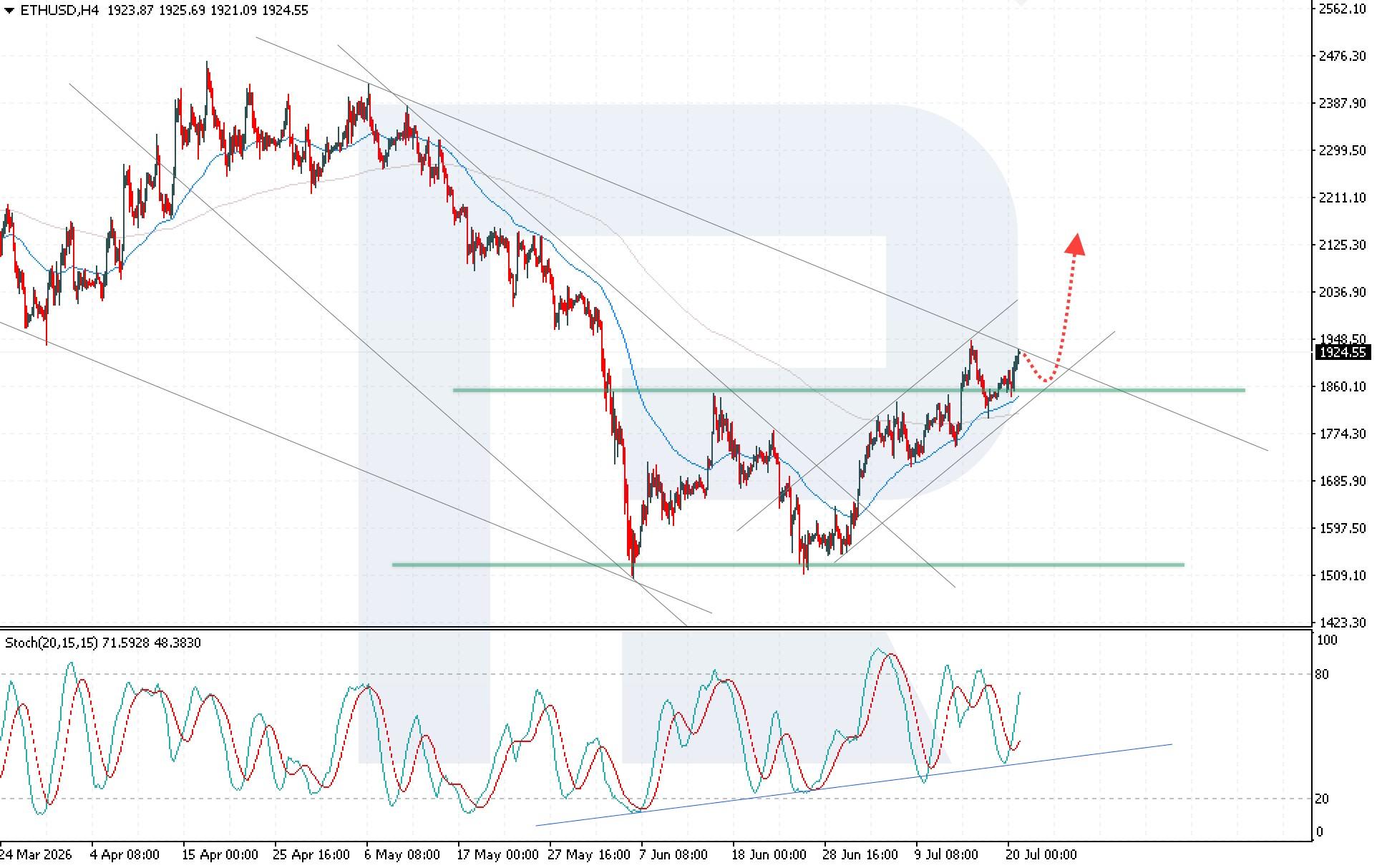
Ethereum (ETHUSD) gains bullish momentum thanks to shrinking supply The ETHUSD rate is maintaining positive momentum amid rising investor demand and renewed interest in Ethereum, with the price currently at 1,925. Technical outlook ETHUSD is testing the upper boundary of the descending channel, with the price already consolidating above the upper boundary of the Double Bottom reversal pattern. This trend indicates stronger buying activity and increases the likelihood of continued upward momentum. The ETHUSD forecast for today remains positive, while the key factor for further movement will be buyers’ ability to overcome the 1,945 USD resistance level. Read more - ETHUSD Forecast Attention! Forecasts presented in this section only reflect the author’s private opinion and should not be considered as guidance for trading. RoboForex bears no responsibility for trading results based on trading recommendations described in these analytical reviews. Sincerely, The RoboForex Team
-
Welcome to Indo-Investasi.com. Please feel free to browse around and get to know the others. If you have any questions please don't hesitate to ask.
-
roboforex Market Fundamental Analysis by RoboForex
RBFX Support replied to RBFX Support's topic in Fundamental Analysis
USDJPY is on the edge, Japanese authorities could intervene at any moment When the USDJPY pair attempts to reach new highs, the Japanese authorities may carry out a currency intervention without warning. USDJPY forecast: key takeaways The main driver remains the escalation of the conflict between the US and Iran On the other hand, signals are emerging about a possible 10-day ceasefire New record highs could prompt the Japanese authorities to intervene Fundamental analysis Fundamental analysis for 21 July 2026 shows that the pair continues to trade sideways, remaining in the 162.30–162.60 area and hovering near its highest levels in nearly 40 years. The main driver remains the escalation of the US-Iran conflict. On the one hand, the Yemeni Houthis announced a naval blockade of Saudi Arabia. RoboForex Market Analysis & Forex Forecasts Attention! Forecasts presented in this section only reflect the author’s private opinion and should not be considered as guidance for trading. RoboForex bears no responsibility for trading results based on trading recommendations described in these analytical reviews. Sincerely, The RoboForex Team -
 SimpleMoodyPerson joined the community
 -
HFMarkets (hfm.com): Market analysis services.
AllForexnews replied to AllForexnews's topic in Fundamental Analysis
Date: 21st July 2026. USDCAD Outlook: Tariffs, Oil Risks & Canadian Dollar Volatility. Global economic dynamics are once again being tested by a complex combination of geopolitical volatility in the Middle East and a new wave of US trade protectionism. The pressure on the Canadian dollar (Loonie) to around 1.40 per USD reflects not only domestic macroeconomic readings but also the vulnerability of Canada's trade structure to external shocks involving the world's vital energy arteries: the Strait of Hormuz and the Red Sea. Easing Inflation and Pressure on the "Loonie" Canadian inflation reports showed a decline in the annual inflation rate to 2.8%, while the Bank of Canada's (BoC) preferred core inflation measure slumped to its lowest point in more than five years. While this slowdown provides some relief for consumers, it directly reduces market expectations for further interest rate hikes. With the benchmark interest rate stuck at 2.25%, domestic bond yields lost their competitive appeal to foreign investors, triggering further depreciation in the Loonie exchange rate. Geopolitical Influences: The Strait of Hormuz, the Red Sea, and Energy Supply Amidst slowing domestic inflation, the global energy market is haunted by geopolitical uncertainty originating in the Middle East, particularly disruptions in the Strait of Hormuz and the Red Sea. A Fragile Global Energy Pulse: The Strait of Hormuz and the Red Sea are two of the most crucial chokepoints for global crude oil shipping routes. Escalation of conflict in the region directly drives up global oil prices. Impact of Shocks on Inflation & Policy: Although the Bank of Canada assesses that the surge in energy costs from the Middle East crisis has not yet spread broadly to core economic sectors, persistently high oil prices maintain the risk of imported inflation. For Canada, as an energy exporting nation, fluctuating global commodity prices due to supply threats in the Strait of Hormuz create a paradox: boosting energy sector revenues on the one hand, but increasing macroeconomic vulnerabilities and global supply chains on the other. Escalation of US Protectionism: Additional 50% Tariffs Canada's economic situation became even more strained when the White House unilaterally announced an aggressive protectionist policy: an additional 50% ad valorem tariff on certain Canadian products, primarily covering automotive, parts, and consumer goods. This policy, effective August 19, was framed by Washington as a response to what it called Ottawa's "discriminatory policies" against US automotive, alcoholic beverages, and dairy products. Threat to Integrated Supply Chains: This move is a major blow to the integration of the North American Supply Chain Agreement (USMCA), which has closely linked the manufacturing industries of the US, Canada, and Mexico. Consumer Inflation Risk: High import taxes not only threaten the profit margins of the cross-border automotive industry but also pose a significant risk of shifting the cost burden to consumers in both countries. Potential Trade War: Ottawa's threat to retaliate opens the door to an open trade war, further complicating the investment climate amidst Canada's sluggish economic recovery efforts due to global uncertainty. Strategic Conclusion Based on the USDCAD price structure, the pair is experiencing a healthy pullback after stalling near the key Fibonacci resistance area of the 0.5 ratio and the previous swing high line. Currently, the price is approaching the dynamic support area of the moving average line and the 0.382 Fibonacci level (around 1.3981), while the RSI momentum indicator indicates easing short-term selling pressure. As long as the price maintains this classic support level and the main uptrend structure remains intact, the opportunity for an upward price bounce remains open to retest the resistance area in the range of 1.4136 to 1.4291 (0.618FR). The current Loonie crisis reflects a dangerous crossroads: domestic pressures stemming from declining interest rate expectations, disruptions to global energy supply chains caused by instability in the Strait of Hormuz and the Red Sea, and the devastating impact of unilateral US tariffs. If these geopolitical tensions over energy and the trade war are not eased soon, Canada's economic resilience will be severely tested until the end of 2026. Always trade with strict risk management. Your capital is the single most important aspect of your trading business. Please note that times displayed based on local time zone and are from time of writing this report. Click HERE to access the full HFM Economic calendar. Want to learn to trade and analyse the markets? Join our webinars and get analysis and trading ideas combined with better understanding of how markets work. Click HERE to register for FREE! Click HERE to READ more Market news. Ady Phangestu HFMarkets Disclaimer: This material is provided as a general marketing communication for information purposes only and does not constitute an independent investment research. Nothing in this communication contains, or should be considered as containing, an investment advice or an investment recommendation or a solicitation for the purpose of buying or selling of any financial instrument. All information provided is gathered from reputable sources and any information containing an indication of past performance is not a guarantee or reliable indicator of future performance. Users acknowledge that any investment in Leveraged Products is characterized by a certain degree of uncertainty and that any investment of this nature involves a high level of risk for which the users are solely responsible and liable. We assume no liability for any loss arising from any investment made based on the information provided in this communication. This communication must not be reproduced or further distributed without our prior written permission. -
Read all the posts to understand how it works. 1. I recently tested the TI crack and it worked well for me. When the author introduced AI model with online check/login, Terra menu became disabled. This requires the cracked *NN files from Banker. 2. You need the latest Terra update from the Terra updater as well as from Banker for Terra to work, no need to run every update. Only the last update is enough. But when the next update comes, you have to update both!
-
 bbj256 joined the community
 - Last week
-
Welcome to Indo-Investasi.com. Please feel free to browse around and get to know the others. If you have any questions please don't hesitate to ask.
-
 Hope Get Destroyed joined the community
 -
Welcome to Indo-Investasi.com. Please feel free to browse around and get to know the others. If you have any questions please don't hesitate to ask.
-
 hamad60530 joined the community
 -
 togoxanux joined the community
 -
Market Technical Analysis by RoboForex
RBFX Support replied to RBFX Support's topic in Technical Analysis
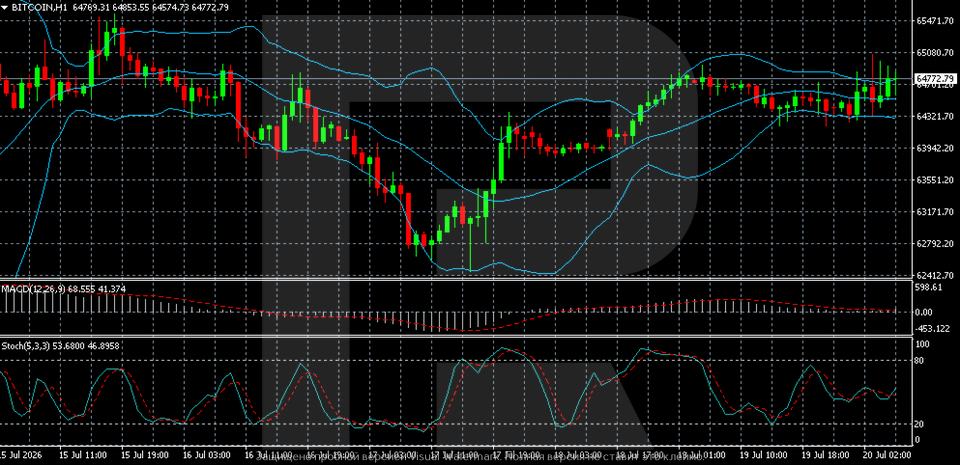
Bitcoin (BTCUSD) may rise, but it needs more support Bitcoin (BTCUSD) climbed to 64,772 USD. The market is keeping a close eye on external developments and the US bill to create reserves. Technical outlook On the hourly chart, Bitcoin is recovering after falling to the 62,400–62,800 area and is now trading around 64,770. The price is holding above the middle Bollinger Band and is again approaching the upper boundary of the indicator, signalling continued local demand. The Bitcoin price is attempting to rise, but consolidation remains the baseline scenario. Read more - BTCUSD Forecast Attention! Forecasts presented in this section only reflect the author’s private opinion and should not be considered as guidance for trading. RoboForex bears no responsibility for trading results based on trading recommendations described in these analytical reviews. Sincerely, The RoboForex Team
-
roboforex Market Fundamental Analysis by RoboForex
RBFX Support replied to RBFX Support's topic in Fundamental Analysis
DE 40 forecast: the index is testing the support level During the correction, the DE 40 stock index began to test the support level, which could lead to a trend reversal. The DE 40 forecast for today is positive. DE 40 forecast: key takeaways Recent data: Germany’s CPI rose by 2.3% year-on-year in June Market impact: the data creates a moderately positive backdrop for the German stock market Fundamental analysis The German inflation data release has a moderately positive, but limited, impact on the DE 40 index. The annual Consumer Price Index slowed from 2.6% to 2.3% in June, while prices fell by 0.3% month-on-month. For the DE 40, this could result in growing interest in stocks of companies focused on domestic consumption, industry, and capital expenditure. RoboForex Market Analysis & Forex Forecasts Attention! Forecasts presented in this section only reflect the author’s private opinion and should not be considered as guidance for trading. RoboForex bears no responsibility for trading results based on trading recommendations described in these analytical reviews. Sincerely, The RoboForex Team